$150 million in giving from Kevin Hochman’s Chili’s to St. Jude grows from a coloring-sheet idea into the hospital’s newest clinical home
In the fall of 2002, a handful of restaurant managers sat around a table at a Chili’s in Memphis and tried to figure out how a neighborhood grill could help the famous children’s hospital a few miles away.
One of them, an assistant manager named Shane Turner, had recently stopped by St. Jude Children’s Research Hospital to ask about volunteer opportunities for his staff, and a fundraiser there, Melissa Lessley of ALSAC, had given him a tour and nudged him to think bigger. Turner came back with an idea so simple it sounded almost like a joke: hand guests a sheet of paper with the outline of a chili pepper, ask for a dollar, and let them color it in.
Dharam Rampersad, then new to the company and managing a Chili’s across town, admits he was the skeptic in the room.
Crayons?
Coloring pages?
“It was a good-lookin’ chili,” he later said.
But would grown-ups really pay to color one?
They did.
Seven Mid-South restaurants each printed 3,000 sheets, and Rampersad’s store ran out so quickly that he raced to a copy shop in the middle of a shift to print more. Parents colored peppers.
Couples on date night-colored peppers. People at the bar colored peppers in their favorite team colors.
The seven restaurants raised $14,000, and the walls of those dining rooms, papered with rainbow chilis, became the first chapter of one of the most durable partnerships in American corporate philanthropy.
Twenty-four years and more than $130 million later, Chili’s has written its largest chapter yet. On September 8, Chili’s Grill & Bar and St. Jude announced a pledge to help raise $150 million for the hospital over the next 15 years, the biggest commitment in a relationship that has already put the restaurant’s name on a medical building and a school. The money will support the new Chili’s Clinical Center at St. Jude, scheduled to open in February 2027, which will carry the Chili’s name forward on the Memphis campus and bring the hospital’s major outpatient services together under one roof.
The announcement arrives with a detail that makes it unusual among nine-figure gifts. This is not a check written from a corporate treasury. It is a promise that the Chili’s community, the guests who add a few dollars to their bill, and the more than 70,000 team members who ask them to, will keep giving at a scale that now rivals the largest individual donors to children’s medicine.
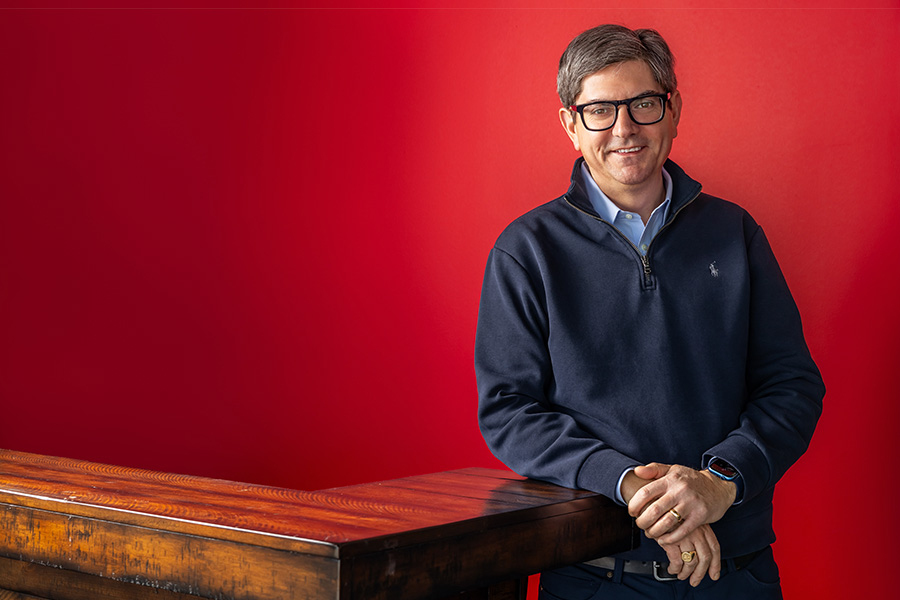
Kevin Hochman, the chief executive of Chili’s parent company, Brinker International, and president of the Chili’s brand, made that point first when he spoke about the pledge. “Our guests and team members have been incredible supporters of St. Jude. With over 3 million individual donations in the last year alone, they continue to show how much this mission means to the Chili’s community,” he said.
“We’ve created a lot of special moments at Chili’s, but what we’ve done together for St. Jude and for children with cancer is something we’ll be proud of for decades to come.”
Three million donations in a single year is the number that explains how a restaurant chain can credibly promise $150 million.
Divided across 15 years, the pledge averages about $10 million a year, roughly the pace the partnership has sustained recently as the cumulative total climbed from $100 million at the end of 2022 to more than $130 million this fall. In other words, Chili’s is not betting on a windfall. It is committing, publicly and for a decade and a half, to keep doing what its dining rooms already do every day and to do it long after the current menu, the current marketing campaigns, and perhaps the current leadership have changed.
Chili’s has made and kept that kind of long promise before. By 2006, four years after the first coloring sheets went up in Memphis, the chain had raised $5.2 million for St. Jude. It then made what was, at the time, a startling commitment for a casual-dining brand: $50 million over 10 years to help build a new clinical and research facility.
The Chili’s Care Center opened in 2007 as the first medical building on the St. Jude campus to bear a corporate partner’s name: a seven-story, 340,000-square-foot home for imaging and radiation technology, clinics, and research, complete with an aquarium and family-friendly patient rooms. Chili’s finished paying off the $50 million in 2014, two years early.
Two years later, it pledged $30 million more to sponsor the hospital’s school program, now known as the St. Jude Imagine Academy by Chili’s.
Behind those buildings are children whose lives were bent around them. In November 2008, a Memphis family who had immigrated from the Philippines drove their son, Anthony Lawrence, to St. Jude for the first time, a week after he was diagnosed with a brain tumor pressed against his brain stem.
He was almost six, born in 2002, the same year the partnership began. As they walked into the lobby of the new Chili’s Care Center, he spotted the familiar red pepper on the wall and called out, “Let’s eat at Chili’s, Mom!” His parents laughed for the first time in days. If they could laugh, his mother, Mary Cecile, would later say, they could hope. Anthony Lawrence went on to receive 33 radiation treatments in that building and to undergo three more surgeries.
For years afterward, the family celebrated his clean scans, his spelling bees, and his clarinet concerts at their neighborhood Chili’s, where his mother would rest a hand on his shoulder after the meal and tell the servers, “Thank you for saving my son’s life.” When St. Jude told his story in 2022, he was 20, studying at the University of Memphis, the same age as the partnership that had helped carry him there.
The Imagine Academy holds its own quieter version of those stories. Every new St. Jude patient is offered a consultation about school, and on a typical day the program’s teachers see anywhere from 50 to 150 children, from preschoolers to high school seniors, who remain enrolled in their hometown schools while they are in Memphis for treatment.
Teachers there say one of their proudest moments is when former students come back to visit during checkups. For some families, a graduation ceremony held inside a cancer hospital is a milestone they once feared their child would never reach.
The new Chili’s Clinical Center is meant to take that same family-centered thinking and apply it to the most demanding part of the St. Jude experience: the long days of outpatient care. Most St. Jude patients are treated as outpatients, living in hospital housing and coming to campus for infusions, procedures, scans, and appointments, sometimes several in a single day.
The new center rises as one of two 15-story towers under construction beside the original Chili’s Care Center, part of a 2022 to 2027 strategic plan that St. Jude describes as the largest investment in its history. According to the hospital, the clinical building will encompass roughly 700,000 square feet and gather services such as the Acute Care Clinic, the Infusion Center, apheresis, and pharmacy in one place, with infusion rooms clustered into six-room “neighborhoods” designed to reduce noise, improve safety, and leave space for parents at the bedside.
St. Jude now welcomes more than 600 new cancer patients each year, and the building is designed to make that journey easier to navigate so that fewer hallways and fewer buildings stand between a frightened family and the care their child needs.
The timing places the pledge at a turning point for St. Jude itself. On January 1, 2027, a month before the Chili’s Clinical Center is scheduled to open, Dr. Charles W.M. Roberts, a physician-scientist who has led the hospital’s Comprehensive Cancer Center since 2015, will succeed Dr. James R. Downing as president and chief executive, the seventh leader in the institution’s history.
On the fundraising side, Ike Anand, who became president and CEO of ALSAC in 2025 after five years as its chief operating officer, has now secured one of the signature corporate commitments of his tenure. “This extraordinary commitment from our friends at Chili’s is a powerful example of how generosity can change lives,” Anand said.
“For more than 20 years, Chili’s guests and team members have helped support families facing some of life’s toughest challenges and fuel the research that is helping drive childhood cancer survival rates higher in the U.S. and around the world.”
It also lands at a high-water mark for Chili’s. Hochman, a former Procter & Gamble brand manager who ran KFC in the United States before arriving at Brinker in June 2022, has led what the restaurant industry widely calls one of the most remarkable turnarounds in casual dining. Brinker reported in August that Chili’s had completed five consecutive years of same-store sales growth, a cumulative increase of 71 percent, and the brand has been named Ad Age’s Brand of the Year two years running.
A company riding that kind of momentum could easily let its charitable partnerships coast. Instead, Chili’s has chosen to tie its name, for another 15 years, to a building where children will receive chemotherapy.
For the families who walk through the doors of that building, the arithmetic of St. Jude matters as much as the architecture. When the hospital opened in 1962, the overall survival rate for childhood cancer in the United States was about 20 percent.
Today it is more than 80 percent, a transformation driven in no small part by research pioneered and shared freely by St. Jude. And because of donors of all sizes, families never receive a bill from St. Jude for treatment, travel, housing, or food. Every coloring sheet taped to a restaurant window is, in that sense, a small down payment on a family’s ability to think only about their child.
That is why the most important people in this $150 million pledge may not be in any boardroom.
They are the servers who, all through September, Childhood Cancer Awareness Month, are asking guests whether they would like to add $1, $5, $10, or $25 for a Create-A-Pepper sheet, with every dollar going to St. Jude.
They are the grandparents who color one with a grandchild, the regulars who round up their check without a second thought, and managers like Dharam Rampersad, now a director of operations for the company, who still remembers how the idea “just caught on fire.”
When the campaign went national in 2004, he said, the support from headquarters convinced him he had chosen the right place to work.
“They let us come up with this and gave no pushback,” he recalled. “Everyone was on board.”
Once they realized what they could do, Rampersad said, in those early years, they wanted to do more.
Twenty-four years later, the crayons are still out, the peppers are back on the walls, and the promise has grown to $150 million.