$25 million gift from Michael and Allison Rees buys undergraduates something Wall Street no longer gives them: time
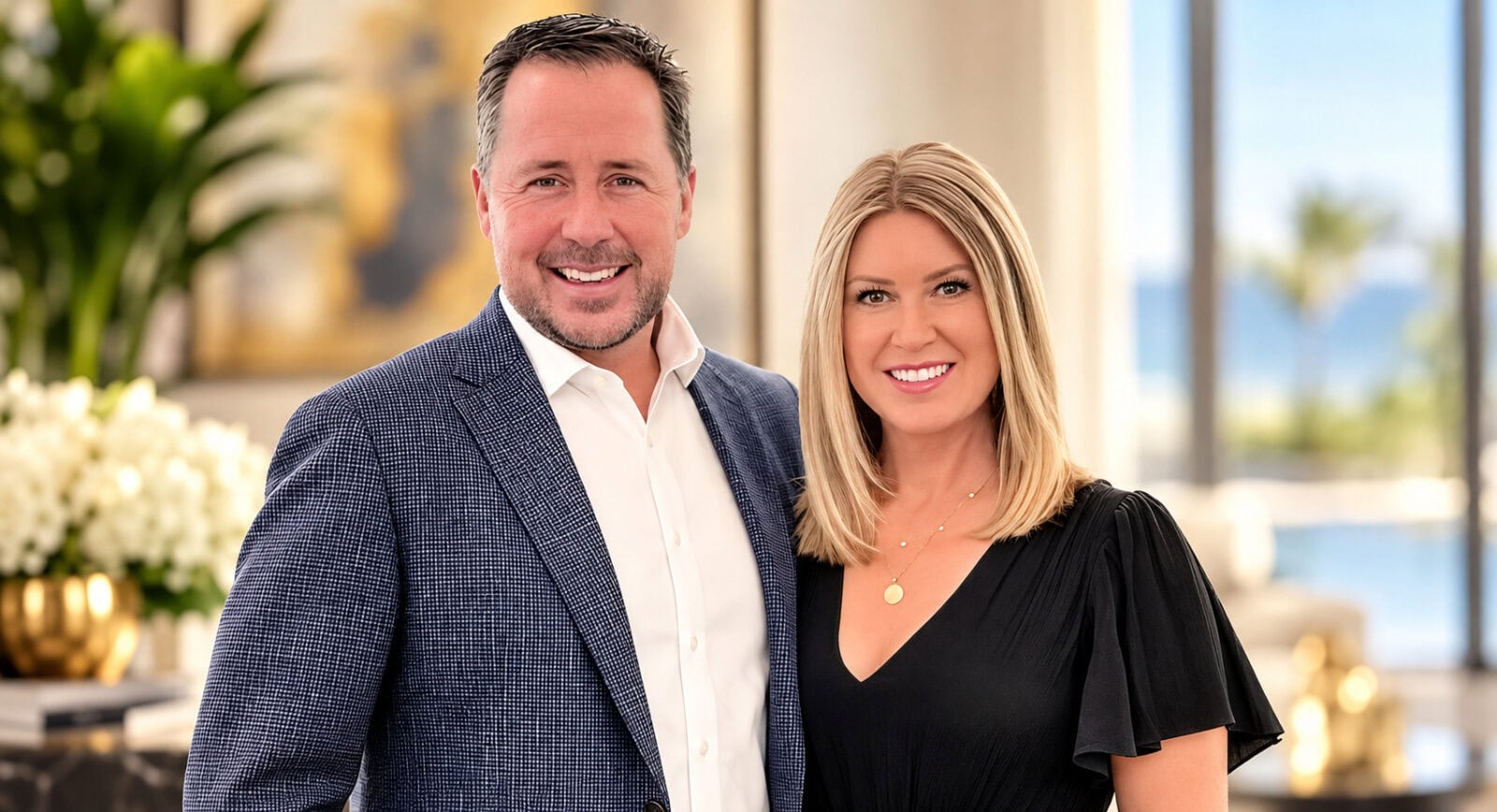
Michael Rees has spent his career buying pieces of other people’s firms. This week he bought something less liquid: time—specifically, the twelve to eighteen months of preparation that now separate a nineteen-year-old from a Wall Street offer letter.
Rees and his wife, Allison, have committed $25 million to Vanderbilt University to establish the Vanderbilt Undergraduate Center for Finance, an initiative anchored at the Owen Graduate School of Management and aimed squarely at undergraduates who want to work in finance and increasingly have to decide that before they can legally rent a car.
The center will fund a professor of the practice at Owen dedicated to undergraduate finance teaching, new coursework aimed at first- and second-year students, a hands-on career seminar covering interviewing and networking, and Career Center advisers stationed in New York City to work employer relationships from inside the market rather than from 900 miles away.
What makes the gift interesting is not the number. Vanderbilt has been swimming in $25 million checks—an anonymous one for a ten-story, 210,000-square-foot science building slated to open in late 2028; another from Jeff and Marieke Rothschild for fellows at the San Francisco campus; $25 million from John and Laura Arnold for the new College of Connected Computing; $30 million from John and Shannon Addison to launch a $300 million engineering campaign; and $75 million from Nvidia’s Jensen Huang and his wife, Lori, for San Francisco.
The university’s Dare to Grow campaign closed on June 30 with $4.5 billion, after a final year that alone brought in $757 million—a 350 percent jump in annual fundraising performance since 2021. Against that backdrop, $25 million is a line item.
What makes it interesting is that it is a gift explicitly designed around a broken clock. Investment banking recruiting has compressed to an absurd degree. Summer analyst applications now open as much as eighteen months before the internship begins, which means the process effectively starts in the winter or spring of sophomore year.
Evercore has pushed its summer analyst application to September of sophomore year for the 2028 cycle. Read that sequence backward, and the implication is brutal: a student who arrives on campus in August without a working vocabulary for discounted cash flows and league tables has, in practical terms, already missed a cycle. Freshman year is now preseason.
The Reeses saw this up close. They are the parents of a current Vanderbilt student, and their inspiration was a specific program—Vandy 2 Wall Street, a Career Center effort run with support from Owen and the Hoogland Undergraduate Business Program that uses immersive treks and employer partnerships to walk undergraduates through finance recruiting.
The program’s pitch to new students tells you about the era: it promises help navigating fall recruiting to land a Summer 2028 internship. The Rees gift takes that scrappy program and gives it a faculty line, a curriculum, a New York address, and a name over the door.
Manhattan logic also shapes the timing. Vanderbilt opened its first campus outside Nashville last month—Vanderbilt University–New York City, in Chelsea, welcoming students starting August 23, after the university formally established the campus in November 2025.
A finance center with advisers based in New York is not an abstraction; it is a beachhead attached to a building. Provost C. Cybele Raver framed it exactly that way, citing “the growing opportunities created by Vanderbilt’s presence in New York.
“Ralph Owen Dean and Tom Steenburgh were blunter about the goal: helping Vanderbilt undergraduates “compete for the most coveted roles on Wall Street and beyond.”
The donors themselves are a study in how quickly modern private-capital money matures into institutional philanthropy. Michael Rees is co-president of Blue Owl Capital, a board member, and head of its GP Strategic Capital platform, the business he built as Dyal Capital. Dyal was a Neuberger Berman unit assembled from the wreckage of Lehman Brothers, where Rees worked from 2001 to 2009 and once ran asset management strategy. He named it for his children, Dylan and Alexia.
Dyal merged with Owl Rock in a 2021 SPAC deal to create Blue Owl, making Rees and his co-executives billionaires; Forbes most recently pegged his net worth at $1.2 billion, with GP Strategic Capital overseeing $66 billion of Blue Owl’s roughly $250 billion. His division also owns stakes in the Phoenix Suns, Sacramento Kings, and Atlanta Hawks.
Notably, neither Rees went to Vanderbilt.
He holds two bachelor’s degrees from the University of Pittsburgh and two master’s degrees from MIT; Allison Rees, a former Bloomberg sales and marketing executive, studied marketing at Penn State.
They live in New Canaan, Connecticut, where she sits on the library’s board, and their giving runs through the Rees Chancellor Scholarship Program at Pitt, Memorial Sloan Kettering’s Geoffrey Canada Center for Cancer Disparities, the Opportunity Network, Northwell Health, and Filling in the Blanks.
Parent money, in other words—the fastest-growing and least-discussed constituency in elite university fundraising—arrives via the Chancellor’s Parent Council rather than an alumni reunion.
And the check comes with a dare.
Vanderbilt’s target for the center is $50 million; the Reeses’ $25 million is the lead gift, and they are openly challenging other donors to match it. “We encourage others who share that vision to join us in making it a reality,” they said.
The uncomfortable question sits just underneath the press release, and no one at the announcement had reason to raise it.
A gift like this is a rational, even generous, response to a recruiting system that has become a race to prepare children earlier—but it is also an investment in winning that race, not slowing it.
Chancellor Daniel Diermeier said the gift would give students what they need to succeed in finance “and, over the course of their careers, to help shape its future.”
Whether the graduates of a purpose-built sophomore-year pipeline grow up to dismantle the timeline that produced them or simply to run it is a return that won’t be measurable for twenty years.