$75 million latest gift: Ken Griffin deepens his commitment to Baptist Health as its new home for brain care breaks ground—announcement follows in the footsteps of his $3 billion donation to Carnegie Mellon University
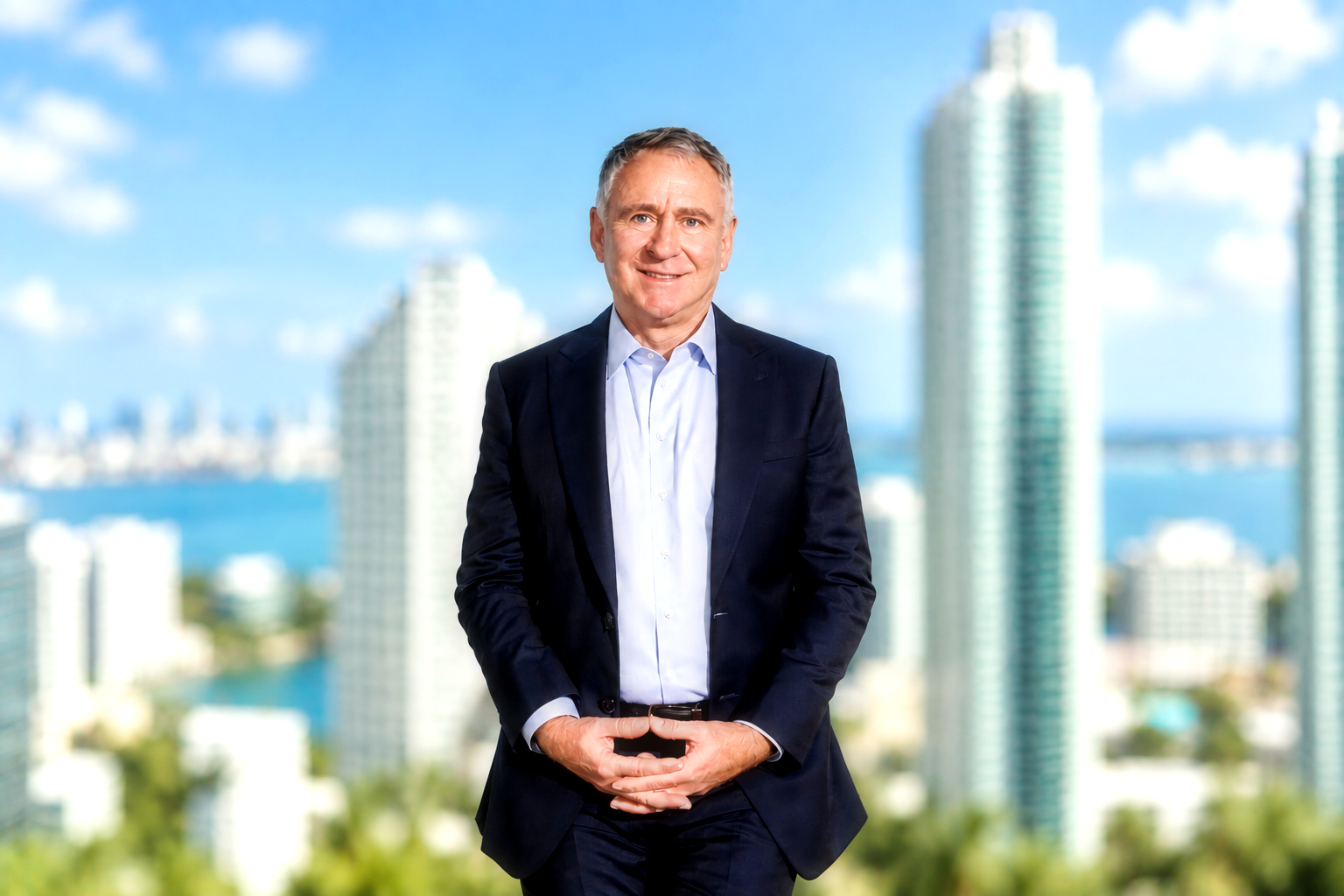
Some philanthropists give and move on. Ken Griffin came back.
Two and a half years after he made the largest gift Baptist Health South Florida had ever received, the Citadel founder has raised his commitment to $75 million.
The news came as construction began on the building his money helped make possible, a 197,000-square-foot home for the Baptist Health Miami Neuroscience Institute on the hospital’s Kendall campus.
The additional $25 million arrives just as the plans become a building site, and it reads as a vote of confidence.
Griffin has watched the project grow from a promise into an excavation, and he decided it deserved more.
The gift was meant to build the Kenneth C. Griffin Center at Miami Neuroscience Institute, a place where neurologists, neurosurgeons, rehabilitation specialists and researchers would work together under one roof.
Griffin explained his reasoning in the plain language of someone who builds institutions for a living. “Baptist plays a key role in Miami,” he said then.
“You cannot have a world-class city without world-class healthcare.” He added a line that has since become his creed for South Florida: “Baptist’s success is Miami’s success.”
The building has grown along with his commitment.
In early 2025, Dr. Michael McDermott, the internationally known neurosurgeon who serves as the institute’s chief medical executive, described a 158,000-square-foot design in progress. It would sit next to Baptist Hospital’s emergency room, across the street from the cancer institute.
The ground floor would hold some of the most advanced radiosurgery equipment anywhere: a ZAP-X system, a Leksell Gamma Knife, and a linear accelerator used only for the spine.
Above it would be space for neurology, neurosurgery, psychiatry, physical medicine and acute rehabilitation.
The building now breaking ground is about 40,000 square feet larger than that early design.
To understand why a hedge-fund titan would put this much into the brain, start with the people in the room on the day of his first gift.
One was Sebastian Krys, a Grammy-winning audio engineer whose career was soaring when he was diagnosed with Parkinson’s disease at 48.
For a while, he got about five good hours a day. Then he came under the care of Dr. Diego Torres-Russotto at Baptist, and he told the audience that he now had “13 or 14 hours a day of my normal self, which meant I could work, meant I could travel, meant I could enjoy my kids, I could go to concerts, I could live my life.” He turned to the donor. “Mr. Griffin, this is life-changing for us,” he said. “I can’t put into words what this means to the communities that deal with neurological diseases.”
The need behind those words is hard to overstate in Miami. Research presented in 2023 found that Miami-Dade County has the highest rate of Alzheimer’s disease in the nation among people 65 and older.
The disease strikes Hispanic and Black residents at higher rates, and together they make up more than 80 percent of the county’s population. Across Florida, roughly 600,000 seniors live with Alzheimer’s.
In a region where so many families have roots in Cuba, Venezuela, Colombia and the wider Caribbean, demand for memory care, movement-disorder treatment and stroke response has reached what hospital officials call an all-time high.
Baptist has been building capacity to meet that demand. The Miami Neuroscience Institute is a Joint Commission Certified Comprehensive Stroke Center. Its epilepsy program holds the highest accreditation level from the National Association of Epilepsy Centers.
Its intraoperative monitoring team was the first in Florida, and one of only 30 in the world, to earn top-tier accreditation. The institute says it is the only facility in the world that offers every major radiosurgery platform. That makes Kendall an unlikely global training ground for the next generation of brain surgeons.
The results show up in individual lives. This spring the Miami Herald told the story of Timothy Sick, a 66-year-old from Fort Lauderdale who had lived with Parkinson’s tremors for more than six years. He and his partner, Sal Zambito, consulted 48 specialists between London and Boston before coming to Baptist for MRI-guided high-intensity focused ultrasound.
The procedure needs no incision, no anesthesia and no implanted device. “I came out of the machine. My hand didn’t quiver at all,” Sick recalled, and the doctor high-fived him. A man who had been lucky to walk 100 yards with a cane had soon walked well over a mile. “I have my purpose in life again,” he said. Dr. Justin Sporrer, the institute’s director of functional neurosurgery, explained that the team first warms the targeted cells without damaging them, briefly switching them off to preview the effect before making it permanent. “It’s a little test drive,” he said.
The new building is meant to make moments like that routine and to move what comes next out of the lab and into the clinic faster. Baptist’s physicians have described a pipeline that includes low-dose whole-brain radiation and focused ultrasound for Alzheimer’s, gene therapy for Parkinson’s delivered directly into the brain, and stem-cell approaches for neurodegenerative disease.
When the first gift was announced, Baptist leaders said Griffin’s support could double or triple the institute’s research capacity and help it recruit and keep top doctors. This year, Baptist said it plans to have more than 90 physicians at the Kendall institute within five years. “The community is hungry for care and hungry for appropriate care,” Dr. Torres-Russotto told the Herald.
Others have followed Griffin’s lead, as McDermott hoped. When he accepted the first gift, McDermott said he hoped it “will inspire others to join us on this journey.” In March, the Elaine and Eduardo Saverin Foundation gave $5 million to create a Parkinson’s disease fund. The new center’s auditorium will carry their name. “We feel deeply privileged to play a small part in building something that can extend beyond any single patient,” Elaine Saverin said. In May, Dr. Herbert Wertheim’s $100 million gift to rename Baptist’s cancer institute set a new record for the system.
Griffin’s gift is part of Power Extraordinary, Baptist Health Foundation’s $600 million campaign, the most ambitious in its history. Alexandra Villoch, who leads the foundation, summed up the shift when the first gift was announced: “The scale of Ken Griffin’s philanthropy is a new level for Miami.”
For Griffin, the Kendall building is one piece of a larger plan. He was born in Daytona Beach and moved Citadel’s headquarters from Chicago to Miami in 2022. Since then he has given in South Florida with a builder’s eye.
He gave $25 million to Nicklaus Children’s Hospital for a surgical tower bearing his name, and $50 million to the University of Miami’s Sylvester Comprehensive Cancer Center for a 12-story research building. Mount Sinai Medical Center, Miami Dade College, the county’s public-school math tutoring program and Success Academy’s expansion into Miami have also received his support.
Just a week before the Baptist news, he pledged $3 billion to Carnegie Mellon University, $2 billion of it to build a 35-acre campus in Wynwood. The university called it the largest individual gift in the history of higher education. He has also given for years to Boston Children’s Hospital, Memorial Sloan Kettering and the Michael J. Fox Foundation’s Parkinson’s research.
Next to a $3 billion university, a $25 million increase for a hospital building can look modest. It may say more about the donor. Raising an earlier commitment as the work begins is something patient investors do when a project has earned more of their confidence. It suggests Griffin sees the Kendall center as a lasting institution, not a one-time ribbon-cutting.
At the 2024 announcement, Griffin talked about the families. “Baptist Health’s incredible team of dedicated doctors and researchers at Miami Neuroscience Institute bring hope and healing to individuals and families, both in our community and from around the world,” he said.
That hope now has a foundation in the ground. In a few years, a grandmother from Hialeah with early memory loss, a musician from Coral Gables living with Parkinson’s, or a father from the Redland struggling to hold a coffee cup may walk into this building, all of them closer to home than they would have dreamed.