
$15 million gift from alumnus Essel W. Bailey Jr. and Menakka Bailey, is one of the most significant philanthropic gifts in local school’s history
Cranbrook Educational Community has received a landmark $15 million gift to transform its 1932 gymnasium-turned-auditorium into a state-of-the-art performing arts center, anchoring a planned $20 million expansion and renovation on its Bloomfield Hills campus.
The project will not only modernize the physical space but also reassert Cranbrook’s historic commitment to arts, design, and community life at a moment when demand for high-caliber student performance venues is surging nationwide.
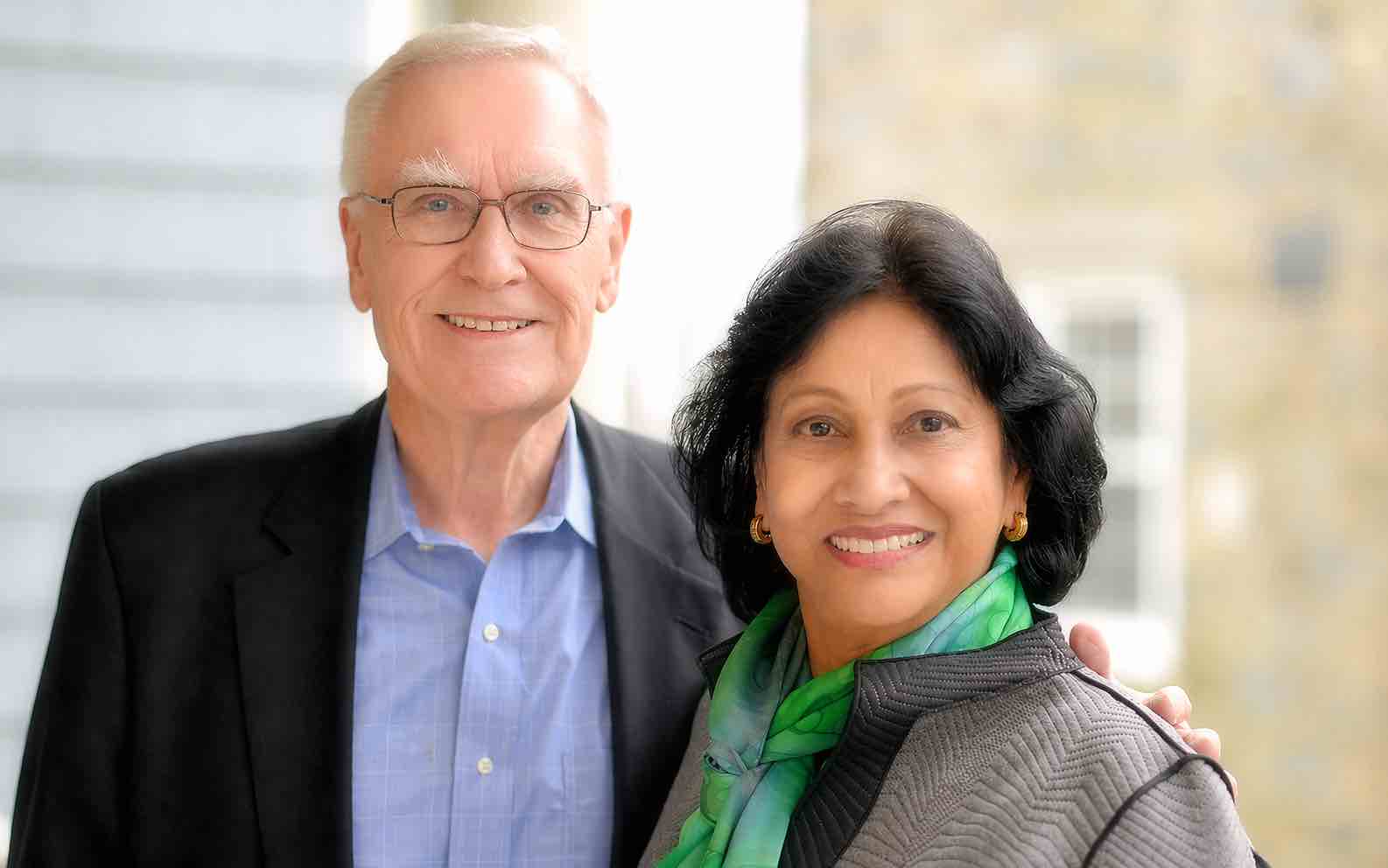
The donation, made by Cranbrook alumnus Essel W. Bailey Jr. and his wife, Menakka Bailey, is one of the most significant philanthropic gifts in the institution’s history.
In recognition of their support, the longtime Performing Arts Center will be renamed The Bailey Center for the Performing Arts, a symbolic shift that links the school’s nearly century-old architectural heritage with a new generation of innovation and performance.
Cranbrook officials describe the gift as “a landmark” in both scale and impact, noting that it permanently endows the center while catalyzing the capital campaign needed to complete the full $20 million project.
The building at the heart of the effort was originally constructed in 1932 as a small gymnasium designed by Finnish-born modernist architect Eliel Saarinen, whose imprint defines much of Cranbrook’s international reputation as a unified campus of art, architecture, and landscape. Over time, the gym evolved into the Cranbrook Schools Performing Arts Center, a workhorse venue that hosted assemblies, concerts, plays, and community gatherings but retained much of its original athletic DNA in both layout and infrastructure.
While the space has long been beloved for its history and centrality to student life, aging systems, dated acoustics, constrained backstage areas, and undersized gathering spaces increasingly limited its potential as a true 21st-century performance hub.
Under the new plan, Cranbrook will pursue a comprehensive expansion and renovation designed to fully convert the former gym into a modern performing arts facility while carefully preserving Saarinen’s architectural character. The project will deliver world-class acoustics, an orchestra pit, state-of-the-art stage technology, and a reimagined lobby, aligning the building with the expectations of contemporary performers, audiences, and technical crews. Expanded gathering areas and circulation spaces are also central to the design brief, positioning the center as an everyday crossroads for students, faculty, families, and visitors rather than a venue that comes alive only on performance nights.
Current planning work fits into a broader master plan update for the Cranbrook Educational Community, where Boston-based firm Utile has been engaged to program several key buildings, including a performing arts center, innovation center, visitor center, and field house.
That master plan effort is explicitly focused on balancing new construction and renovations with Cranbrook’s distinctive topography, historic architecture, and landscape, ensuring that any intervention—especially in a signature building such as the 1932 gym—respects the original Saarinen vision.
Within that framework, the Bailey Center project is emerging as a touchstone for how the campus can modernize while retaining its identity as a living work of art and education.
Cranbrook leaders say the Bailey gift builds on a recent pattern of transformative philanthropy aimed at reinforcing the institution’s dual role as a premier educational community and a nationally recognized center for art and design.
In 2021, Cranbrook Academy of Art announced a $30 million gift from Jennifer and Dan Gilbert to support diversity, equity, inclusion, and long-term fiscal sustainability—at the time, the largest single gift since the community’s founding in 1904 and one of the largest ever to a graduate art program in the United States. Together, the Gilbert and Bailey commitments signal a widening circle of high-net-worth donors who view Cranbrook as a strategic platform for shaping the future of arts education and cultural leadership.
The Bailey Center for the Performing Arts is envisioned as both a pedagogical engine and a community living room, providing a daily platform for student collaboration, interdisciplinary projects, and public programming. School officials emphasize that improved acoustics and stage technology will allow Cranbrook ensembles—from choirs and bands to theater productions and student-led performances—to work at a level previously out of reach, enabling more complex repertoires, professional-grade lighting and sound design, and more ambitious staging.
The enhanced lobby and gathering areas are expected to double as informal learning spaces, exhibition zones, and reception venues for events that connect Cranbrook’s schools, art museum, and graduate academy.
For Cranbrook’s students, the renovation promises more than a cosmetic upgrade; it redefines what it means to train and perform within a historic independent school setting.
Rather than rehearsing and showcasing their work in a retrofitted gym, future performers will occupy a purpose-built environment aligned with collegiate and professional performance standards, potentially easing the transition for graduates heading to conservatories, theater programs, or arts-focused universities.
Faculty and administrators also see the project as a recruiting lever, allowing Cranbrook to attract students and teachers who are increasingly weighing facilities and creative infrastructure as core factors in their educational decision-making.
At a systems level, the modernization will address aging infrastructure that has challenged Cranbrook’s ability to fully utilize the building. Updated mechanical, lighting, and audiovisual systems are expected to improve energy efficiency and reliability, while new backstage, storage, and support spaces will streamline production logistics and reduce the friction of hosting multiple events in rapid succession.
These changes, while technical, have an outsized impact on the student experience, reducing setup time, enhancing safety, and allowing crews and performers to focus on craft rather than workarounds.
The project also reinforces Cranbrook’s identity as a cultural anchor for the broader Detroit metro region. With its art museum, graduate Academy of Art, and architecturally significant campus, Cranbrook has long attracted artists, designers, and educators from across the country; the new Bailey Center is expected to amplify that draw by providing a more compelling stage for guest artists, visiting ensembles, lectures, and community events.
The renovated center could host everything from student showcases and regional festivals to donor gatherings and cross-institutional collaborations, further weaving Cranbrook into the region’s cultural fabric.
Cranbrook Educational Community, headquartered at PO Box 801 in Bloomfield Hills, Michigan, serves a constellation of schools and cultural institutions that share a 319-acre campus. Founded in the early 20th century by newspaper magnate George Gough Booth and his wife, Ellen Scripps Booth, Cranbrook has been recognized as a National Historic Landmark and is frequently cited as one of the most important works of integrated educational planning and design in the United States.
The 1932 gym—soon to become the Bailey Center for the Performing Arts—sits within this carefully choreographed environment of buildings, courtyards, and landscapes, magnifying the stakes of any major intervention.
In that context, the decision to invest heavily in a former gymnasium speaks to a larger philosophical stance: that historic educational spaces can evolve with new technologies and uses without surrendering their architectural soul.
By choosing to restore, expand, and endow rather than raze and rebuild, the Bailey gift positions Cranbrook as a case study in how legacy campuses can adapt to contemporary arts education needs in a way that is both fiscally ambitious and historically sensitive.
For alumni and current families, the project offers something both familiar and new—a once-humble gym reimagined as a flagship stage for creativity, performance, and community life for decades to come.