$75 million to heal the human–animal bond: billionaires Kathy and Ken Hao’s transformative gift to university for pets, families and veterinarians
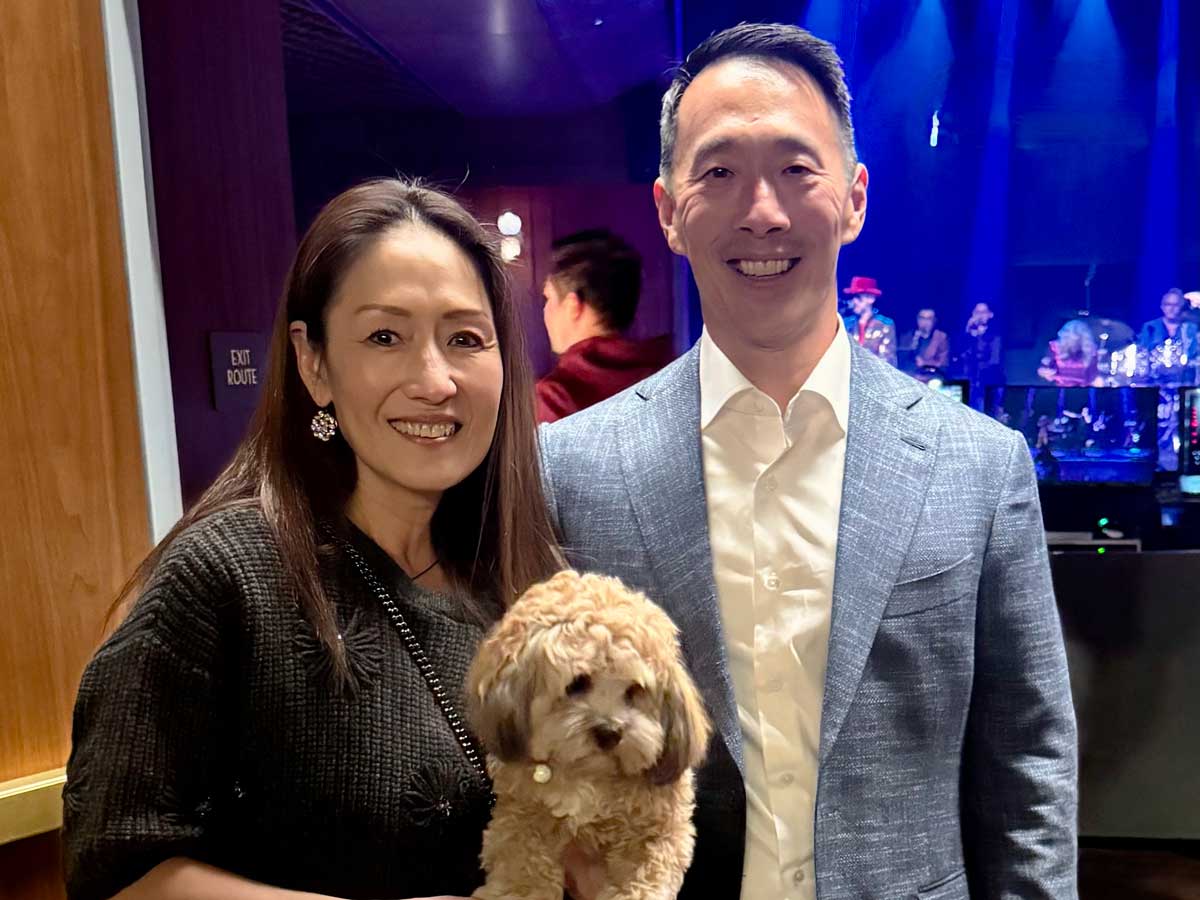
On a fog-softened stretch of the Northern California coast, Kathy Chiao and Ken Hao learned early how much a single animal can matter to a family.
They have spoken about the “magic of the Northern California coastline” and its marine life as part of the backdrop of their own story, a landscape where seals and sea lions were not abstractions but neighbors—and where the line between environmental beauty and human responsibility felt very thin.
That sensibility, nurtured over years of quiet giving to animal and marine causes, now sits at the heart of one of the most consequential gifts ever made to veterinary medicine.
Their $75 million commitment to the UC Davis Weill School of Veterinary Medicine is, on paper, a transformational capital and programmatic investment. In person, people who work with them describe something more intimate: a couple who see veterinarians as “true everyday heroes” and view the bond between families and their animals as a serious responsibility, not a sentimental footnote.
“We deeply value the advancement of healthcare for every type of animal,” they said, emphasizing that they consider veterinary and human life sciences “increasingly interconnected and mutually reinforcing.”
Coming from a family that has already backed marine mammal rescue and rehabilitation, that language reads less like a fashionable One Health slogan and more like the next chapter of a long-running personal narrative.
In the rarefied world of global technology investing, Ken Hao is best known as the chairman and managing partner of Silver Lake, the Silicon Valley firm that has shaped the trajectory of some of the world’s most influential tech companies.
Estimates peg Hao’s net worth at about $2.5 billion, but inside the couple’s circle, the more telling number is the hours he has spent in boardrooms of academic medical centers, listening to physicians and scientists describe the distance between a promising idea and a therapy that actually reaches patients.
As vice chair of the UCSF Board of Directors and co-chair of the UCSF Health Executive Council, Hao has watched philanthropy close that gap—underwriting high-risk research, seeding new clinical programs, and recruiting the talent that defines a great hospital.
It’s no accident that when he and Chiao turned to veterinary medicine, they chose a school that operates as much like a teaching hospital as a campus, and they structured their gift to touch every layer of that ecosystem.
Chiao, who tends to stay out of the financial press, is the quieter presence in public but a driving force in the couple’s philanthropic focus on animals, coastlines, and health. Her name appears alongside Hao’s on support for the Marine Mammal Center, where the family helped underwrite significant renovations and spoke of wanting to inspire young people “to take action now to ensure future generations enjoy the magic of our coastline and our amazing marine mammals.”
That same impulse toward stewardship—thinking in generations rather than grant cycles—suffuses the UC Davis commitment. Rather than a single building, they are investing in an entire continuum: from the student who chooses veterinary school but worries about debt to the family agonizing over an unaffordable surgery for a beloved dog to the researcher chasing a discovery that might one day help both animals and humans.
Their UC Davis gift will place their names on a new small-animal hospital scheduled to open in 2030, a state-of-the-art facility expected to treat up to 25,000 additional animals each year across oncology, orthopedics, cardiology, neurology, and more.
Naming rights are the visible part—the photo backdrop, the future inscription on the façade—but those close to the project say what thrilled the couple was not the lettering on the building; it was the idea of a place where a young veterinarian might diagnose a cancer in a golden retriever that leads, unexpectedly, to a new option for a human patient.
UC Davis has already shown how that leap can happen, from stem-cell approaches to spina bifida, which moved from puppies to human fetuses, to joint work with human medical centers on cancers seen in cats and people. For Chiao and Hao—steeped in innovation culture and trained to look for leverage points—veterinary medicine offered a rare kind of multiple: one investment, two species’ worth of impact.
But if the new hospital is their most visible legacy in Davis, the less visible one may be the lives that never make it into a press release. A significant slice of the $75 million is earmarked for those who simply cannot afford care for their animals—the student-led clinics in rural and inner-city communities, the compassionate care funds that step in when a pet’s only other option is surrender or euthanasia, and the shelter medicine programs that stabilize animals on the edge of being adoptable.
University officials are candid that these operations survive on philanthropy, and the couple was equally clear that they wanted their gift to touch that side of the story, too. In practice, it means that a single mother bringing in an aging cat, or a farmworker arriving with an injured dog, will feel the effect of a billionaire couple they will never meet, in the form of a reduced bill, an approved surgery, a life saved.
Inside the vet school, their commitment is also a vote of confidence in the next generation. UC Davis plans to grow its veterinary enrollment in the coming years, and Chiao and Hao’s gift will expand scholarships and fellowships so that graduates can choose careers based on calling rather than on loan statements. Dean Mark D. Stetter put it simply: the gift will allow students to “graduate with the freedom of choice in their paths and go on to help our world.”
For a couple who have spent their careers navigating complex financial structures, there is a certain symmetry in choosing to pay down not just buildings but constraints—giving young veterinarians the ability to say yes to research, rural practice, public health, or shelter medicine without being pulled inexorably toward the highest-paying specialty.
The timing of their philanthropy also tells its own story. Earlier this year, Joan and Sanford I. Weill, who were prominently featured for over 30 years in Lifestyles Magazine/Meaningful Influence among the most seasoned philanthropists in American finance, committed $120 million to UC Davis veterinary medicine—the largest gift to the field anywhere in the world and the naming gift for the school itself.
Chiao and Hao are not trying to replicate the Weills’ decades-long public philanthropic persona; instead, they are stepping into a newly defined space that the Weills helped illuminate.
If the Weill gift announced that veterinary medicine belongs in the same conversation as big-ticket gifts to law or business schools, the Chiao–Hao gift suggests that a new generation of tech and coastal philanthropists is ready to make the field its own.
Their broader philanthropy underscores that evolution. Beyond UC Davis and UCSF, their names surface in credits for documentary programming and environmental storytelling, in support for nature and science initiatives that blend education, conservation, and narrative.
It is the philanthropic profile of a couple who understand that stories move people—whether the protagonist is an orphaned elephant calf in Kenya, a marine mammal off the Marin headlands, or a family pet on an exam table in Northern California. In that sense, their UC Davis gift is not just a bet on medicine; it is a bet on the human–animal bond as one of the defining emotional relationships of modern life, worth protecting with the same seriousness we reserve for our own health.
For UC Davis Chancellor Gary S. May, the pair are now woven into the university’s own story arc. “Some of the brightest chapters in our university’s history have come when we partner with those who share our vision for a better world,” he said, calling their philanthropy transformative for both animal care and human health.
In a school that just marked 75 years and is now reimagining its Veterinary Medical Complex as a $750 million global hub, the Chiao and Hao name will become part of the shorthand for that transformation—on donor walls, in alumni anecdotes, and in the quiet pride of students who train in a hospital their generosity built.
For Chiao and Hao themselves, the return will arrive in subtler ways: in the knowledge that somewhere, a young veterinarian is saying “yes” to a career that once seemed financially out of reach, and a family is walking out of an exam room with their animal on a leash instead of in their memory.