
$55 million new commitment from Nancy and Rich Kinder—following $900 million in their giving to date—anchors data‑driven hometown impact as couple continues to give away 95% of their $11 billion fortune
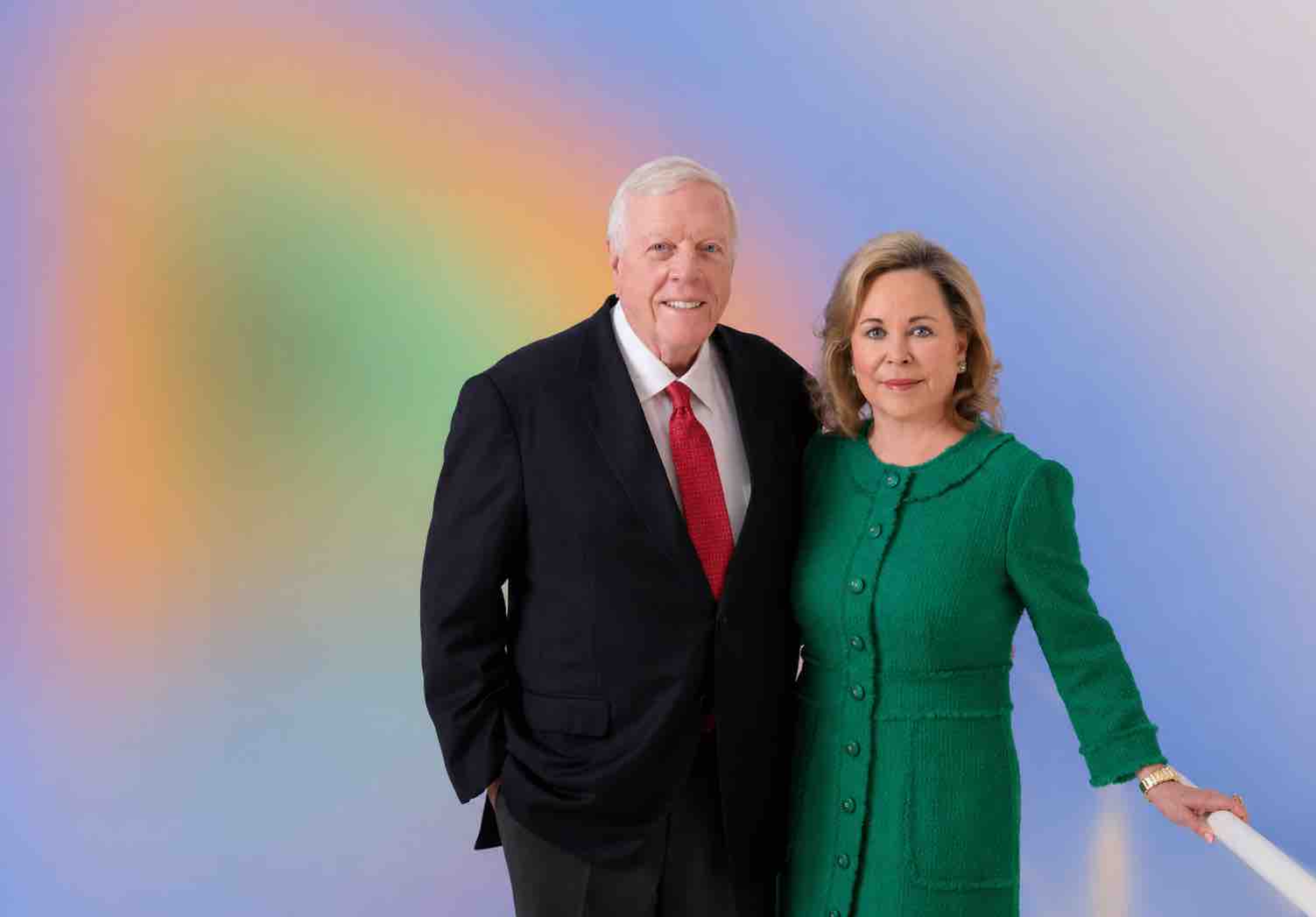
Rice University’s Kinder Institute for Urban Research has secured a transformational $55 million commitment from the Nancy and Rich Kinder Foundation, a gift that effectively guarantees the institute’s future and dramatically expands its ability to turn rigorous data into tangible improvements in the lives of Houstonians.
Of the total, $50 million will be dedicated to the institute’s endowment, creating a permanent source of funding for core operations and long‑horizon research, while $5 million will support immediate programmatic needs and high‑impact projects in the community.
For director Ruth López Turley, this is not just a generous contribution; it is a powerful vote of confidence in the institute’s model of pairing sophisticated urban data with on‑the‑ground partnerships to address issues such as housing, transportation, education, health, and neighborhood opportunity in one of the country’s most diverse metropolitan regions.
Under López Turley’s leadership, the Kinder Institute has become a trusted civic engine, producing research that city officials, school districts, nonprofit leaders, and business groups rely on when they are making consequential decisions about Houston’s future.
The institute’s work ranges from longitudinal survey efforts that track the region’s evolving demographics and attitudes to collaborative studies that help school systems understand student outcomes to analyses that guide investments in parks, infrastructure, and public services.
A hallmark of its approach is that research is rarely produced in isolation: projects are co‑designed with the public agencies and community organizations that will ultimately use the findings, which helps ensure that data is not just published but put to work. With expanded endowment support behind it, the institute can deepen this model, move more quickly when crises arise, and sustain long‑term initiatives that require continuity rather than short bursts of grant funding.
The structure of the gift is as notable as its size.
By endowing the Kinder Institute at this level, the Kinders are effectively institutionalizing data‑driven problem‑solving as a permanent part of Houston’s civic infrastructure. The additional $5 million in flexible program dollars gives López Turley and her team room to respond to urgent needs—whether that is analyzing the impact of a storm, tracking the recovery of vulnerable neighborhoods, or rapidly assessing new policy proposals—without waiting for a new funding campaign.
This balance between long‑term security and short‑term agility is exactly what many research organizations lack, and it positions the Kinder Institute to serve as a steady, nonpartisan resource in a city that must continually navigate growth, inequality, climate risk, and demographic change.
This latest commitment also has to be seen in the context of Nancy and Rich Kinder’s broader philanthropic arc. Through the Kinder Foundation, established in 1997, the couple has focused their giving on three major pillars in the Houston region: urban green space, education, and quality of life.
Over decades, that strategy has translated into hundreds of millions of dollars committed to transformative projects that ordinary Houstonians can see and feel: the redevelopment of signature parks and bayou greenways, major support for cultural institutions, and large investments in educational and research initiatives such as the Kinder Institute at Rice.
Their approach has consistently favored bold, catalytic gifts that unlock larger public and private investments, rather than small, diffuse contributions, and Houston’s landscape bears the imprint of that philosophy from its trails and parks to its museums and university campuses.
The scale of their philanthropy is inseparable from the scale of their fortune.
Estimates place Nancy and Rich Kinder’s wealth at around $11 billion, making them among the wealthiest couples in Houston and underscoring the magnitude of their choice to use that capital for public benefit rather than private accumulation.
They have publicly committed to giving away about 95% of their net worth, a pledge that turns an approximately eleven‑billion‑dollar balance sheet into a long‑term civic project: significant resources deployed during their lifetimes through major gifts like the Kinder Institute endowment, with the remainder designated for the Kinder Foundation to distribute to aligned causes over time. In this light, the $55 million gift to Rice is not an outlier but a representative expression of their intent to convert exceptional wealth into durable, local impact.
The relationship between the Kinders and the Kinder Institute is therefore both strategic and deeply personal. Since the institute’s creation, Kinder Foundation support has underwritten its growth from a promising research center into a nationally recognized hub for urban data and public policy thinking in the Sun Belt.
Earlier major commitments laid the groundwork: supporting the institute’s physical home, funding flagship survey work, and backing expansions into new areas of urban research.
The new $55 million gift takes that partnership into a new phase, essentially securing the institute’s financial backbone so that López Turley and future directors can focus on substance rather than survival.
For the Kinders, it ensures that their name is attached not only to buildings and green spaces but also to the ongoing production of knowledge that can help Houston confront its toughest challenges.
Ultimately, this is a story about alignment: between a couple whose ultimate philanthropic goal is to deploy the vast majority of their considerable fortune for public benefit and an institute whose mission is to use evidence to create “prosperity for all” in the city they share.
The Kinder Foundation’s latest commitment offers the Kinder Institute the stability and independence required to be a durable civic asset—one that can stay above politics, operate over decades, and consistently translate data into action.
And for Nancy and Rich Kinder, it represents another carefully chosen, deeply local investment in a Houston where opportunity is more widely shared, decisions are better informed, and the public realm—from its parks and bayous to its schools and research institutions—bears witness to their belief that great private wealth carries with it a responsibility to serve the common good.