
$22 million Sorenson gift gives impetus to $50 million facility channeling private philanthropy into a purpose‑built home where clinicians, engineers, and entrepreneurs will work side by side
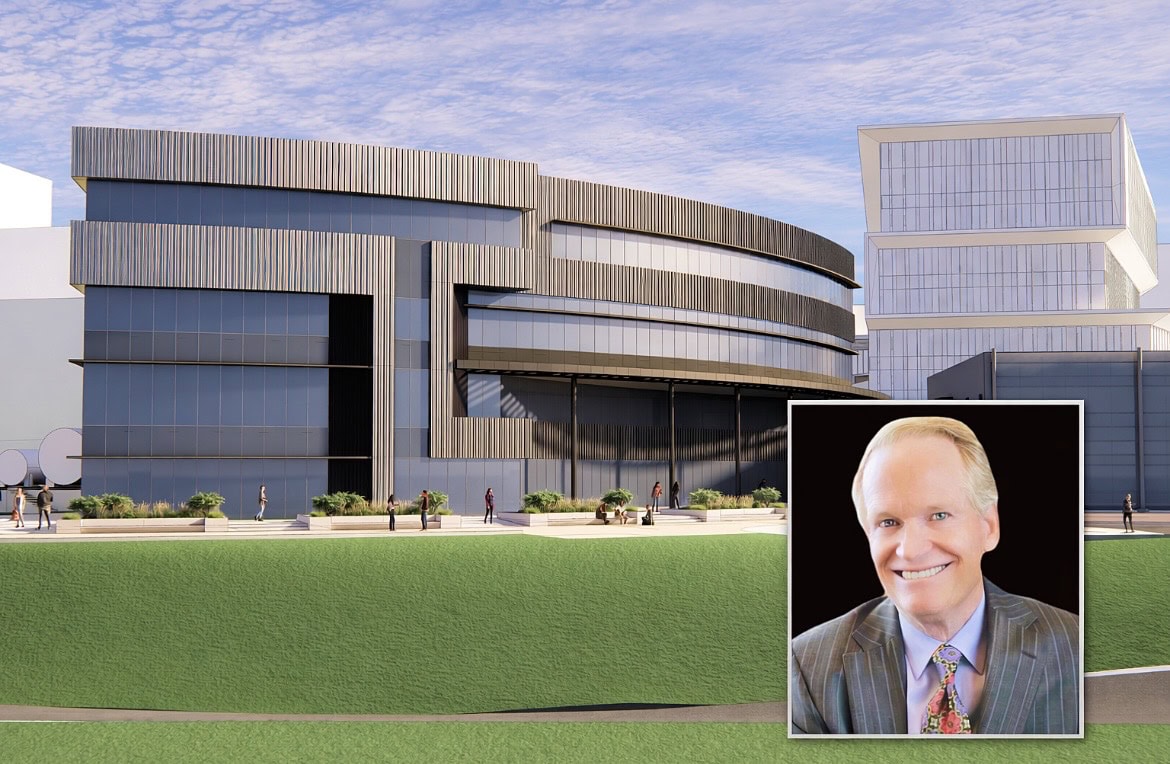
University of Utah Health’s dedication of the James LeVoy Sorenson Center for Medical Innovation is, above all, a story about people—an inventor‑patriarch whose ideas reshaped modern medicine, a family foundation deploying its capital to keep that spirit alive, and a cadre of academic and industry leaders intent on turning Utah into one of the country’s most dynamic medtech corridors.
The $50 million facility, anchored by a $22 million lead gift from the Sorenson Legacy Foundation, formalizes a decades‑long relationship between the Sorenson family and the University of Utah, channeling private philanthropy into a purpose‑built home where clinicians, engineers, and entrepreneurs are expected to live side by side with the technology they are trying to push into operating rooms and clinics.
The center’s namesake, James LeVoy Sorenson, epitomized the archetype of the restless medical inventor long before startup culture made that role fashionable. Born in 1921 and raised during the Great Depression, he left a traditional pre‑med path and instead wove his way through real estate and early business ventures before discovering his niche in medical devices.
That unorthodox trajectory informed a lifelong belief that formal credentials mattered less than an ability to see around corners and an obsession with solving real clinical problems. Over the course of his career, he amassed dozens of patents and helped develop technologies that quietly became ubiquitous: among them, the disposable surgical face mask and single‑use intravenous catheter, innovations so ingrained in modern care that most patients never consider that someone had to invent them.
Colleagues and biographers have described Sorenson as far more comfortable on the factory floor and in R&D labs than in boardrooms, a leader who preferred to prod engineers and clinicians through rapid prototyping cycles and hands‑on testing rather than long strategic memos.
That personality—impatient, experimentally minded, and deeply pragmatic—is effectively being enshrined in architecture through the new center. Its advanced prototyping spaces and ISO‑8 clean room are laid out as workhorse environments where teams can iterate on devices in real time, while the ASCENT surgical lab offers a bio‑tissue surgical suite designed for physicians and trainees to trial, critique, and refine technologies under conditions as close to real surgery as possible. In many ways, it is the kind of environment Sorenson himself would have gravitated toward: an integrated path from idea to prototype to clinical feedback loop, housed in one building rather than spread across far‑flung departments and industrial parks.
The Sorenson Legacy Foundation, founded by James and Beverley Taylor Sorenson, continues their philanthropic work today.
While James became known for healthcare and technology, Beverley carved out her own reputation as one of Utah’s most influential arts and education philanthropists, particularly around classroom‑based arts integration.
Together, they designed a foundation structure meant to survive them: family‑guided, professionally managed, and focused on a handful of areas—education, health, innovation, and community—where relatively large bets could catalyze public and private follow‑on funding rather than simply name buildings.
In recent years, that strategy has been translated into substantial, multi‑year commitments to Utah institutions, including earlier gifts that underwrote innovation centers and student success initiatives bearing the Sorenson name.
In the case of the James LeVoy Sorenson Center for Medical Innovation, the foundation’s $22 million gift is less a one‑off gesture than the latest expression of a long‑running thesis: that Utah’s mix of research universities, clinical systems, and entrepreneurial culture can, with the right infrastructure, compete with coastal tech and life science hubs.
Family members and foundation leaders, by backing a facility with wet labs, clean‑room capacity, and incubator bays all under one roof, are effectively betting that the next generation of Sorenson‑like inventors will come from interdisciplinary student teams and young physicians, not just lone tinkerers in garages. Their philanthropy is creating the physical and financial conditions in which those people can take risks—exactly the kind of “platform building” James favored late in his life.
At the core of this philanthropic effort are a set of institutional leaders who will determine how fully the center’s promise is realized. Bob Carter, MD, PhD, now leading University of Utah Health, has emerged as one of the key stewards of the Sorenson vision on the clinical side.
His public framing of the building as a “catalyst for the future of patient care” reflects a deliberate strategy: compress the distance between the exam room and the engineering bench, and insist that physicians and scientists occupy the same problem‑solving space as entrepreneurs and students.
Carter’s background in both medicine and research gives him credibility with faculty who might otherwise see commercialization as peripheral, and he has been positioning the center as a translational engine in which clinical insight feeds directly into new devices, software, and procedures that can be tested and refined rapidly.
On the university’s academic and economic development front, President Taylor Randall has been the other central personality behind the project. A former business school dean, Randall has spent much of his presidency arguing that the University of Utah must act as a primary driver of the state’s innovation economy, not merely a supplier of talent.
He has seized on the Sorenson Center as a visible exemplar of that agenda, highlighting its potential to convert faculty research into startup activity, attract federal and industry partnerships, and keep Utah‑trained founders rooted in the state rather than decamping to more established coastal ecosystems. Randall’s public comments around the dedication underscore a particular philosophy: that philanthropy’s highest use on campus is not just to expand square footage, but to underwrite spaces where disciplines collide and ideas are pulled through to market faster.
On the industry side, another individual whose fingerprints are all over the center’s story is Kelvyn Cullimore, CEO of BioUtah, the state’s life sciences trade association. A veteran medtech executive and former mayor, Cullimore has long served as a bridge between Utah’s device manufacturers, biotech firms, and policymakers.
His support for the Sorenson Center has been rooted in a practical reading of what Utah’s medtech community lacks: an accessible, specialized space where early‑stage companies can prototype under stringent conditions, test with clinicians, and avoid the cost and disruption of leaving the state to reach that next level.
His characterization of the facility as a “transformative milestone” for the life sciences ecosystem speaks to more than boosterism—it reflects the hope that BioUtah’s members will now have a place to mentor student teams, co‑develop technologies with faculty, and plug into a pipeline of investable startups without having to build that infrastructure themselves.
Inside the building, another set of protagonists is just beginning to emerge: the founders and teams behind the inaugural companies taking up incubator space. Startups such as Australis Scientific, Fusetec Advanced Surgical Training, Purgo Scientific, Bloom Surgical, Microvascular Therapeutics, and Medicell Healthcare are bringing a mix of surgical training technologies, infection‑control tools, and vascular innovations into the facility’s bays.
For their leaders—many of whom are juggling the demands of early‑stage R&D, regulatory navigation, and fundraising—the real appeal of the center lies less in prestige than in proximity.
They will have access to prototyping tools down the hall, clinicians and faculty who can serve as design partners and early adopters, and a steady stream of students who might become interns or early hires.
Over time, the careers of these founders—and whether they choose to stay and build in Utah—will be one of the more concrete measures of whether the Sorenson family’s investment is paying off in human capital as well as intellectual property.
Even those whose roles are more fleeting are part of this narrative of people powering a place. Construction executives at Jacobsen Construction and leaders of its 60‑strong subcontractor cohort had to choreograph steel, concrete, and heavy equipment around an active hospital, maintaining continuous access routes while assembling the building’s 347 tons of steel and more than 2,200 cubic yards of concrete.
For the architects and builders, the project was less about producing a showpiece and more about solving a complex logistical puzzle in service of a long‑term vision shared by philanthropists and university leaders. Their work, like that of the donors and executives now cutting ribbons, is an essential but often overlooked chapter in how a concept—Utah as a national medtech leader—becomes brick, mortar, glass, and, ultimately, a working culture.
Taken together, the dedication of the James LeVoy Sorenson Center for Medical Innovation reads less like a single‑day event and more like a generational handoff.
The original inventor‑patriarch is gone, but the values he championed—hands‑on experimentation, pragmatic problem‑solving, and a willingness to place bold bets on local talent—are being interpreted and updated by his family, by university administrators such as Carter and Randall, by industry conveners like Cullimore, and by a new wave of founders setting up shop inside the building’s incubator bays.
Their collective challenge now is to ensure that the center lives up to its namesake not only in the number of patents and companies it produces, but in the way it shapes the character and careers of the people working within it.