
$84 million gift from Alexandra and Julian Burt: a low-key family fortune speaks up for nature
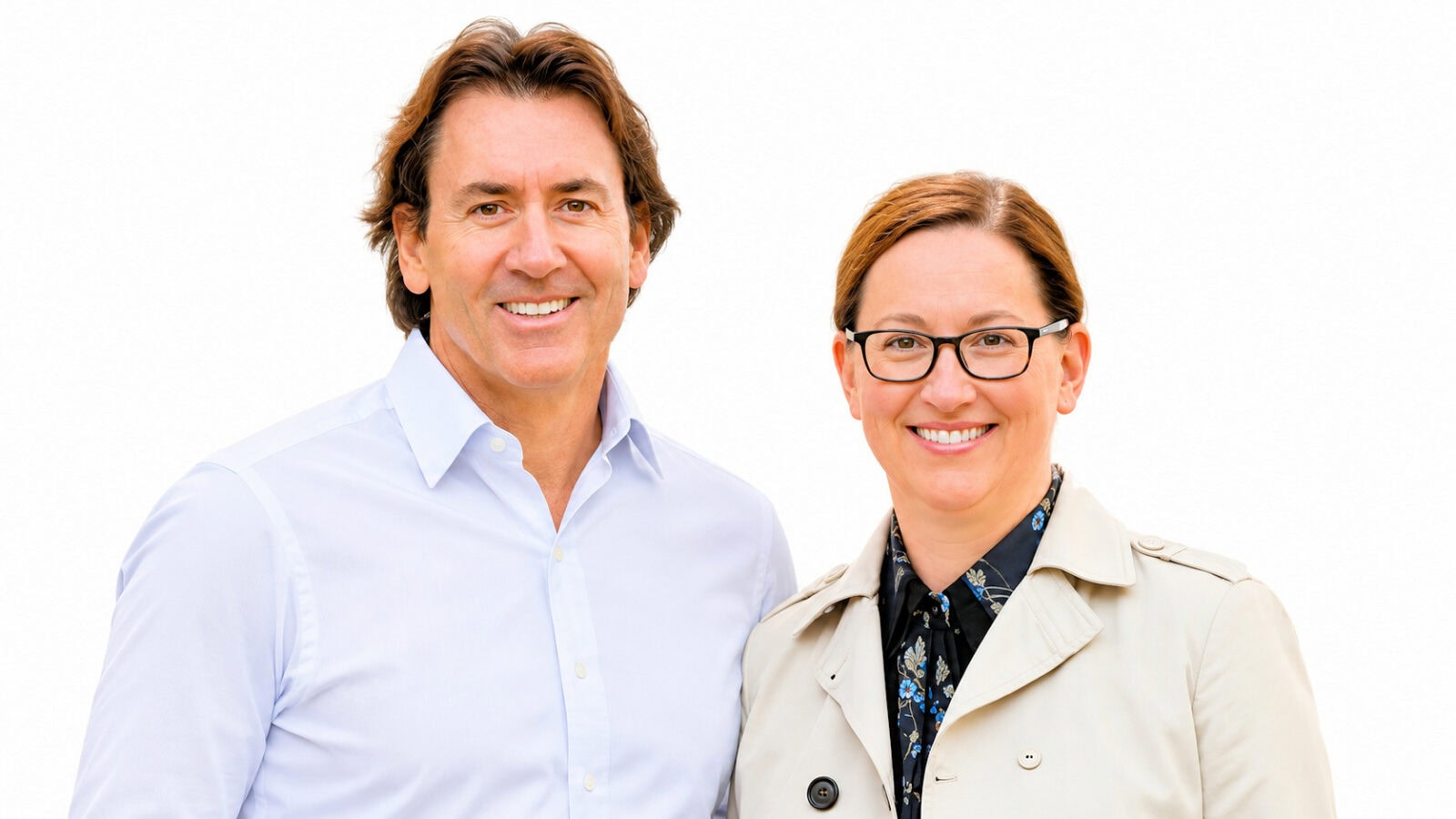
Alexandra Burt grew up with one of Australia’s great fortunes, and she has spent most of her life quietly giving parts of it away.
Most recently, that changed.
Burt and her husband, Julian, said they are giving more than $84 million to 10 conservation and environmental organizations.
People in the field are calling it one of the largest gifts to nature in Australian history.
The couple will distribute all the money through the Wright Burt Foundation before the end of the year.
The couple rarely talk about their giving.
“We both prefer not to draw too much attention to ourselves,” Julian Burt said.
They are speaking now because they want to be heard. In a recorded statement, Alexandra Burt said she hoped the gift would push others in philanthropy, business, and government to look at where they could do more for the environment.
“All our efforts, including those of philanthropy, business, government, and the broader community, need to increase to reverse this decline,” she said.
The gift is spread widely, but it is not spread evenly.
The Australian Wildlife Conservancy, Bush Heritage Australia and Greenpeace will each receive about US$17.5 million.
BirdLife Australia and the Great Southern Land Conservancy, a new group led by Atticus Fleming, a former head of the New South Wales National Parks and Wildlife Service, will each receive about US$7 million. Aussie Ark, Conservation Partners, the Great Barrier Reef Foundation, Rainforest Rescue, and the South Endeavor Trust will each receive about $3.7 million.
Julian Burt said the foundation reviewed each group and its leaders long before the announcement.
He said each grant reflected the organization’s size and how quickly it could put the money to work.
The money will reach places most Americans have never seen.
BirdLife Australia will use its share to try to save the kyloring, or western ground parrot.
About 150 of these birds, most of the species that remain, live in one national park on Western Australia’s south coast.
Rainforest Rescue called the gift the largest in its 27-year history and will put most of it toward the Daintree floodplain, a rainforest. Julian Burt notes it is about 180 million years old, older than the Amazon.
The Australian Wildlife Conservancy says its share will help it buy new sanctuaries and expand its work to protect threatened species.
The gift also has a clear American connection.
Three of the largest recipients raise money in the United States through tax-exempt affiliates.
Australian Wildlife Conservancy USA is based in New York.
Friends of the Australian Bush Heritage Fund is based in California and links American donors to Bush Heritage’s land purchases.
Great Barrier Reef Foundation USA is based in Washington.
Each one gives American donors a tax-deductible way to support the same work the Burts are funding.
Claire O’Rourke, who leads the Australian Environmental Grantmakers Network, said Australians give less to charity overall than Americans do, but give a larger share of it to the environment.
The Burts’ gift shows that pattern on a very large scale.
Alexandra Burt’s love of the land did not start in a boardroom.
Her husband remembers that, after she inherited the family winery, Voyager Estate in Margaret River, she pushed through major sustainability changes there, eventually bringing the vineyards to organic certification.
The couple later bought Bullo River Station, a 400,000-acre cattle property in the Northern Territory.
In 2019 they made it the first cattle station in Australia to partner with the Australian Wildlife Conservancy.
Today about 350,000 acres of Bullo are managed for conservation.
Surveys there have recorded 395 species, including rare scaly-tailed possums and ghost bats, and land that had been damaged is recovering.
Julian Burt’s love of nature started early.
“My parents would attest that’s been a passion for me since I was six years old,” he said.
“I kept ant farms and raised pigeons when I was eight and kept redback spiders in jars.” Put more simply: “We just have a lot of passion for bark and leaves.”
The new gift is a sharp increase in giving that has gone on for years.
The Burts started the Wright Burt Foundation in 2009.
Until now, it has given mostly to the arts, heritage, education, and the church in Western Australia.
For 18 years, Alexandra Burt served as the West Australian Ballet’s first Patron of Private Giving, a role created for her.
She and Julian gave the company’s endowment about $2.1 million, much of it as a matching gift to bring in other donors.
They gave about $175,000 to stage a new “Swan Lake” and have provided long-term funding for the dancers’ health program.
They were also founding patrons of the National Gallery of Australia’s National Sculpture Garden campaign, and they have supported Co3 Contemporary Dance, the King’s Trust, and the conservation of the Burt family papers held by the Law Society of Western Australia.
The foundation is a private fund that does not publish its full grant history.
Publicly disclosed gifts now total more than $86 million, and the true lifetime figure is almost certainly higher.
The money comes from iron ore.
Alexandra Burt is the granddaughter of Peter Wright, the accountant who was the business partner of prospector Lang Hancock.
In 1963 the two men reached a deal with Rio Tinto that paid them a 2.5 percent royalty on ore mined from their Pilbara claims.
That royalty made both families very wealthy.
Burt and her sister, Leonie Baldock, inherited their share in 2012 when their father, Michael Wright, died.
Last year their company, VOC Group, sold its 25 percent stake in the Rhodes Ridge iron ore project to Japan’s Mitsui & Co. for about US$3.34 billion.
The sisters’ combined fortune at about $5.5 billion.
Julian Burt is open about where the wealth came from.
“Let’s be frank, it’s done well for Alex’s family,” he said.
He added that none of it came from fossil fuels.
“It has come out of the ground, and we’re putting it back into the ground, and that’s what we want to do,” he said.
Including Greenpeace, a group that campaigns against fossil fuels, was “a different choice,” Julian Burt said.
He said the foundation already had a relationship with the group and trusted its leader in Australia, David Ritter, to deliver “sensible and practical and good outcomes.”
The other nine recipients focus on buying land, restoring it and saving species.
Together, the ten groups cover almost every way private money can protect the Australian landscape.
Julian Burt, a descendant of Sir Archibald Burt, Western Australia’s first chief justice, was made a Member of the Order of Australia last year for his service to the arts, the church, and the environment.
Alexandra Burt chairs the policy group Next25 and is a director of Tourism Australia.
Fleming has spent 30 years in conservation, and he said he had never seen a gift this large.
For the Burts, the timing felt right.
“There’s a lot of negative publicity out there about wildfires, temperature rises in Europe, and biodiversity loss,” Julian Burt said.
“It’s just nice if something like this comes out and, hopefully, it makes people feel a little better.”