
$80 million for Dana-Farber: Billy Starr’s Pan-Mass Challenge rides past its record goal
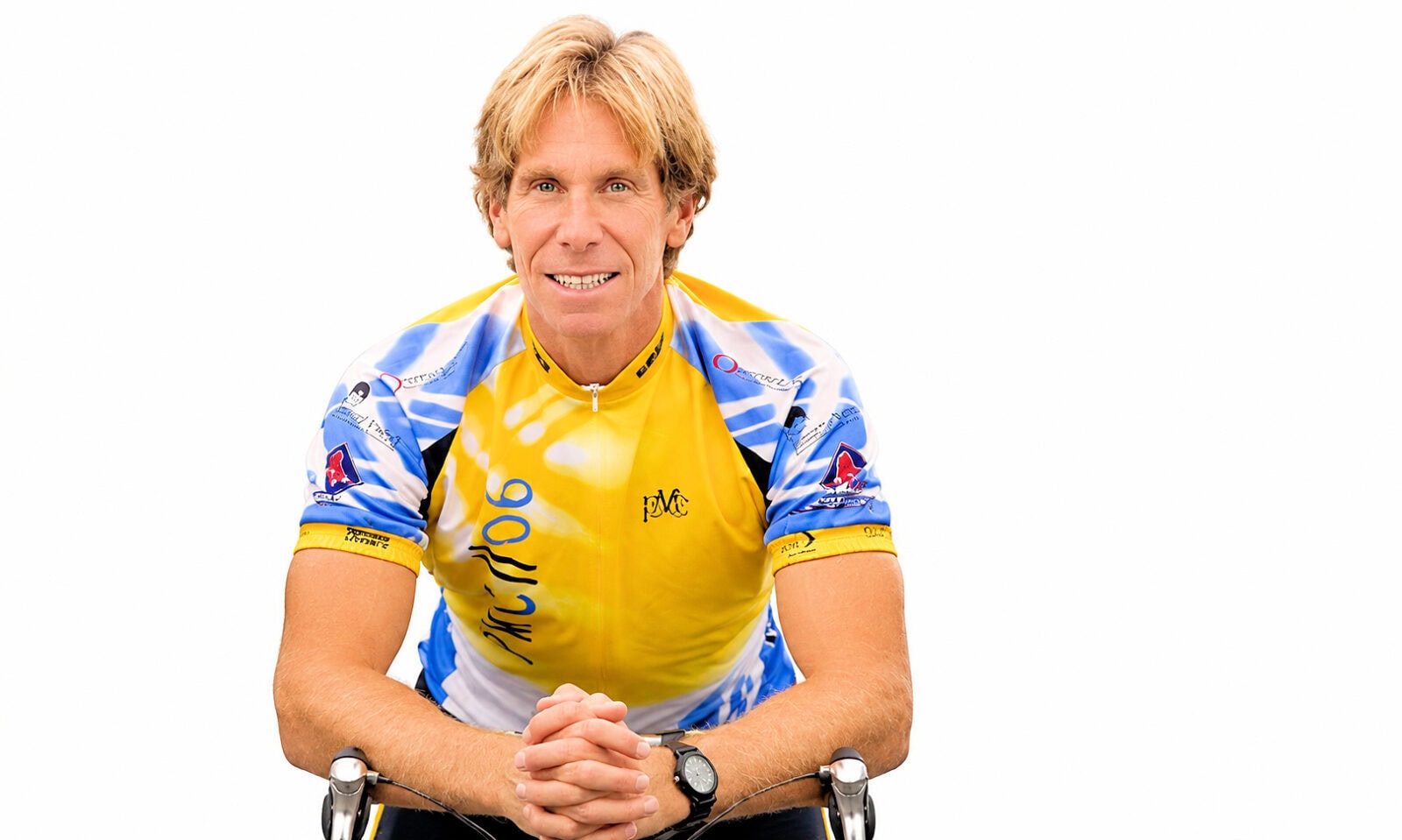
In 1980, Billy Starr led 36 cyclists across Massachusetts.
They got lost, ran out of food, and missed the ferry. He expected his friends to be angry with him. Instead, they threw him into Provincetown Harbor and promised to do it better the next year.
That first ride raised $10,200 for the Dana-Farber Cancer Institute, the hospital where his mother, Betty, had been treated for melanoma.
On Sunday, at a celebratory brunch at Rochambeau in Boston, Starr helped present Dana-Farber with $80 million.
It is the largest gift in the Pan-Mass Challenge’s history, and it brings the event’s lifetime giving to the institute to more than $1.2 billion.
“Eighty million dollars isn’t just a number,” said Starr, the PMC’s founder and chairman.
“It represents the next clinical trial, the next breakthrough, the next life saved, and the next patient who gets to ring the bell at the end of treatment.”
The goal going into the summer was $79 million. The riders beat it by $1 million.
“They didn’t just meet the moment, they rode right past it,” he said.
“I’ve never been prouder of this community, and I’ve never been more confident that the cures we ride for are within reach.”
The number is new, but the reason behind it is very old.
Betty Starr died in 1974 at 49, when her son was in his early twenties.
Starr later described her as someone who “made everything beautiful.”
He also lost an uncle and a cousin to cancer.
Grieving, he started cycling, then hiked the Appalachian Trail in Maine with friends.
That trip taught him he could do almost anything he fully committed to.
He had already ridden from Newton to Provincetown three summers in a row when the idea came to him on a sunset ride through the Arnold Arboretum: turn the journey into a cause in his mother’s name.
He once said that if the ride could raise $1 million a year, people would see it as a real way to fund cancer research. Its annual gift is now 80 times that.
This year, the man who started it all couldn’t ride.
Days before the event, Starr fractured his pelvis in a bicycle accident, ending a streak of 46 straight rides.
He didn’t step away.
He called himself a “reimagined rider,” kept raising money, and had already passed $110,000 when he shared the news.
“Cancer’s not going anywhere,” he said. “Neither am I.”
One of the people raising money in the saddle this year runs the institution receiving the gift. Dr. Benjamin L. Ebert, president and CEO of Dana-Farber, rides in the PMC himself.
He accepted the check as both a leader and a participant. “We are immensely grateful for the PMC’s longstanding support of Dana-Farber,” Ebert said.
“This unprecedented gift is an important milestone and will be used to shape the future of cancer care and research at Dana-Farber. I am honored to be one of thousands of committed PMC riders and volunteers who have played a role in making a big impact.”
That impact shows up in the lab. Dana-Farber credits PMC support with helping drive some of its most important recent advances, including the discovery of menin inhibitors, progress in multi-cancer early detection, and new cell therapies such as CAR-T and tumor-infiltrating lymphocyte therapy.
Much of what the PMC gives is unrestricted.
That lets researchers pursue ideas before they are far enough along to win traditional grants.
It matters more now, as federal research support and grant approval rates shrink while cancer rates keep rising.
More than 20 million new cancer cases are projected worldwide this year.
The gift is also a farewell of sorts for Jarrett Collins, the PMC’s CEO, who will step down at the end of the year.
Collins first rode in 2009 on a team organized by a friend whose husband had died of cancer.
The team wanted to honor the Dana-Farber doctors and nurses who had helped him live as long and as well as possible.
Collins had barely been on a bike since college. He finished the ride and was hooked.
He spent two decades in venture capital, then helped Partners In Health build the University of Global Health Equity in Rwanda.
In 2019, he joined the PMC staff. Since then, the annual gift has grown by more than a third.
He also launched PMC Unpaved, the country’s largest gravel-cycling fundraiser.
He says he plans to keep riding and fundraising for years to come.
Others stood beside them with their own reasons.
Jeff Carpenter of M&T Bank, which co-presents the event with the Red Sox Foundation, spent the summer packing registration kits for riders before riding himself.
“I’m riding for my mother. I’m riding for my sister,” he said, adding that 40 percent of his immediate family has had cancer.
Most of the people behind the $80 million will never stand at a podium.
This summer, nearly 6,500 riders and more than 3,500 volunteers came out across Massachusetts.
The weekend opened with a first-ever ceremony and start in Worcester, and riders finished in Provincetown, Bourne and Wellesley. \
They come from 44 states and eight countries, backed by more than 300,000 individual donors.
Many ride in memory of someone.
Others ride for a Pedal Partner, one of the young Jimmy Fund patients paired with teams. Every year in Lakeville, the mile before the water stop is lined with the children’s photos and handmade signs.
The children wait in a tent to greet the riders.
The giving goes on all year.
Riders spin indoors at Fenway Park for the PMC Winter Cycle, ride gravel roads in the Berkshires for PMC Unpaved, and children as young as two raise money through PMC Kids Rides.
For the 20th straight year, every dollar raised by riders goes directly to Dana-Farber.
The PMC now provides 67 percent of the Jimmy Fund’s annual revenue, which makes it the institute’s largest single contributor.
When Starr rode out in 1980, fewer than 5 million Americans were cancer survivors.
Today there are more than 19 million.
Starr has said many times that no one raises the money alone.
“None of us are raising that money by ourselves,” he said this summer.
“But collectively, we’ll get there.”
Writing about his mother years ago, he put it more personally: he once thought of the PMC as his gift to her, but in the end, he wrote, it had become her gift to him.