
$100 million from 45-year-old Brian Chesky gives San Francisco’s parks a historic future, bringing his philanthropy to over $240 million
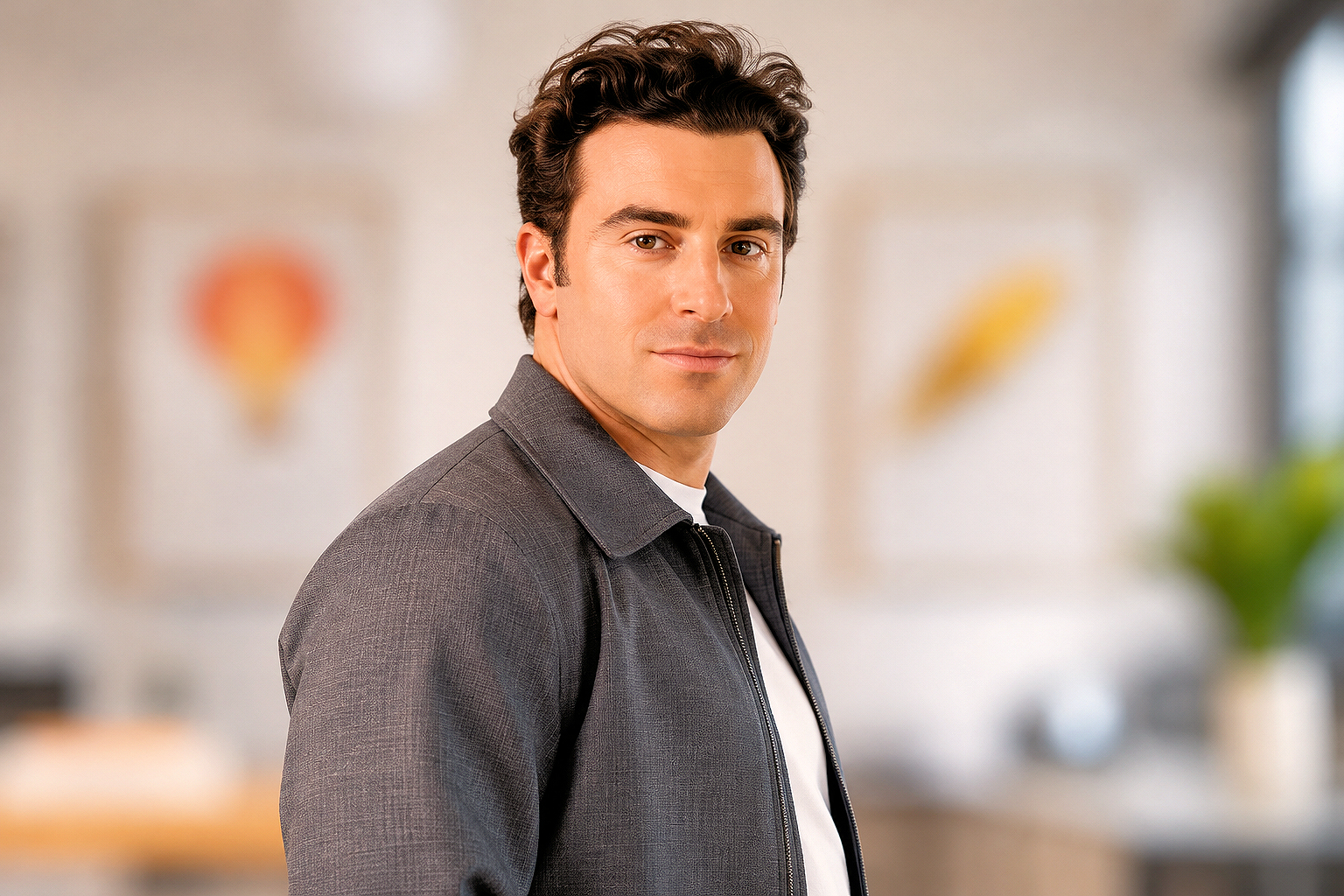
$100 million from Brian Chesky, Airbnb co-founder and chief executive officer, is giving San Francisco something money alone cannot create: more places where children can play, families can gather, neighbors can become friends, and communities can build memories that last a lifetime.
The extraordinary personal commitment is the largest single-donor philanthropic gift ever made to the City of San Francisco, according to Mayor Daniel Lurie’s administration.
It also expresses gratitude from a 45-year-old entrepreneur whose remarkable journey began with an air mattress in a rented San Francisco apartment and grew into one of the world’s most recognizable hospitality businesses.
For Chesky, the city is more than the headquarters of a company he helped build.
It is where his life changed, where an unconventional idea became a global enterprise, and where a community of creative people helped him discover what was possible.
Now he is returning a substantial measure of that success to the city itself.
The contribution, directed to the San Francisco Recreation and Park Department, will accelerate five major public-space projects across 24 acres, improving neighborhoods that have waited years for better recreational facilities, waterfront access, playgrounds, and gathering places.
According to Airbnb, the investment will directly benefit more than one in ten San Francisco residents, including 20,000 children and seniors who will have an improved park within half a mile of their homes.
The significance is striking because the money goes toward something universally accessible. No one needs to pay admission, pay membership fees, or be invited to enjoy a neighborhood park.
A child needs somewhere to run. A teenager needs somewhere to belong. A grandparent needs a comfortable place to sit and watch the world. A family needs somewhere to spend an afternoon without worrying about the cost.
Chesky’s contribution recognizes the extraordinary value of these seemingly ordinary experiences.
Speaking about the city that shaped his career, Chesky explained that much of his success came from San Francisco’s people and creative spirit. He has long wanted to find a meaningful way to express that gratitude.
His choice of parks reflects his belief that the physical places people share are essential to a community’s health.
At the November 9 announcement, Chesky put the idea simply: “The best antidote to division is connection.”
The first $39 million will go directly to five projects already planned but needing additional resources to move forward or reach completion.
In the South of Market neighborhood, Rachele Sullivan Park will transform a half-acre site on 11th Street into a welcoming public space with a children’s play area, half-basketball court, shaded seating, and fitness facilities.
Previously expected to open in 2031, the park is now scheduled to be completed in late 2028.
That three-year acceleration is more than an administrative achievement. It means that children who might otherwise have grown out of their playground years before the park opened will have an opportunity to enjoy it while they are still young.
In the Mission District, Garfield Square Park and Recreation Center will receive improvements expected to be completed by mid-2028. The investment will also support expanded access to recreation, including Sunday operations at the swimming pool.
For working families, access to a neighborhood pool on weekends can make a meaningful difference. It provides affordable recreation, an opportunity to learn an important life skill and a place where children can build confidence.
At India Basin Waterfront Park in Bayview-Hunters Point, the gift will help close a funding gap that has delayed the next phase of an ambitious waterfront transformation.
Scheduled for completion in early 2028, the improvements will include a gravel beach, boathouse, playground, and basketball courts, bringing additional recreational opportunities to a historically underserved part of the city.
In Potrero Hill, Jackson Playground will undergo a comprehensive renovation, with work expected to begin in late 2027.
Downtown, Chesky’s support will help create a five-acre waterfront park by improving Embarcadero Plaza and Sue Bierman Park, with completion targeted for late 2027.
Together, these projects represent a geographically broad investment in the daily lives of San Francisco residents.
They also illustrate an important feature of Chesky’s philanthropic approach: he is not simply funding ambitious ideas that may someday become reality. He is helping move established, community-supported projects across the finish line.
The remaining $61 million will support additional projects selected by the Recreation and Park Department over the next year.
Importantly, the funding is intended to cover not only construction but also five years of maintenance and programming, giving the city time to develop longer-term funding arrangements.
This provision recognizes a fundamental truth about public philanthropy: building something beautiful is only the beginning. Keeping it safe, welcoming, accessible, and well maintained is what allows its benefits to endure.
One of the most moving responses to the announcement came from Joi Jackson-Morgan, chief executive officer of Third Street Youth Center and Clinic.
Growing up in San Francisco, Jackson-Morgan learned to fish at India Basin and tried out for softball at Garfield.
Those experiences remain among her treasured childhood memories.
Now, the very places that helped shape her youth are receiving new resources to serve another generation.
Her reflections capture the human dimension of Chesky’s gift. A park’s value is not measured solely by the number of acres renovated or dollars invested. It is also measured by the friendships formed, the skills learned and the memories that children carry into adulthood.
Mayor Daniel Lurie, whose administration has made civic renewal a central priority, welcomed the contribution as an opportunity to make the city’s recreational opportunities more equitable.
For Lurie, whose professional background includes leadership in philanthropy, the gift demonstrates what can happen when private generosity and public institutions work together on clearly identified community needs.
Sarah Madland, general manager of the Recreation and Park Department, described the commitment as transformative for both the city’s parks and the people who depend on them.
The scale is remarkable. According to Madland, the department has received approximately $300 million in philanthropic contributions over the previous 15 years. Chesky’s single commitment equals roughly one-third of that historical total.
Before this announcement, the largest private gift to the city’s parks was a $25 million contribution from the John Pritzker Family Fund in 2019 to help launch the India Basin project.
Chesky’s $100 million commitment establishes an entirely new benchmark for individual civic philanthropy in San Francisco.
The San Francisco commitment also marks an important new chapter in a philanthropic journey that began publicly a decade ago.
In 2016, when Chesky was just 34, he joined the Giving Pledge, committing to devote the majority of his wealth to charitable purposes.
His pledge letter offered a revealing glimpse into the experiences that shaped his approach to giving.
Growing up in Niskayuna, New York, Chesky was an imaginative child who did not necessarily fit conventional expectations. He described himself as disruptive in school and recalled that, as he grew older, he began to temper his ambitions with what seemed practical.
His parents were social workers, and his upbringing emphasized the importance of helping others.
A high school teacher recognized his creative abilities and encouraged him to attend art school.
At the Rhode Island School of Design, Chesky discovered the power of design and met Joe Gebbia, who would become one of his Airbnb co-founders.
That friendship eventually brought him to San Francisco.
In his Giving Pledge letter, Chesky reflected on the teachers, parents, and friends who recognized possibilities in him that he hadn’t always seen in himself.
He wrote, “I am not special, but I had special people in my life.”
That sentiment helps explain the direction of his philanthropy.
Rather than concentrating exclusively on institutions, buildings, or traditional charitable programs, Chesky has shown a particular interest in expanding the horizons of individuals who may not yet recognize their own potential.
He knows from personal experience that one encouraging teacher, one unexpected journey, or one supportive community can change the course of a life.
His philanthropy seeks to create more of those opportunities for others.
The scale of that ambition became apparent in 2022, when Chesky announced a $100 million commitment to the Obama Foundation to establish the Obama-Chesky Voyager Scholarship for Public Service.
Created in partnership with former President Barack Obama, the program supports college students who demonstrate financial need and a commitment to careers serving others.
The scholarship combines practical financial assistance with an unusual emphasis on travel, exposure to unfamiliar communities, and the development of enduring relationships.
Recipients can receive up to $50,000 in financial aid during their junior and senior years, helping reduce the burden of college debt that might otherwise discourage them from pursuing public-service careers.
They also receive a $10,000 stipend and access to Airbnb accommodations for a summer work-travel experience.
The program encourages students to design journeys that connect them with communities, organizations, and challenges relevant to their professional interests.
After graduation, participants are eligible for $2,000 in Airbnb travel credits annually for ten years, allowing them to continue exploring communities and building professional relationships.
Mentorship, leadership development and opportunities to engage with other emerging public servants are integral parts of the initiative.
By January 2026, the Obama Foundation reported that 400 students had received Voyager scholarships since the program began in 2022. Applications for the fifth cohort, covering 2026 through 2028, opened with plans to select another 100 students.
The program’s international reach has been substantial. Members of the 2024–2026 cohort traveled to 61 countries and 24 American states and territories during their summer experiences.
Behind those numbers are young people discovering new perspectives, developing practical skills and building relationships that may influence decades of public service.
The Voyager Scholarship is particularly consistent with Chesky’s personal philosophy.
A young man whose own career was transformed by moving to an unfamiliar city is helping other young people discover what might happen when they venture beyond the boundaries of their everyday lives.
An important additional dimension of Chesky’s support for the Obama Foundation emerged in June 2026.
Reporting by the Chicago Sun-Times, based on donor recognition at the Obama Presidential Center, established that Chesky’s total contribution to the foundation was $125 million, rather than the $100 million widely associated with the Voyager Scholarship alone.
Of that amount, $100 million supports the scholarship program, while an additional $25 million provides unrestricted support that can be used for the Obama Presidential Center’s construction.
The distinction is significant because it brings the publicly documented value of Chesky’s Obama Foundation philanthropy to $125 million.
Combined with his newly announced $100 million commitment to San Francisco’s parks, these two major philanthropic initiatives alone represent $225 million in documented personal giving and commitments.
His philanthropic record, however, extends beyond these two landmark gifts.
During the COVID-19 pandemic, Chesky personally committed $10 million to nonprofit organizations supporting frontline workers responding to the crisis.
He also committed an additional $5 million to Airbnb’s Frontline Stays initiative, which helped provide accommodations for first responders and other essential personnel.
Those commitments reflected an immediate, practical response to a period when healthcare workers and other essential personnel faced extraordinary pressures.
In 2021, Airbnb also disclosed that Chesky was developing plans to make a personal contribution of company shares worth more than $100 million at the time of contribution to the Airbnb Host Endowment, an initiative designed to support hosts through education, financial resources and other assistance.
That proposed contribution must be distinguished from completed giving. The company’s announcement described an intention, and publicly available information does not establish that the contemplated transfer was completed.
Separately, in 2022, Chesky joined Airbnb co-founders, Lifestyles Magazine/Meaningful Influence cover subject Joe Gebbia and Nathan Blecharczyk in pledging to match up to $10 million in donations from others to Airbnb.org to support temporary housing for people fleeing the war in Ukraine.
That was a collective matching commitment, not an additional $10 million personal gift attributable entirely to Chesky.
Taken together, the publicly identified commitments provide a more complete picture of his philanthropic activities.
The $125 million Obama Foundation contribution and the new $100 million parks commitment establish a documented baseline of $225 million. His $10 million pandemic-relief commitment and $5 million Frontline Stays commitment bring the identifiable personal commitments to at least $240 million, assuming those earlier commitments are counted separately and without overlap.
The precise lifetime total of completed personal charitable disbursements cannot be independently established from available public reporting. The proposed Host Endowment contribution and the collective Ukraine matching pledge should not be added as though they were verified, fully completed personal gifts.
What can be established is that Chesky has made philanthropic commitments on a scale that places him among the significant technology entrepreneurs directing substantial personal resources toward public benefit.
His long-term intentions suggest that the current figures may represent only an early stage of his giving.
Beyond signing the Giving Pledge, Chesky has committed to donating the net proceeds of his multiyear chief executive equity compensation awards to charitable, community and philanthropic causes.
In a 2023 interview with the Chronicle of Philanthropy, he described plans to give away the proceeds of stock awards linked to Airbnb’s achievement of specified share-price milestones.
The potential value of those awards could be substantial, although their ultimate philanthropic value depends on the achievement of the milestones, the proceeds realized and the donations actually made.
With sources estimating his personal fortune at approximately $13 billion Chesky possesses the financial capacity to expand his giving considerably over the coming decades.
Yet the most distinctive aspect of his emerging philanthropic identity may be less about the size of his commitments than the consistency of the ideas behind them.
The Voyager Scholarship opens doors to young people whose ambitions may be constrained by financial circumstances or limited exposure to the wider world.
His pandemic-related commitments sought to help people serving others during an unprecedented emergency.
His support for Airbnb hosts recognizes the individuals and families whose participation helped build the company.
And his latest investment in San Francisco’s parks creates places where people of different ages, backgrounds and economic circumstances can come together.
Each initiative, in its own way, reflects an interest in human connection, opportunity and belonging.
Those themes have been central to Airbnb since its beginnings.
In 2007, Chesky and Gebbia were struggling to pay rent on their San Francisco apartment. They decided to welcome paying guests into their home, offering air mattresses and hospitality during a busy design conference.
The idea was modest, but its implications were enormous.
With Nathan Blecharczyk joining as a co-founder, the enterprise evolved into a global platform connecting travelers with hosts in communities around the world.
By November 2026, Airbnb reported more than 5.5 million hosts and over 2.5 billion guest arrivals since its founding.
For Chesky, the company demonstrated that strangers could become connected through shared experiences and mutual trust.
His latest philanthropic commitment brings that philosophy back to the public spaces of the city where it began.
A neighborhood park, after all, is a place where strangers encounter one another without needing a reservation, a transaction or a digital platform.
It is where children learn to share a basketball court, where parents exchange conversations while watching their children play, and where neighbors who might otherwise never meet begin to recognize one another.
For a technology entrepreneur whose business helped redefine how people experience places around the world, there is something especially meaningful about investing in places that belong to everyone.
The San Francisco donation also arrives at a consequential moment for the city.
Like many major American urban centers, San Francisco is working to strengthen its neighborhoods, improve public spaces and renew confidence in its civic future.
Its extraordinary economic success has generated immense private wealth, but the benefits of that prosperity have not always been experienced equally across its communities.
Chesky’s gift offers one example of how entrepreneurial success can be translated into improvements that residents can see and use.
It also offers a model for collaboration between individual philanthropists and public institutions.
The city will remain responsible for identifying projects, overseeing implementation and maintaining public accountability. The contribution is subject to the appropriate municipal approval processes, including review by the Board of Supervisors.
Chesky is providing resources that can help the city achieve community priorities more quickly and on a larger scale.
The distinction matters because the most effective civic philanthropy strengthens public institutions and expands their ability to serve residents.
Chesky has expressed hope that his commitment will encourage other successful entrepreneurs to become more involved in San Francisco’s future.
He has also indicated that he would welcome opportunities to continue helping the city, while describing this contribution as a first step from which he hopes to learn.
That willingness to learn is consistent with a philanthropist who, despite his considerable achievements, continues to approach giving as a developing part of his life’s work.
For a man who once imagined that the most he could hope for after art school was a steady job with health insurance, the journey has been extraordinary.
He has built a company that operates across much of the world, accumulated a multibillion-dollar fortune and committed hundreds of millions of dollars to causes intended to broaden opportunity and strengthen communities.
Yet the inspiration for his latest gift can be traced back to a much simpler idea: that people thrive when they have places to meet, opportunities to explore and others who believe in their potential.
Years from now, the children playing in a renovated San Francisco park may know little about Airbnb’s beginnings or the financial success of its co-founder.
They may simply remember learning to swim on a Sunday afternoon, making a friend on a basketball court, watching the boats at India Basin or spending an unforgettable afternoon with their grandparents beside the waterfront.
Some may grow up to become teachers, doctors, artists, entrepreneurs or community leaders.
Others may return to those same parks with children of their own.
For Brian Chesky, whose life was transformed by the generosity of people who helped him see a larger world, creating more opportunities for others to discover their own possibilities may prove to be one of his most meaningful accomplishments.
And for San Francisco, his $100 million commitment promises something enduring: public places where the city’s next generation can begin creating stories of its own.