
$300 million and a promise kept: Dick Hedreen’s gift to university goes through Sotheby’s auction
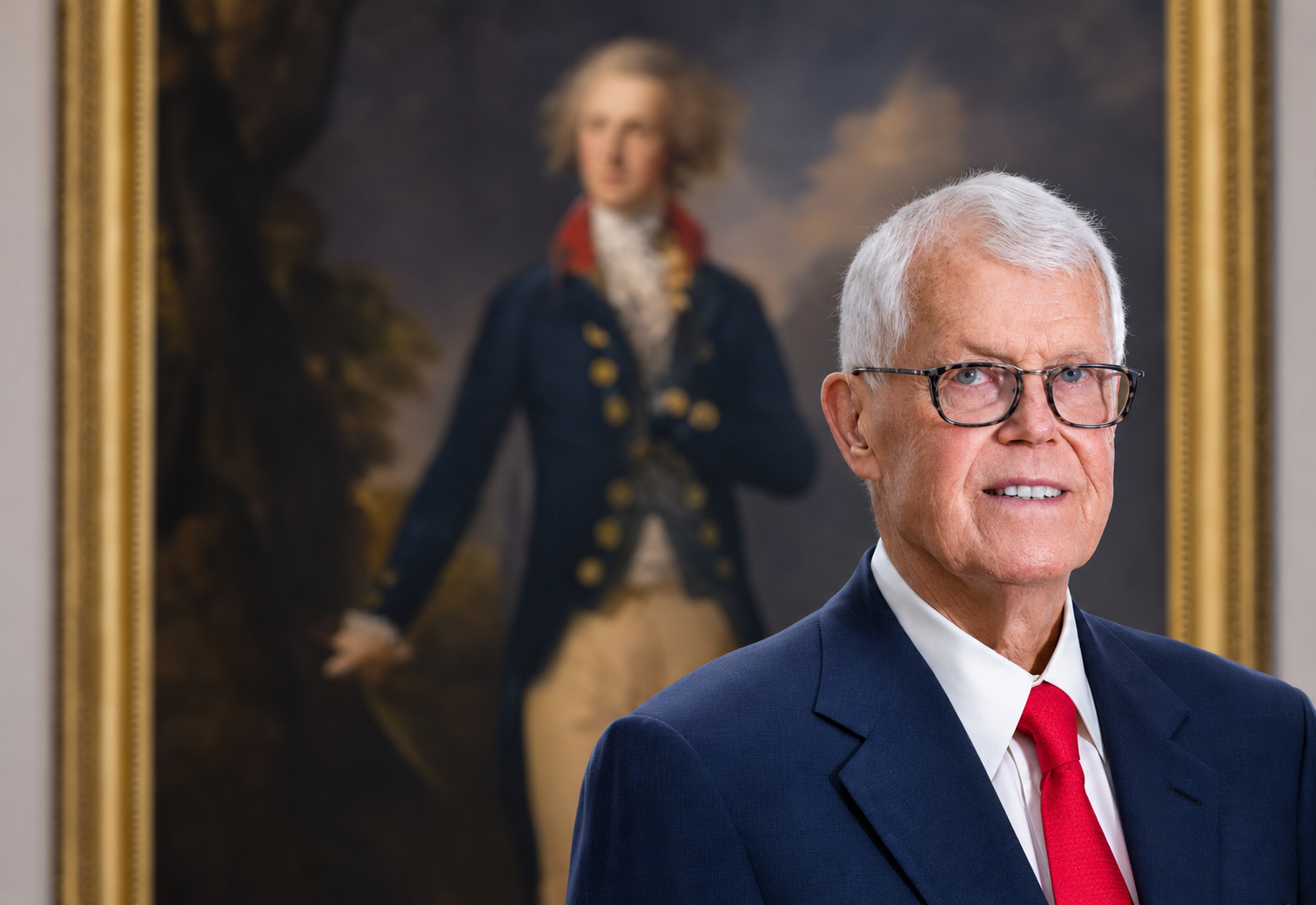
When the gavel falls at Sotheby’s in New York, the first painting from one of America’s great private collections will go to a new owner.
Roy Lichtenstein’s “Reflections on ‘Painter and Model,’” a 1990 canvas that looks back at Picasso through Ben-Day dots and bands of glare, is estimated at $20 million to $30 million.
It has hung with Richard “Dick” Hedreen and his late wife, Betty, for more than three decades.
It will not be going to Seattle.
It is still part of a love story and the largest gift of art ever promised to an American university.
In 2024, Seattle University announced that Hedreen, the Seattle hotel developer behind the Grand Hyatt and the Hyatt Regency, would give the school his entire art collection.
It was valued at more than $300 million, and he added $25 million in seed money to build a museum around it.
It was the biggest gift in the Jesuit university’s history and the largest single gift of any kind to a university in Washington state.
Hedreen said it was for Betty, who had died two years earlier.
“Betty went to Seattle University,” he said, “and I wouldn’t have met her had she not attended school there.”
Now the gift is changing shape.
Over four nights this week, and then at a dedicated Old Masters sale in February, Sotheby’s will offer about 50 works in a series called “Expanding Horizons: The Hedreen Collection.”
The estimates total $109 million to $158 million. The roughly 350 remaining works are still promised to the university.
The collection had grown to more than 400 pieces by the time the sale was announced.
The reason for the sale is more practical than romantic.
The 2024 gift was legally a pledge, a promise to give the collection in the future. Some of the art had long been used as collateral for a loan.
The borrowing began with Goldman Sachs in 2012.
Last year it moved to Bank of America, backed by about 44 major works.
At least 18 of the works being sold this week are part of that collateral. They include tonight’s Lichtenstein, Willem de Kooning’s “Water…Soft Banks and a Window (Untitled VIII),” estimated at $20 million to $30 million, and Sam Francis’ “Towards Disappearance,” estimated at $15 million to $20 million.
David Thyer, president of R.C. Hedreen Co. and Hedreen’s son-in-law, has said the sale is tied to the hotel and real estate markets.
He said hotel income alone would not repay the loan “in any reasonably foreseeable time frame.”
The $25 million seed commitment was met by privately selling a de Kooning, which brought $17 million.
The family says the goal has not changed. “Mr. Hedreen’s commitment to Seattle University has not changed,” said his son Guy Hedreen, an art history professor at Williams College.
He said his father is not selling “in order to spend money on himself” or his business.
The sale is meant to clear “a debt that prevents him from translating his pledge intentions into an outright gift.”
According to Guy, his father and university representatives chose the works to sell together, so the collection that remains would still be strong and still span many periods and places.
Seattle University is grateful and is planning carefully.
Scott McClellan, vice president for university affairs, said the school still sees the collection as “a significant opportunity for the university, community and our broader vision for the arts.”
He added that the university intends to receive works “commensurate” with the original commitment.
To understand why a 91-year-old would go to this much trouble to keep a promise, start with a Seattle boy on a Saturday afternoon.
Hedreen grew up about half a mile from the old Seattle Art Museum.
On Saturdays his parents dropped him and his brother off for the museum’s movie screenings.
He would leave the screening room and wander the galleries.
“I loved walking through the museum, looking at the art and the objects,” he once said.
He went to Garfield High, played on the golf team, and joined the ski club, then studied civil engineering at the University of Washington.
In October 1957, he married Elizabeth Ann Petri, a Tacoma native who had just graduated from Seattle University. Six years later he founded R.C. Hedreen Co.
His first project was the 11-story Harbor House apartment building on Queen Anne.
Over the next six decades, he helped shape the Seattle skyline: the Seattle Hilton, the Madison Renaissance, Olive 8, the Grand Hyatt, and the 45-story Hyatt Regency, the city’s largest hotel.
The art started small.
In the 1960s, the young couple wanted a few things for the walls of a new house, and they bought Northwest painters like William Ivey and Guy Anderson.
In the mid-1970s they met Charles Cowles, who had come to Seattle as the art museum’s contemporary curator.
Cowles introduced them to dealers in New York, London, Basel, and Zurich and urged them to buy from the world market.
“He turned what an interest into a passion,” Hedreen said. People close to the couple say Betty often found a work first and walked Dick over to it.
Over the years, the collection grew into something unusual for its time.
Old Masters hung next to postwar American painting and the most sought-after artists working today.
The roster included Pontormo, Titian, Gainsborough, Élisabeth Vigée Le Brun, de Kooning, Lucian Freud, Rauschenberg, Cecily Brown, Rashid Johnson and Amy Sherald.
The Hedreens appeared on ARTnews’ list of the world’s top collectors.
They also sold and traded actively.
Their Hockney “Nichols Canyon” brought $41.1 million at Phillips. A Francis Bacon “Pope with Owls,” bought in 1986 for about $700,000, sold for $33 million in 2021.
Betty’s own story may be the bravest part of the collection’s history.
In the early 1970s, still a young mother of four, she was diagnosed with multiple sclerosis.
She lived with it for 55 years.
She joined an early trial of the then-experimental drug glatiramer acetate and counseled newly diagnosed patients for decades.
The National MS Society gave her its Hope Award in 2004.
In 2012 she and Dick were co-lead donors for the MS Center at Swedish Medical Center, now a leading center for MS research and care.
The disease ended her skiing and limited her mobility, so she put her energy into institutions.
She trained as a docent at the Seattle Art Museum in the mid-1970s.
She was a founding member of its Contemporary Collectors Forum and of Seattle Art Museum Supporters, joined the board in 1990, and served as vice president from 1994 to 1998.
She was one of the museum’s most effective fundraisers, helping pay for the downtown building, its 2007 expansion, and the Olympic Sculpture Park.
In 2017 she was named an honorary trustee for life.
Former director Amada Cruz said few people “have been as integral to the growth and success of the Seattle Art Museum as Betty Hedreen.”
Her giving went well beyond the galleries.
She was active in the Seattle chapter of ARCS, which funds graduate fellowships in the sciences, from its second year onward, and the couple funded several of those fellowships. She belonged to the Genevieve Henry guild at Seattle Children’s for more than 60 years.
Seattle Repertory Theatre gave her its Distinguished Service Award.
She supported Catholic Community Services, the Sisters of St. Dominic and Bellarmine Prep, the Tacoma Art Museum, and the Henry Art Gallery.
Together, the couple served on the Museum of Modern Art’s International Council and the National Gallery of Art’s Trustee Council.
They gave works to the National Gallery, the Seattle Art Museum, and Seattle University, and both Seattle institutions have galleries named for them.
Seattle University got their most personal attention.
For more than 25 years, the Hedreens helped make art part of the campus itself.
They were among the lead donors for the Chapel of St. Ignatius, Steven Holl’s celebrated building of light and color.
They co-chaired the campaign for the Lee Center for the Arts, home of the Hedreen Gallery for emerging artists, and placed sculptures by James Rosati and Joel Shapiro around the grounds.
Weeks after the 2024 announcement, both were inducted into the Jesuit Honor Society.
“Betty and I always felt that we were custodians of the artworks we acquired, holding them in trust for a larger purpose,” Dick said.
That purpose is the Seattle University Museum of Art, a four-story, 44,000-square-foot teaching museum designed by Tom Kundig of Olson Kundig for the campus’s 12th Avenue edge.
Permitting has pushed construction to next year.
The university has raised about $55 million toward the roughly $65 million project.
The works that will stay include Amy Sherald’s “The Make Believer,” Rashid Johnson’s “Seascape ‘Jitter Bug,’” and paintings by Gainsborough and Pontormo. Hedreen has always pointed to Yale and Harvard as models.
In his view, an on-campus museum “gives the university the tools to teach art history,” and the new one could draw the same people who visit the Seattle Art Museum, the place where his own love of art began.
Tonight’s results will set the first real prices of this final chapter.
The total won’t be known until February.
What remains is a widower in his tenth decade, his children and eleven grandchildren around him, selling some of what he and Betty loved so he can give the rest to her school, on the hill where they met nearly 70 years ago.