
$75 million new gift from Lifestyles Magazine/Meaningful Influence Board member Ronald S. Lauder aims to encourage next‑generation philanthropists
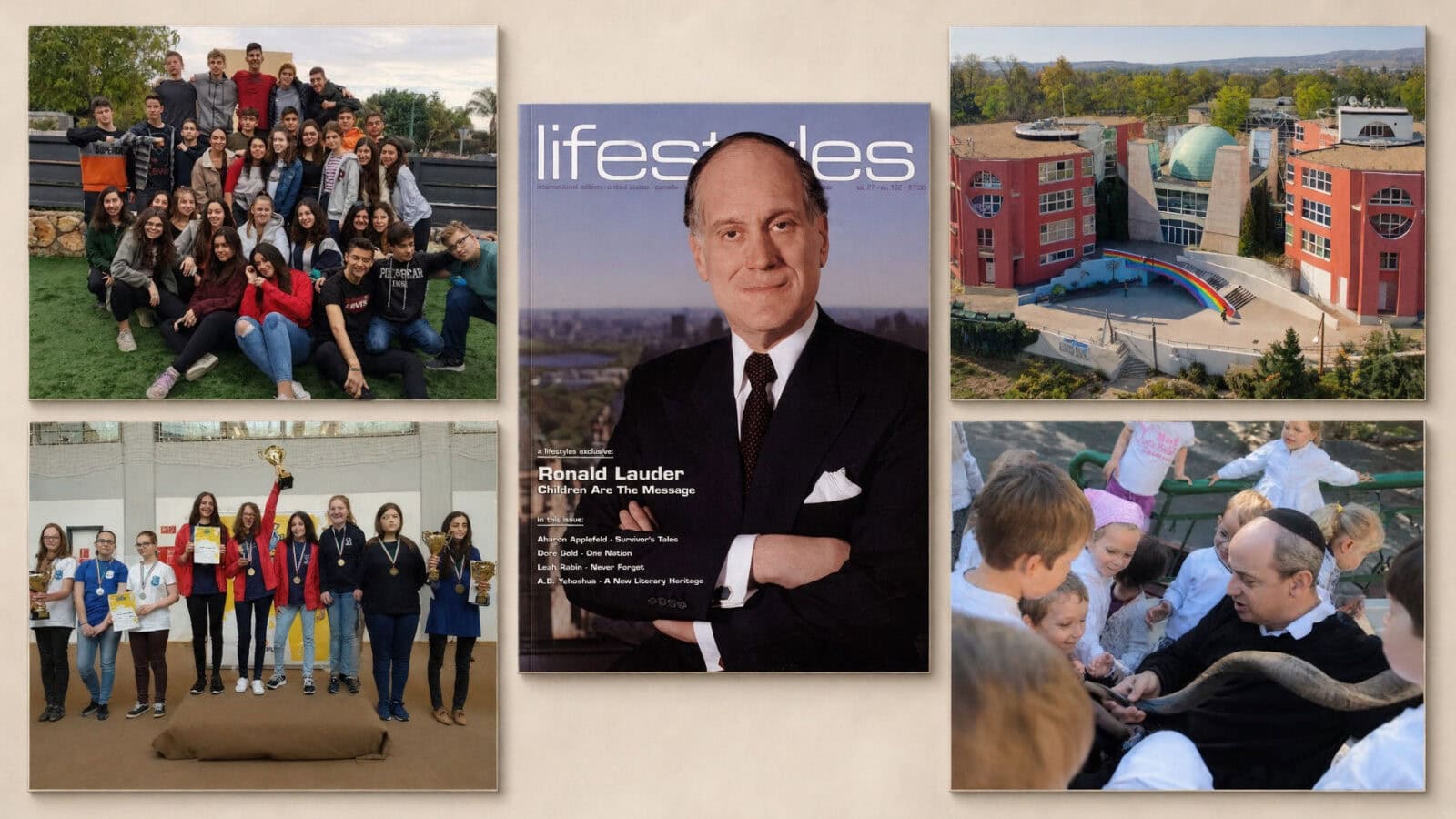
Ronald S. Lauder’s announcement this week that his foundation will wind down support for seven of its flagship Jewish school systems across Europe marks the close of one of the most ambitious and personal philanthropic projects of the post‑Communist era.
This development feels both sudden and long‑anticipated — a moment arriving with the weight of four decades of institution‑building, community‑rebuilding, and a donor’s evolving philosophy about what lasting philanthropy should look like.
The Lauder Foundation confirmed that by 2027 it will hand full responsibility for schools in Athens, Berlin, Budapest, Prague, Rome, Sofia, and Vienna to the communities they serve.
The transition will be accompanied by a final $75 million gift, including $40 million for new facilities and additional funds to support operations through 2028 and prepare each community for independence.
The move reflects Lauder’s belief that philanthropy should not create permanent reliance but should instead build institutions strong enough to stand on their own.
That belief has been visible for years.
Lauder has repeatedly signaled that the foundation’s European school network — once entirely dependent on his support — would eventually need to be sustained by local parents, leaders, and philanthropists.
In recent interviews, he has spoken openly about the need for “next‑generation philanthropists” to take up the work of strengthening Jewish education, just as he did in the late 1980s when he first encountered a small kindergarten for Soviet Jewish children in Vienna.
That visit, during his tenure as U.S. ambassador to Austria, became the origin story of a philanthropic mission that would reshape Jewish life across a continent.
Lauder has often described how he bought the apartments next door to that kindergarten and built a school almost overnight.
Requests soon followed from other cities, and over the next decades the foundation opened 30 schools across Eastern and Central Europe.
Many were established in places where Jewish communal life had been nearly erased. Today, more than 40,000 alumni have passed through Lauder‑supported schools — a generational footprint that few philanthropists can claim.
The transition now underway is not a retreat but a handoff. Communities have already begun stepping forward.
In Rome, the Yael Foundation partnered with Lauder in 2024 to pledge $15.5 million toward expanding the city’s Jewish school system.
Rome’s community president, Victor Fadlun, recalled pitching Lauder on a nearly $30 million expansion plan and being told bluntly that it would fail without serious external support. Days later, the Lauder Foundation committed more than $9 million.
Fadlun said the gesture offered something deeper than funding: confidence that the community could rise to the challenge.
That confidence is central to Lauder’s message now. In announcing the transition, he reflected on the families who reclaimed traditions “that history had tried so violently to extinguish,” and emphasized that the success of these communities should not be mistaken for the end of the need for Jewish philanthropy. Instead, he framed the moment as proof of what patient, serious investment can achieve — and as an invitation for others to continue the work.
What the Lauder Foundation will focus on after 2027 remains unspecified, but Lauder himself has already begun shifting attention to new arenas.
Since 2024, he has launched the Lauder Impact Initiative, his first major North American education effort, aimed at reversing declining enrollment in non‑Orthodox Jewish day schools.
He has also urged philanthropists to allocate significant resources toward strengthening Israel’s public‑relations efforts.
Beyond Jewish education, his philanthropic interests span the arts, medical and scientific research, civic causes, and cultural institutions.
Still, the emotional center of this week’s announcement lies in Europe, where Lauder’s philanthropic identity was forged.
The schools he built there were not abstract investments; they were responses to communities emerging from trauma, uncertainty, and erasure.
The transition now underway is both a milestone and a challenge — a test of whether the institutions he nurtured can thrive without him, and whether a new generation of donors will see themselves as stewards of the continuity he helped restore.
Lauder’s hope, expressed plainly, is that they will.
He has spent forty years proving what one philanthropist can build.
Now he is asking others to imagine what comes next.