
$125 million gift from philanthropists Jonathan and Mindy Gray reflects a lifetime of generous giving to health and opportunity
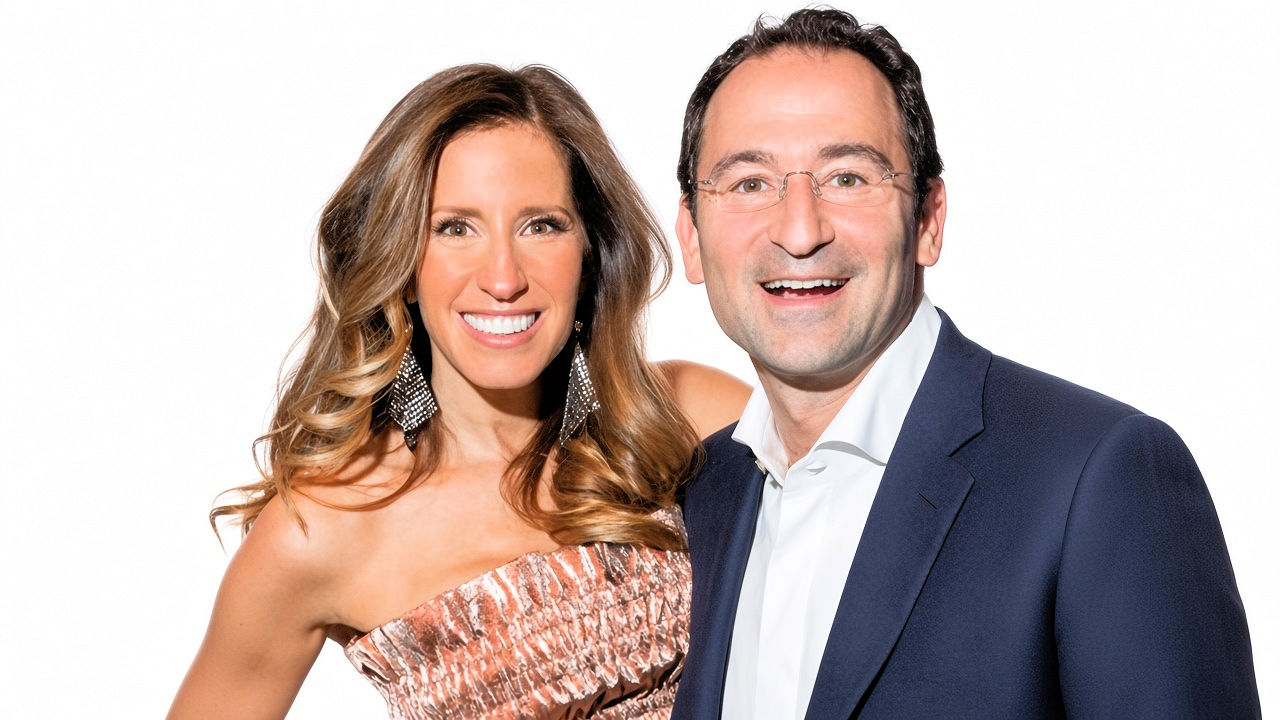
For Jonathan and Mindy Gray, their $125 million gift to Tel Aviv University is not a departure from their philanthropy.
It is the largest expression yet of a giving strategy built around two closely connected ideas: advancing medical research and making education, healthcare and opportunity more accessible to people who have historically had less of it.
The donation will transform Tel Aviv University’s Faculty of Medical and Health Sciences, which has been named for the couple.
The university says the gift will help build a 600-bed dormitory, expand scholarships, modernize its Schools of Medicine and Dentistry, create advanced teaching and research facilities, recruit and retain biomedical scientists, support cancer research and establish a memorial to the victims of October 7.
It is also expected to increase the number of new medical students by approximately 25% and expand enrollment across the wider faculty by about 20%.
For a student arriving in Tel Aviv from a low-income family, the most immediate benefit may not be a new laboratory or research grant.
It may be a bed in the new dormitory, a scholarship that makes tuition and living costs manageable, or the chance to enter a medical profession that once seemed financially out of reach.
Tel Aviv University has said the gift will include targeted support for underrepresented groups and aims to double the number of Arab Israeli students in its School of Medicine.
The broader expansion is expected to include nurses, dentists, therapists and other health professionals, not only doctors.
Through partnerships with 18 hospitals, the university says its graduates already play a role throughout Israel’s healthcare system.
The Grays’ emphasis on access mirrors their giving in the United States.
Through the Gray Foundation, they have supported programs for low-income children and young people in New York, including college preparation, scholarships, health education and pathways into professional careers.
Their publicly documented beneficiaries include Prep for Prep, the Inner-City Scholarship Fund, Schools That Can, Year Up and Breakthrough New York.
The couple has also supported Harlem Village Academies, the Educational Alliance, Trinity School and Peer Health Exchange.
Their education philanthropy includes a $10 million gift to the University of Pennsylvania for a college-savings initiative aimed at helping low-income, first-generation students from New York City attend college.
The foundation has also awarded a $3 million grant to a Penn researcher studying the relationship between breast cancer and the immune system.
Penn occupies an important place in the Grays’ philanthropic story.
They met while studying English there, and the university became the home of their most sustained medical-research commitments.
The couple helped establish the Basser Center for BRCA at Penn Medicine, which was created as the first institution focused exclusively on BRCA-related cancers.
Its work includes research, genetic counseling, education, prevention and efforts to reach communities that may be less likely to receive information or testing for cancer risk.
The Grays later committed another $55 million to Penn’s BRCA work to create and fund the Cancer Interception Institute.
The program focuses on finding ways to identify cancer at its earliest stages—or prevent it from developing—rather than waiting until the disease is established.
Their total commitment to Penn and the Basser Center has been reported at more than $125 million.
That research commitment is connected to the Tel Aviv University gift.
The university has identified BRCA-related cancer research as one area that will benefit from the new funding, alongside genetics, biomedical research, diagnostics, personalized treatment and healthcare delivery.
Their medical philanthropy extends beyond Penn.
The Gray Foundation has supported programs and institutions connected to medical education and healthcare careers, including CUNY School of Medicine, Montefiore Einstein, Mount Sinai and Memorial Sloan Kettering.
Other reported health beneficiaries include National Jewish Health, the Lungevity Center in Illinois and the Hospital for Special Surgery. Mindy Gray has also been involved with the Ovarian Cancer Research Fund.
The foundation’s health agenda is broader than research alone.
Its stated interests include treatment, public awareness, medical training and helping communities benefit from advances in healthcare.
The Grays’ support for medical schools and research centers reflects an effort to strengthen the systems through which healthcare is delivered.
Their giving also reaches New York’s civic and social-service networks.
Reported beneficiaries include the Mayor’s Fund to Advance New York City, the Robin Hood Foundation, the Police Athletic League, United Way of New York and Big Brothers Big Sisters of New York City.
The couple has also supported the Center for Jewish History, JCC Manhattan, UJA and other Jewish organizations.
The Grays have supported cultural and educational institutions as well.
Their philanthropy includes at least $3 million directed to Trinity School and the Educational Alliance, which provides educational, health, arts and social services in New York.
The Gray Foundation also helped launch a Holocaust education program for students at the Museum of Jewish Heritage.
Taken together, the record shows a consistent pattern.
The Grays give to institutions that can expand opportunity at scale, but they tend to attach that ambition to specific human needs: a child preparing for college, a student unable to afford housing, a researcher pursuing an early-detection breakthrough, or a patient who may benefit from improved care.
That pattern helps explain why the Tel Aviv University gift combines a medical school expansion with scholarships, housing, research laboratories and recruitment efforts.
The Grays are not treating education and healthcare as separate causes.
They are investing in the people who deliver care, the researchers who improve it and the students who need a realistic path into those professions.
Jonathan Gray, Blackstone’s president and chief operating officer, and Mindy Gray have said that the decision to support Tel Aviv University was shaped by their desire to help Israel after October 7.
The gift also allowed them to bring their established priorities to a new country and institution.
“For us, this wasn’t about any sort of deletion, but really addition,” Gray said.
“That’s what this is. We thought: The State of Israel needed support post-Oct. 7, let’s bring the areas we were really focused on — access to education and medical research — and bring it together, and TAU was a perfect place to do it.”
The $125 million donation is therefore both an emergency gesture and a continuation.
It supports Israel at a time of acute need while extending a philanthropic record that has centered on medical research, professional training, educational access, low-income youth, New York communities and Jewish life.
The full value of the Grays’ giving cannot be captured by a single total, particularly because their foundation has supported many organizations through grants whose individual amounts have not all been disclosed.
But the publicly documented record is clear: their philanthropy has repeatedly sought to turn private wealth into wider access—to laboratories and clinical care, to universities and professional careers, and to opportunities for people who might otherwise be left outside them.