
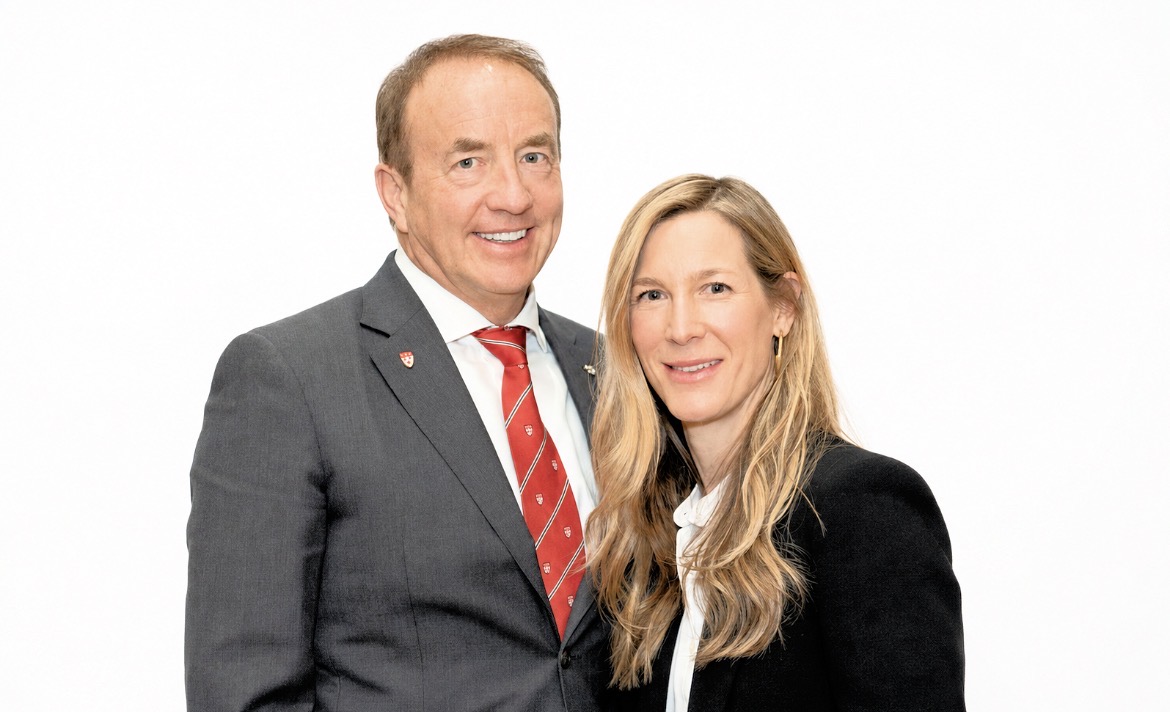
$50 million gift to university from Dr. Marcy McCall MacBain and her husband, John McCall MacBain, aims to advance global leadership in health span research and raises their overall philanthropy to $560 million
There’s a particular kind of gift that doesn’t just fund a building or endow a chair—it reshapes how an entire field thinks about its purpose.
That’s what McMaster University just received: a $50-million commitment from alumna Dr. Marcy McCall MacBain and her husband John McCall MacBain, channeled through their family foundation, that positions the university as a global leader in kinesiology and what researchers are increasingly calling healthspan optimization.
It’s the largest philanthropic investment in kinesiology in Canadian university history, and the ambition behind it is anything but modest: help people live not just longer, but better.
The money will bring three things into being. First, a new McCall MacBain Kinesiology and Healthspan Institute, built to serve as a nerve center for interdisciplinary research.
Second, four McCall MacBain Chairs in Healthy Living are filled by scholars recruited for their global standing in the field. And third, the Marcy C. McCall Kinesiology Scholarships, a program aimed squarely at the next generation of students who will carry this work forward.
Marcy McCall MacBain has spent her career thinking about the gap between how long people live and how well they live those years, and that distinction sits at the heart of this gift.
“Kinesiology is a powerful foundation for understanding health—and what sets McMaster’s program apart is how it builds on that through global leadership in evidence-based medicine,” she said.
“At the McCall MacBain Foundation, we are proud to accelerate the momentum McMaster’s faculty have already built. This grant has two goals: to put healthspan research at the forefront of how Canada thinks about health policy and to give kinesiology students the leadership and training opportunities they need to make a lasting difference in the health of people’s lives.”
That word—healthspan—is doing a lot of work here, and it’s worth pausing on. Lifespan tells you how many years someone survives.
Healthspan tells you how many of those years someone actually gets to enjoy: moving freely, staying independent, and staying clear of the chronic illnesses that quietly steal function long before they take a life.
The gift is built around the idea that preventing disease and shrinking the time people spend in poor health matters just as much as adding years to a calendar.
The institute itself will straddle two of McMaster’s faculties, tying together the Department of Kinesiology in the Faculty of Science with the Department of Health Research Methods, Evidence, and Impact in the Faculty of Health Sciences.
That dual home is intentional—it lets the institute pull expertise from both the science of movement and the science of evidence, then push findings out into policy, clinical practice, and community programs.
One of the places where translation will happen fastest is PACE, the Physical Activity Center of Excellence, which already runs as a kind of living laboratory on campus.
More than 500 community members pass through PACE each year, working alongside more than 250 students and a rotating cast of kinesiologists, physiotherapists, and occupational therapists inside a rehabilitation facility built for exactly this kind of hands-on collaboration.
The new institute is expected to give PACE both a bigger research footprint and a longer reach into the communities it serves.
The four endowed chairs will anchor the institute’s intellectual direction, with recruits expected to bring deep expertise across kinesiology and integrated health, healthspan research, the way physical environments shape health outcomes, and the harder-edged work of turning evidence into policy.
Working alongside them will be the Marcy C. McCall Kinesiology Scholars, a scholarship program built differently than most: it’s the first in Canada to both offset tuition and guarantee funding for experiential learning.
Up to ten students a year will receive $50,000 stipends, money meant to open doors to internships at PACE, summer research placements, and international exchanges that might otherwise be out of reach.
McMaster’s president, Dr. Susan Tighe, described the gift as something bigger than a donation. “This remarkable gift from Marcy and John, and the McCall MacBain Foundation, represents an investment in healthier futures,” she said.
“The institute strongly aligns with McMaster’s commitment to advance human and societal health and well-being. It will support bold ideas, groundbreaking approaches, and new discoveries that will help people thrive. We are deeply grateful for this support from the McCall MacBain Foundation for positioning McMaster as a global leader in discovering, teaching, and translating healthspan research.”
For Marcy McCall MacBain, this isn’t a gift from the outside looking in—it’s a homecoming of sorts. She earned her honors bachelor’s degree in kinesiology from McMaster in 2000, then went on to the London School of Economics for a master’s in international health policy and to Oxford for a doctorate in evidence-based health care.
That path eventually led her into academia, where she built a career focused on strengthening research methods and expanding access to quality health care. McMaster inducted her into its Alumni Gallery in 2017 and awarded her an honorary doctorate in 2024.
“I am a proud graduate of McMaster University,” she said. “This is a unique institution in Canada, with exceptional leadership in the field of kinesiology and health sciences. It is deeply rewarding to give back and support a community that continues to develop leaders who will transform the future of health.”
This gift doesn’t come out of nowhere—it’s the latest chapter in a relationship between the foundation and McMaster that stretches back to 2009.
Over the years, the McCall MacBain Foundation has helped establish the McCall MacBain Neurophysiology Lab, the McCall MacBain Postdoctoral Fellows Teaching & Leadership Program, and the McCall MacBain Postdoctoral Fellowship in Education & Cognition. Each of those investments laid groundwork; this one builds an entire structure on top of it.
The work of actually standing up the institute begins now. Over the coming months, McMaster will recruit its four inaugural chair holders and select its first cohort of kinesiology scholars, with applications expected to open in summer 2026.
Founded by John and Marcy McCall MacBain in 2007, the foundation has already touched more than 13,000 students across over 70 countries through its scholarship and education programs, all in service of a mission built around transformational leadership, environmental protection, and better health outcomes.
This gift to McMaster puts that mission to work on one of the more urgent questions in public health today: not just how long we live, but how well.