
$400 million gift to ease the pain: Walter Schroeder’s extraordinary gift to patients
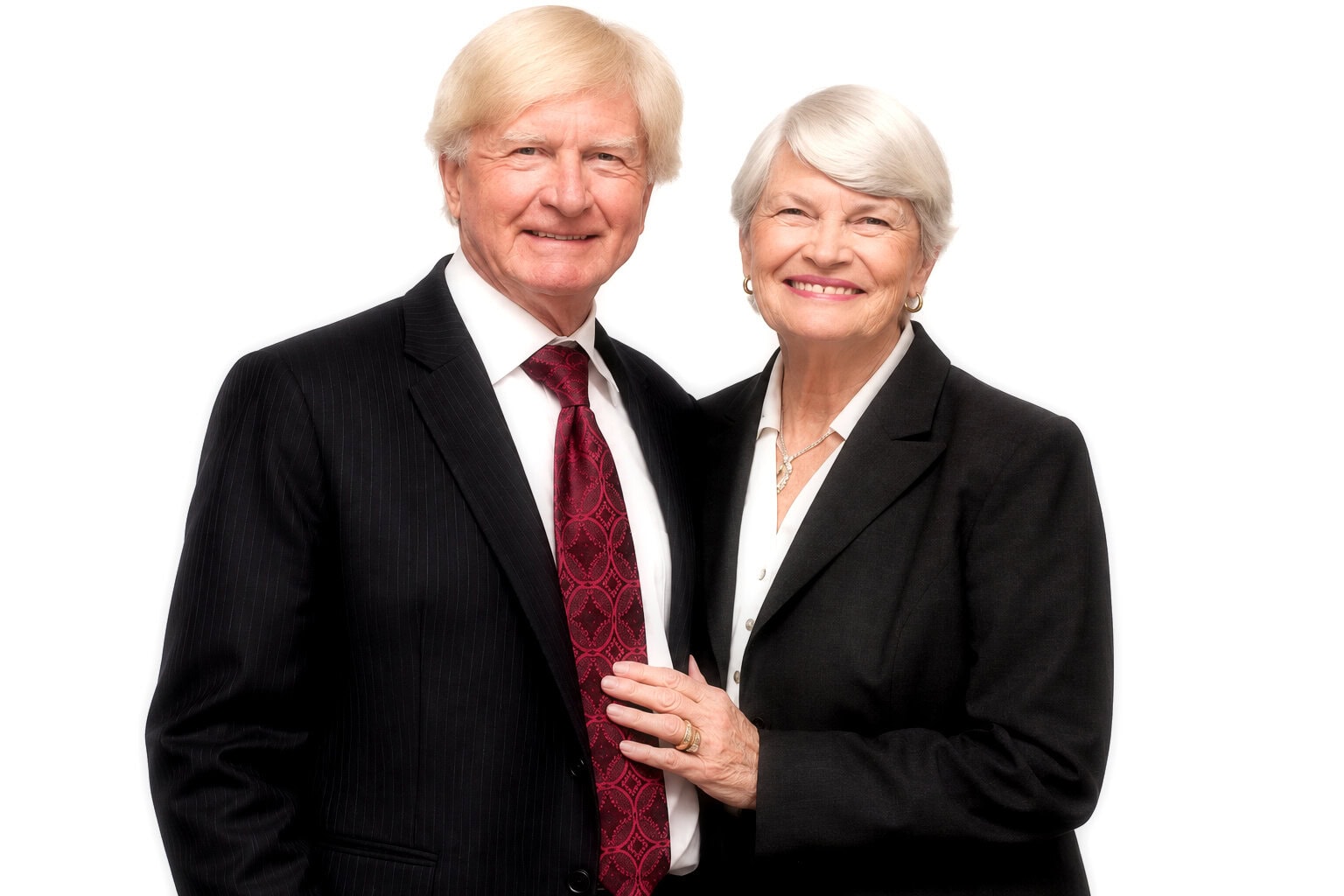
The DBRS founder built one of the world’s top credit rating agencies from a shoestring.
Now the Winnipeg paperboy-turned-philanthropist has paid for an entire medical center so people in pain can walk again.
Walter Schroeder still remembers Winnipeg winters as a boy with a paper route. He was born in December 1941 to German-speaking Mennonite parents whose families had fled Ukraine during the Russian Revolution, surviving the upheaval but losing everything they owned.
They settled in the poorest corner of the city, hemmed in by railway tracks, and took whatever work kept the household going.
His mother cleaned houses for wealthy families. His father was a school caretaker, a handyman who could plumb and do carpentry and who took pride in keeping the family home in good repair.
Walter didn’t speak English until first grade.
He grew up surrounded by dozens of cousins, and he said he never realized the family was poor because there were always so many relatives close at hand.
What his parents lacked in money, they made up for in conviction. Work hard. Spend carefully.
Put family at the center of your life.
And share whatever you have, even if it’s not much—share it.
“I grew up in an environment where if you had something in abundance, you shared it, and if somebody needed help, you helped,” he says today, at 84.
That upbringing explains almost everything about the man, including the habits that make people smile when they meet him.
Schroeder drives a 1981 Cadillac on the sensible grounds that a car that still runs doesn’t need replacing. He reuses his tea bags. Offered a fancy lunch, he’ll happily take a tuna sandwich on white bread.
And yet the same man has written a check, or rather a long series of checks, that now adds up to $400 million and counting, to build and equip a seven-story medical center in Richmond Hill, just north of Toronto, for one simple purpose: to help people who are hurting.
The Schroeder Ambulatory Center stands at 9355 Leslie Street, near the junction of Highways 404 and 407, a location chosen because so many Ontarians live within a two-hour drive. Inside its 200,000 square feet are eight operating theaters, two MRI scanners, CT scanners including a new low-radiation-dose machine worth about $4 million, an angiography suite, pre- and post-operative recovery rooms, a coffee shop and 820 free parking spaces.
Every bit of construction and equipment was paid for by the Schroeder Foundation. No government money went into the building, and Schroeder didn’t borrow a penny from a bank to finish it. “It’s all me,” he says, with the plain pride of someone who has spent a lifetime wary of debt.
The center began seeing patients with a soft launch of ten clinics on October 1, 2025, and it has grown steadily since. It now offers audiology, gastroenterology, geriatrics and internal medicine, neurology, orthopedics, ear, nose and throat care, pain management, plastic surgery, urology, wound care and a primary-care clinic for Richmond Hill families. Its official opening is set for this October.
Ontario has granted it licenses to provide publicly insured MRI and CT scans and GI endoscopy, with $14 million in provincial funding meant to serve more than 115,000 patients over two years, and in December 2025 the province named it among the new community centers licensed to perform hip and knee replacements.
Those surgeries, led by orthopedic surgeon Dr. Christopher Lu and performed by surgeons who also work at major public hospitals, are now accepting referrals. Patients go home the same day.
The idea took shape soon after the family sold the business that made their fortune.
“When we sold DBRS, we asked ourselves, ‘What are we going to do with all this money?’ “Schroeder says.
“We thought deeply about it, and the best thing we can do is take a person who is in physical pain and lessen their pain, and the second-best thing we can do is improve the mobility of someone having trouble getting from A to B.”
Anyone in Canada who has waited for a new knee or hip understands what he means.
The waiting can stretch on for months, first to see a specialist and then to get into an operating room, while daily life shrinks to the distance a person can walk without wincing. Schroeder’s answer is to move a high volume of routine, publicly insured procedures out of crowded hospitals and into a purpose-built community setting, freeing hospitals to concentrate on the more complex cases only they can handle.
Procedures are covered by OHIP.
Whatever revenue the center earns goes back into patient care.
Schroeder himself stands to make nothing.
He carefully describes the project as a partnership rather than a rival. “We have asked the government to look at us as an experiment,” he says.
“We don’t want to steal patients from the hospitals; we want, with sincerity, to help.” The architects who reshaped the building, originally a medical office tower, designed it to handle up to 200,000 patient visits a year.
Schroeder, characteristically, is thinking bigger, picturing as many as 300,000 patients a year once the center reaches full stride. If it works, he hopes it will become a model others across Canada can copy.
He is not a man who signs a check and walks away. “I don’t just give money; I actually do it,” he says.
“I am pretty hands-on, and I think I can do a better job spending money than most.” He can often be found walking the center’s corridors, part of a daily routine of stretching and long walks that keeps him limber.
Neither he nor Maria suffers from joint pain, but he grows visibly emotional when he talks about people who do.
Staff has learned that if a new piece of equipment arrives, he is likely to turn up beside it, studying it with the delight of a man who has finally found something worth spending money on.
That hands-on instinct goes back to the beginning of his career. Schroeder earned an honors commerce degree at the University of Manitoba and an MBA at McMaster University, then worked evenings to earn his accounting and CFA credentials.
In 1969, he joined Wood Gundy, the investment house that dominated Canadian finance at the time, where he set up and ran the credit analysis department, regularly visiting Standard & Poor’s and Moody’s to help clients navigate credit ratings. Along the way, he became convinced Canada deserved a rating agency of its own.
The plan for it was born on a highway. Driving from Toronto to Montreal in the mid-1970s, with their two small boys in the back seat of a ruby-red Volkswagen Beetle, Walter talked through the idea while Maria took notes.
By the time they reached Montreal, the couple had worked out everything from funding to timing to furniture.
“The kids, remarkably, stayed quiet the entire time in the backseat,” he has recalled.
“Otherwise, we couldn’t have done it.” It was the same car they had bought as newlyweds with part of a $5,000 loan from a relative, a loan they paid back to spend a year exploring Europe.
They founded Dominion Bond Rating Service in 1976 with only a few thousand dollars in capital.
Within a few years, it was a full-service agency rating most of the Canadian and international companies operating in Canada, along with banks and sovereign governments.
Schroeder personally rated roughly 120 global banks. DBRS became the largest rating agency in Canada and the fourth largest in the world, with offices in New York, Chicago, and London, and its name in giant red letters atop a Bay Street tower.
Remarkably, nearly 40 years after he started it, Schroeder was still its sole owner.
In late 2014, he agreed to sell to private equity firms The Carlyle Group and Warburg Pincus in a deal reported at about US$500 million, which closed in early 2015. “We had probably taken it as far as we could,” he said. Morningstar bought the company, now Morningstar DBRS, in 2019.
Walter and Maria were a team then, and they remain one now. Maria’s own story is part of why the couple gives the way it does.
She was born into a Mennonite family in the Soviet Union during a time of harsh persecution, reached West Germany with her mother and sisters, and lived in a refugee camp before the family settled in Winnipeg.
She was a gifted student, but money was so tight that she might have had to leave school. Her principal stepped in with encouragement and a small bursary that kept her in class for one more year, long enough to graduate.
She went on to university, where she met Walter. That single act of kindness by one school principal has since been repaid many thousands of times over.
The couple created their foundation in 2015, and they have given at a pace few Canadian donors have matched. Before the ambulatory center, they had already committed roughly $100 million to health care, education, the arts, and food security.
At Toronto Rehab, they gave $20 million in 2017, then the largest gift ever made to a rehabilitation hospital in Canada, creating what is now the Schroeder Institute for Brain Innovation and Recovery.
They gave $22.125 million to establish the Schroeder BRAIN&HEART Center at St. Michael’s Hospital, $25 million to create the Schroeder Arthritis Institute at University Health Network, and $10 million to McMaster University for the Schroeder Allergy and Immunology Research Institute.
At Toronto Metropolitan University and McMaster, they have helped expand the number of nurses entering the workforce. Long before the Richmond Hill center, the theme was already clear. “We want to be part of an effort that will finally end unnecessary pain and suffering,” Walter said when the arthritis gift was announced.
Their most personal giving has always flowed back to Winnipeg.
Starting in 2018 with a $10-million gift to three inner-city high schools, Daniel McIntyre, Sisler, and St. John’s, the Schroeders have paid for breakfasts and warm lunches, outreach workers who connect with students and their families, homework help, bursaries, and full scholarships covering tuition, books, and supplies.
One of the first scholarship recipients, a young woman who had spent her childhood as a refugee in Uganda before arriving alone in Canada, put it simply:
“My life has changed forever. I have hope again.” At RRC Polytech, the foundation’s $15-million gift, the largest in the college’s history, launched the Schroeder Institute of Entertainment and Media Arts, and its support there has grown past $18 million, including hundreds of full-ride scholarships.
This year the foundation began a new partnership with Winnipeg’s Seven Oaks School Division, committing $1.5 million plus in-kind support to turn Garden City Collegiate into a nutrition hub that will help feed students across the north end of the city.
“Helping poor and Indigenous families is my passion today,” Schroeder has said. “I like to fight for the underdog.”
The honors have followed, though he doesn’t seek them. He joined the Horatio Alger Association in 2022, was invested into the Order of Manitoba in July 2025, and at the end of 2025 he and Maria were appointed together to the Order of Canada, recognized as devoted philanthropists whose hands-on giving has sparked major initiatives in health care, culture and education and empowered Indigenous youth and underserved communities.
For all the seriousness of his mission, Schroeder has a joyful side that surprises people who expect a buttoned-down bond man.
He has no time for golf, but he has plenty for music, especially what he calls “jukebox music,” songs that tell stories.
leahThrough his production company, Terra Bruce Productions, he has backed musicals built around beloved songs, including No Change in the Weather, a celebration of Newfoundland music and culture that toured Canada and played Toronto’s CAA Theatre, with Schroeder curating the music himself.
He has produced shows honoring Gordon Lightfoot and is now involved in building a new theatre in New York, where he hopes to stage a tribute to Leonard Cohen featuring some of Cohen’s own backing musicians.
Something is in the works with Paul Anka, too. “Music is the fun stuff for me,” he says.
He is still, at heart, a numbers man, and he keeps a close and sometimes worried eye on the country’s finances. He believes Canada should be able to keep its AAA credit rating thanks to its natural resources but warns that the nation leans heavily on oil and gas revenue.
“Oil and gas are carrying the budget, and if that ever ends, in time, Canada is going to have a major problem,” he says. His advice to young people is the same advice his parents gave him: live within your means.
His own means, he has decided, are for giving away. The boy who delivered papers through prairie winters, the son of a cleaning lady and a school caretaker, has spent the second half of his life making sure other people get the help that once came to his own family when they needed it most.
Soon, someone who has waited months with a failing hip will walk into a bright new building in Richmond Hill Park for free, buy a coffee, and go home the same day with a new joint and the promise of walking without pain.
They may never know the name of the man who paid for it. Walter Schroeder would be fine with that.
He’ll probably be down the hall, admiring the CT scanner.