
$20 million gift from Richard Levy will launch Dartmouth Health at Home
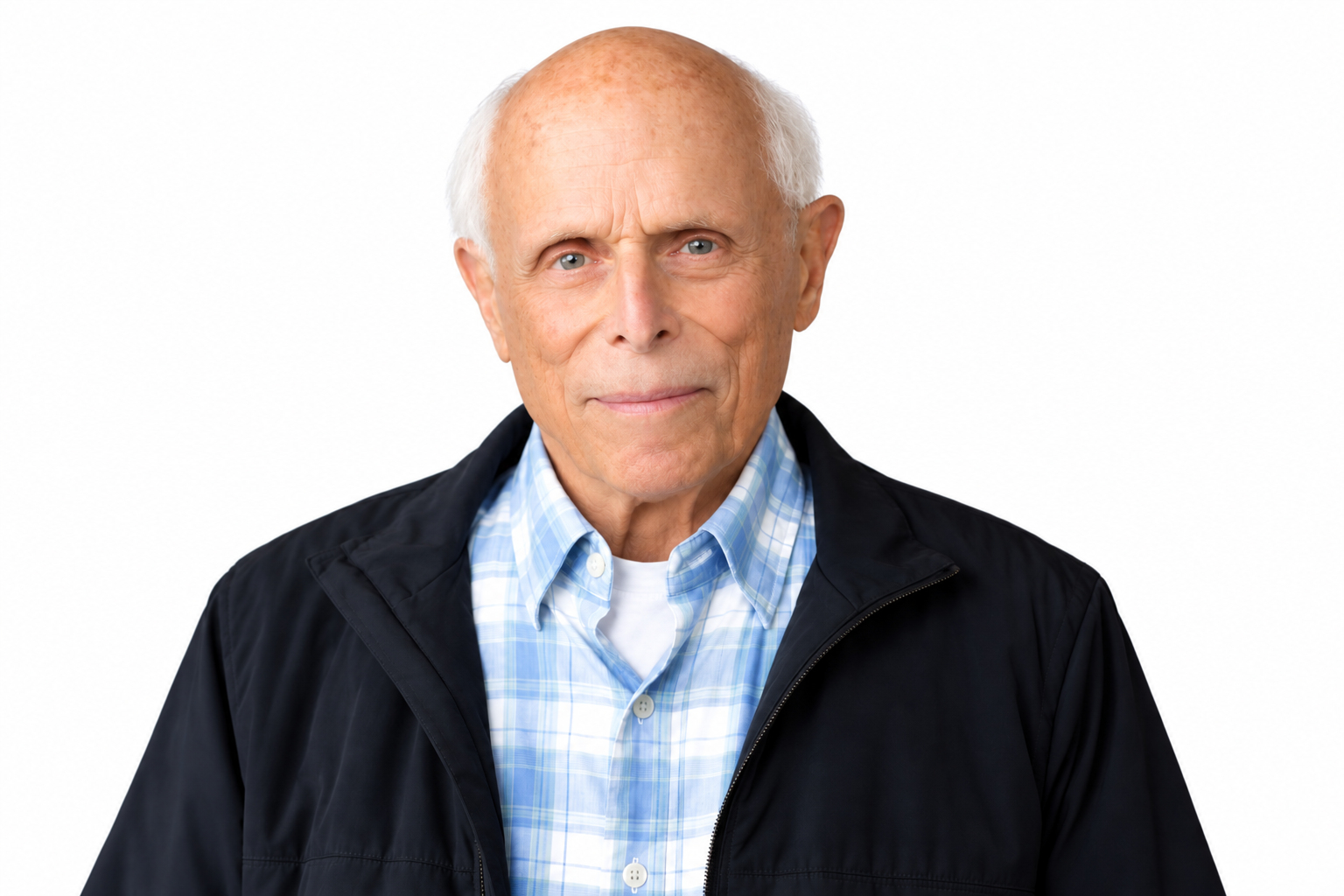
Drawing on the years he spent caring for his wife, the Dartmouth alumnus and former Varian Medical Systems leader is funding a new model of rural care built around patients, families, and the home.
For seven years, Richard Levy lived what millions of American families live quietly.
After his wife, Susan, who grew up in Vermont, was diagnosed with Lewy body dementia, he became her main caregiver, her case manager, and her at-home provider. He kept track of her growing medical needs while also managing his own health. Throughout, he watched the woman he had married in 1964 slowly change as the disease progressed.
Levy, a member of Dartmouth’s Class of 1960, now wants to turn that experience into something lasting. He has made a $20 million gift to Dartmouth and Dartmouth Health to create Dartmouth Health at Home. The program aims to change how rural healthcare works by moving care safely from the hospital to the home and by giving family caregivers the support they have long gone without.
“Home care, I think, is the future of healthcare,” Levy says. “And Dartmouth may be the world leader in putting that together.”
The idea grew from a question Levy kept asking himself during Susan’s illness. He knew he was fortunate. He could afford visiting nurses and home health aides, help with cooking and chores, and someone to organize medications and keep track of doctors’ appointments.
But he kept thinking about the caregivers who could not. Many of them work full-time jobs while providing round-the-clock care. They take on, alone, responsibilities they once shared with the person they now look after. They also have to piece together a care plan from hospital and community services that rarely connect.
Those caregivers make up a large part of the country. About 59 million Americans care for an adult family member with a medical condition, roughly one in five people in the United States. In New Hampshire, Maine, and Vermont, about 740,000 people care for a relative with a long-term illness or disability. The region’s older population, rural geography, economic pressures, and a strong habit of not asking for help make the strain especially heavy there.
Health outcomes in the region reflect those pressures. A 2025 report from Dartmouth’s Geisel School of Medicine and Dartmouth Health found that rural Americans, once healthier than people in cities, have lost that advantage since the 1980s, and the gap keeps widening. One cause is a mismatch in where care happens. Hospital beds are often filled by patients who could be treated safely at home and would rather be there.
“We know people often want to age at home, but it isn’t always clear how to help them do that successfully,” says Dartmouth President Sian Leah Beilock. “Dick Levy’s generous gift will fund the programs and technology caregivers and patients need. It’s part of Dartmouth’s commitment to our community and to leading innovation in rural healthcare, and it’s a real opportunity to create a model for other health systems.”
The program will do three things. It will create a Family Caregiver Institute at Dartmouth Health, offering services, education, support, and access to home care aides. It will bring primary and palliative care into patients’ homes. And through The Dartmouth Institute for Health Policy and Clinical Practice, it will track what works, measuring patient health, patient experience, and costs for families, health systems, and insurers.
Joanne M. Conroy, a 1977 Dartmouth graduate and president and CEO of Dartmouth Health, sees the gift as recognition of the people care has often overlooked. “Thanks to Dick Levy’s philanthropy, Dartmouth Health at Home will provide patients with high-quality care at home, where most prefer to be treated, while also recognizing the vital role that family caregivers play in a patient’s treatment and longevity,” she says. She calls the effort a “much-needed, supportive solution” for families in northern New England and a “case study and scalable model for a new era of healthcare for our aging or chronically ill population nationwide.”
The new program also builds on the Levys’ earlier work. In 2020, the couple founded the Susan and Richard Levy Health Care Delivery Incubator at Dartmouth. Over six years, it has funded 22 projects that redesign how care is delivered, several of which are already improving outcomes. Many of them shared the same goal: giving patients good care, and caregivers good support in the place they most wanted it, which was home.
“The Levy Incubator’s legacy of interdisciplinary collaboration and rapid prototyping gave us the foundation to launch Dartmouth Health at Home,” says Amber Barnato, director of The Dartmouth Institute and the John E. Wennberg Distinguished Professor. “Now our evaluation will translate that pioneering spirit into a scalable blueprint for the rest of the country.” The institute will measure clinical outcomes, cost-effectiveness, and patient experience to help keep the program going for the long term. It will also produce a toolkit that other health systems can use to copy the model.
Levy’s confidence in Dartmouth comes from a career spent in medicine and science. After Dartmouth, he earned a PhD in nuclear chemistry from the University of California, Berkeley, in 1964. In 1968 he joined Varian Medical Systems, which became a global leader in radiation oncology technology. He retired as CEO in 2006 and as executive chairman in 2014. Susan’s diagnosis came two years later.
He believes Dartmouth’s size is part of its strength. “Dartmouth has historically been the leader in looking at innovation in healthcare delivery,” Levy says. “Not only can we do a better job for patients and their families by keeping them at home, we can also reduce costs for hospitals and make them more efficient and effective. It is absolutely the right thing to do.” He adds that the institution “is just small enough to be nimble,” and that it “understands that cross-disciplinary teams work better than individuals working independently.”
That approach will extend into the classroom. Students from the School of Arts & Sciences, Geisel, Thayer School of Engineering, and Tuck School of Business will work directly on the project, gaining experience in health-services research, engineering design, and market strategy. “There is a well-deserved reputation here at Dartmouth as a place where successful models are created and then quickly gain adoption nationwide,” says Geisel Dean Jennifer Hunt. She calls the gift a way to prepare “the next generation of clinicians who will be navigating care for our aging population.”
For Nathan E. Goldstein, chair of the Department of Medicine at Dartmouth Health and the Herman O. West Professor of Geriatrics at Geisel, the cost to caregivers themselves is real and well documented. “At home, exhausted caregivers often manage their own medical conditions while providing care,” he says.
“The data are very clear: caregiving for a loved one leads to poor health outcomes for the caregiver.”
About 20 percent of older Americans live in rural areas, he notes, and Dartmouth Health runs the nation’s most rural academic medical center. That means what works there can be shared with rural communities nationwide.
The Family Caregiver Institute will go well beyond support groups and pamphlets.
Each caregiver will start with an assessment of what they actually need, whether that is help with physical care, emotional support, or guidance through the healthcare system.
From there, they will get hands-on training, care coordination, and help finding resources, connecting Dartmouth’s expertise with local services. “Just like an old-fashioned switchboard, we’ll be connecting them quicker to the things they need the most,” Goldstein says.
“This is Dartmouth Health’s commitment to our communities: providing the right care, for the right person, in the right place, at the right time.”
Levy’s career was built on advanced medical machines, but what he learned at home was simpler. Susan died in 2023, after 59 years of marriage.
What he takes from those last years is not about equipment.
“The answer isn’t always technology,” Levy says.
“One of the best medical drugs you can have is empathy, people around you when you need help. That’s what home care is built around. Empathy is powerful medicine.”