
$40 million from Anthropic, guided by Dario Amodei, strengthens public education and much-needed safeguards for advanced AI
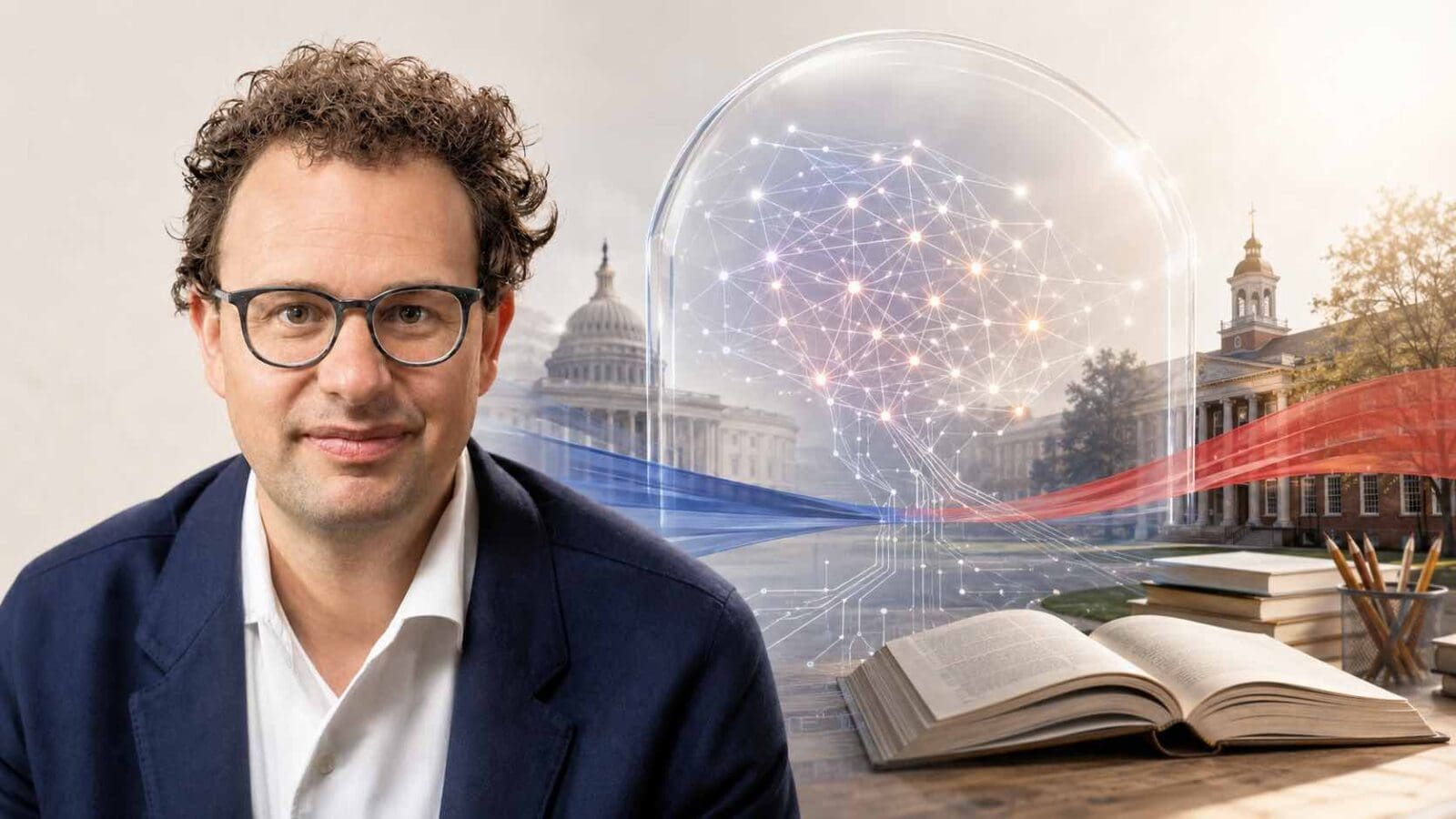
In a moment when artificial intelligence is advancing faster than most institutions can absorb, a deliberate act of leadership is helping shape the conversation.
Anthropic announced that it is contributing an additional $20 million to Public First Action, bringing its total support for the bipartisan organization to $40 million.
The funds are dedicated solely to public education and responsible policy development around advanced AI systems—and cannot be used to influence the election of any candidate.
At the heart of the decision stands Dario Amodei, Anthropic’s co-founder and chief executive.
Dario Amodei is the CEO of Anthropic, an AI research company. Anthropic is a public benefit corporation dedicated to building steerable AI systems that people can rely on and generating research about the opportunities and risks of AI.
Claude is Anthropic’s AI assistant for tasks at any scale and is based on Anthropic’s research into training helpful, honest, and harmless AI systems.
Previously, Dario served as vice president of research at OpenAI, where he led the development of large AI language models like GPT-2 and GPT-3.
He is also the co-inventor of reinforcement learning from human feedback, the technique that powers conversational AI systems like ChatGPT and models created by Anthropic. Before joining OpenAI, he worked at Google Brain as a senior research scientist.
Dario earned his doctoral degree in biophysics from Princeton University as a Hertz Fellow and was a postdoctoral scholar at the Stanford University School of Medicine.
Long known for his insistence that the most powerful technologies must be developed with care equal to their promise, Amodei has treated the rapid rise of frontier models not as a race to be won at any cost, but as a responsibility that demands both scientific ambition and civic foresight.
Under his leadership, Anthropic has repeatedly argued that transparency, independent evaluation, and the capacity to pause or constrain systems that pose catastrophic risk are not barriers to progress—they are the conditions that make lasting progress possible.
The company’s latest contribution to Public First Action reflects that conviction in concrete form.
Public First Action itself was created by two former members of Congress, Democrat Brad Carson and Republican Chris Stewart, who share a belief that the public interest must come first as AI reshapes society.
Their organization works across party lines to educate citizens and support thoughtful safeguards, stronger transparency requirements, and policies that keep America’s technological advantages securely in democratic hands.
The timing is intentional. AI systems are already revealing both extraordinary potential—accelerating scientific discovery, compressing drug development, and opening new pathways to longer, healthier lives—and new categories of risk.
Earlier this year, one of Anthropic’s models identified thousands of high-severity vulnerabilities across major operating systems and browsers.
Rather than leave those findings exposed, the company shared them carefully with trusted defenders through Project Glasswing so the weaknesses could be repaired before they could be exploited.
Amodei’s approach has been consistent: governments and the public need time to build the capacity to capture the benefits of AI while containing its risks.
That work, he has long maintained, must begin now.
In an industry often defined by competitive intensity, the partnership between Anthropic and Public First Action offers a different register—one that treats education, bipartisan cooperation, and long-term responsibility as essential ingredients of leadership.
Through Amodei’s steady insistence on these principles, the company is helping ensure that the next chapter of artificial intelligence is written not only by those who build the systems but also by a broader public prepared to guide them wisely.