
$325 million gift from Gwynne Shotwell marks 250th anniversary, aims to give a chance to more than two million young people to grow up knowing that the future belongs to them
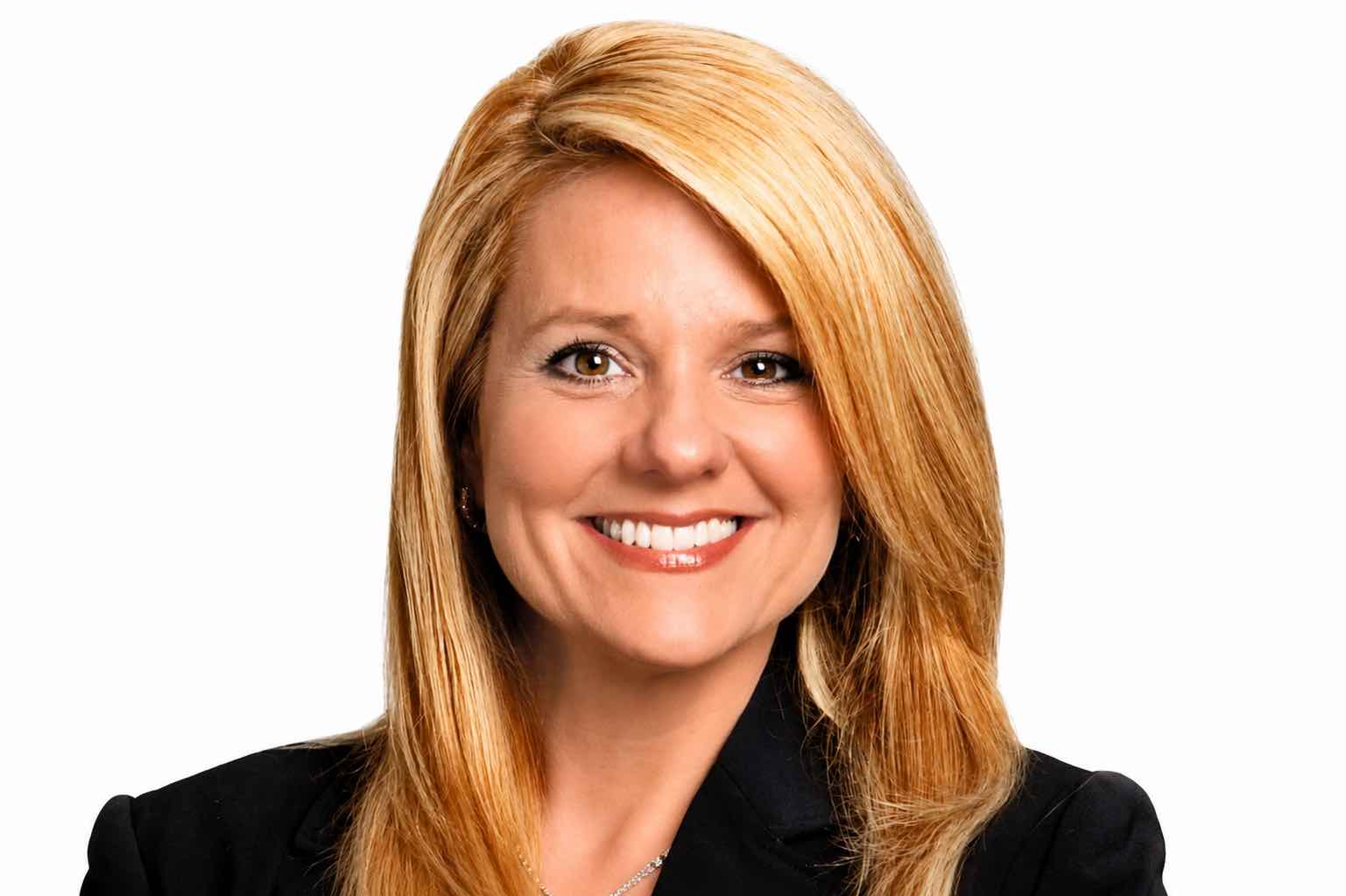
Gwynne Shotwell, President and Chief Operating Officer of SpaceX and one of the most accomplished executives in the history of the American aerospace industry, announced that she and her husband would donate more than two million shares of SpaceX stock to benefit children across the country through the newly launched Trump Accounts program.
Valued at approximately $325 million, the pledge stands as one of the most extraordinary acts of private philanthropy in recent memory—a breathtaking union of ambition, generosity, and a sincere belief that every child in America deserves a stake in the nation’s future.
The announcement came in a post on X, where Shotwell wrote with characteristic warmth and directness:
“My husband and I are honored and thrilled to participate in the Invest America program and gift a share of our SpaceX stock to a Trump account for each of more than two million children across our great nation.”
Her words carry the unmistakable imprint of someone who has spent her professional life betting on the long arc of American ingenuity—and who now wants to extend that bet to the youngest, most deserving members of society.
The Trump Accounts program, formally known as 530A accounts and enacted through President Donald Trump’s landmark legislation, represents perhaps the most consequential children’s investment policy in American history.
Officially launched on July 4, 2026 — chosen deliberately to mark the 250th anniversary of the nation’s independence — the program creates tax-advantaged investment accounts for every American child under 18 who holds a Social Security number.
Children born between 2025 and 2028 receive a one-time $1,000 seed deposit from the U.S. Treasury Department, invested directly in a low-cost index fund tracking the U.S. stock market.
The accounts function like IRAs: they grow tax-deferred, accept contributions from parents, grandparents, employers, and philanthropists alike, and can be accessed at age 18 for purposes such as higher education, buying a first home, or launching a business.
On July 4, the New York Stock Exchange and Nasdaq rang their opening bells from the Oval Office to mark the moment.
Into this landmark program stepped Gwynne Shotwell, armed not merely with a charitable impulse but with something rare and tremendously meaningful: SpaceX stock.
The IPO filings for SpaceX revealed that Shotwell owns approximately 12.6 million shares of the company — a stake whose market value, as of the stock’s first day of trading, stood at approximately $2 billion.
Her pledge of more than two million shares, worth approximately $325 million at the time of the announcement, represents a transformational commitment — a direct financial link between one of the world’s most valuable and visionary companies and millions of American children who might otherwise have no access to the kind of wealth-building capital that defines upper-class financial life.
SpaceX’s path to that valuation is a story worth pausing over, because it is inseparable from Shotwell’s own remarkable career.
The company priced its IPO in June 2026, raising approximately $75 billion in the largest public offering in Wall Street history.
Shares surged past $2 trillion in total market capitalization on the first day of trading on the Nasdaq, eclipsing Broadcom and putting Amazon squarely in its sights.
Elon Musk became the world’s first trillionaire on that day, but standing beside him—as she has for nearly a quarter century—was Shotwell, the woman the press once called “the woman behind SpaceX’s monster IPO.”
It was Shotwell who rang the trading bell on the Nasdaq floor at the IPO debut, a scene of hard-won triumph for someone who joined the company as its seventh employee in 2002, when the entire enterprise fit in a warehouse and the first three rockets failed to reach orbit.
To understand the magnitude of Shotwell’s gift, one must understand Shotwell herself.
Born in Libertyville, Illinois, to a brain surgeon father and an artist mother, she was the kind of child who read books on car engines at age eight and who, at sixteen, attended a Society of Women Engineers panel with her mother that changed the course of her life.
She earned both her bachelor’s degree and master’s degree—in mechanical engineering and applied mathematics, respectively—with honors from Northwestern University, where she later joined the advisory council of the McCormick School of Engineering.
She spent more than a decade at the Aerospace Corporation, rising to chief engineer of an MLV-class satellite program and conducting major studies for NASA and the FAA, before joining Microcosm Inc. as director of its space systems division.
In 2002, a friend introduced her to Elon Musk over lunch. Two weeks later, she was employee number seven at SpaceX.
Musk appointed Shotwell as president of SpaceX in 2008, and the decision proved to be one of the most consequential leadership choices in the history of American business.
While Musk has remained the company’s visionary and public face, it is Shotwell who has overseen daily operations, managed customer relationships, forged government contracts, and guided a workforce of 22,000 full-time employees.
Her compensation in 2025 amounted to $85.8 million—primarily from options awards—reflecting the extraordinary value the company places on her operational stewardship.
Colleagues describe her as deeply approachable, the rare executive who combines rigorous engineering intelligence with a natural talent for human connection.
As one former NASA director who worked alongside her noted, she was pivotal in developing the reusable Falcon 9 rocket and the Crew Dragon capsule, which made SpaceX the first private company in history to send astronauts to the International Space Station.
Her gift reflects this same dual character: technical precision married to genuine human warmth. Shotwell and her husband are not simply writing a check and walking away.
Their donation is targeted with the care one would expect from an engineer who has guided spacecraft to orbit.
The gift specifically targets children ages 11 to 17, with a geographic emphasis on families near the couple’s home in central Texas and special attention to communities where average household incomes are below the norm.
This is not philanthropy performed for the press release.
It is philanthropy designed, as Shotwell herself suggested, to reach the children who need it most—those whose families may not have the means or the awareness to maximize the Trump Accounts opportunity on their own. She wrote that she hopes the gift inspires these children to “live and fly amongst the stars.”
The timing and mechanism of the donation were made possible by a policy breakthrough that coincided with the launch of the Trump Accounts program.
Just days before July 4, the U.S. Treasury Department announced that it would formally accept large philanthropic contributions of publicly traded stock to support Trump Accounts—a decision that created a practical pathway for donors holding company equity to contribute directly to children’s investment futures.
Treasury Secretary Scott Bessent praised the new process, noting that “by accepting contributions of publicly traded stock, Treasury is creating a practical pathway for large-scale private giving to support the next generation.”
Shotwell’s donation is one of the first and most prominent to take advantage of this pathway.
The scope of the Trump Accounts philanthropy movement that has grown up around the program is remarkable in itself, and Shotwell’s contribution now joins a roster of gifts that collectively represent one of the most ambitious private efforts to democratize wealth in American history.
Michael and Susan Dell led the way in December 2025, pledging $6.25 billion to support 25 million children aged 10 and under—one of the largest private charitable donations ever announced.
Billionaire investor Ray Dalio followed with a $75 million pledge to fund accounts for more than 300,000 children in Connecticut.
Dozens of major corporations — Goldman Sachs, Morgan Stanley, JPMorgan Chase, BlackRock, Robinhood, and many others — have pledged to match the government’s $1,000 contribution for their employees’ children.
Altimeter Capital CEO Brad Gerstner, who helped design the Invest America concept, has described the program as the “most capital-efficient form of philanthropy ever devised” because, unlike traditional charitable giving, there are no middlemen or administrative costs that dilute the funds—every dollar goes directly into a child’s account.
More than six million children were enrolled in Trump Accounts as of early June, even before the official launch.
What distinguishes Shotwell’s contribution within this growing constellation of generosity is its particular poetry.
A share of SpaceX stock is not merely a financial instrument. It is a small piece of the company that has, more than any other in history, embodied the dream of reaching beyond our planet—the company that launched the first private spacecraft to dock with the International Space Station, that pioneered reusable rocketry, and that is actively working toward sending human beings to Mars.
When a child in Central Texas who might otherwise have no exposure to wealth or Wall Street receives a share of SpaceX, they receive something more than money.
They receive a symbol of possibility, a certificate of membership in the future that Shotwell and her colleagues have spent their careers building.
As that share appreciates in value over the years ahead — as children grow toward adulthood, toward education, toward the decisions that will define their lives — it will carry within it the implicit message that someone believed in them enough to give them a piece of the stars.
Shotwell’s career has always been animated by a commitment to expanding the frontiers of what is possible, and her dedication to STEM education has been a constant thread throughout it.
Over the years of her leadership in both corporate and external programs, she has helped raise more than $1.4 million for STEM programs that reach thousands of students nationwide, including leading the Frank J. Redd student competition, which awarded more than $350,000 in scholarships over six years.
She has been inducted into the Women in Technology International Hall of Fame, received the World Technology Award for Individual Achievement in Space, and been elected a Fellow of the American Institute of Aeronautics and Astronautics.
She was ranked No. 49 on the Most Powerful Women list in the year leading up to the SpaceX IPO.
These distinctions speak to an executive who has never treated success as an end in itself, but rather as a platform from which to reach back and pull others forward.
That instinct is everywhere in this gift.
In targeting children aged 11 to 17, Shotwell has focused on precisely the cohort most often overlooked by the structural design of the Trump Accounts program—older children who do not qualify for the Treasury’s $1,000 seed deposit and who have shorter time horizons for compounding growth but who still have years ahead of them to watch their share of SpaceX appreciate and to dream about what they might do with it.
In emphasizing lower-income families near her central Texas home, she has anchored her generosity in community and in the recognition that proximity to one of the nation’s great technology corridors has not automatically meant access to its rewards.
SpaceX is itself a measure of how far American ambition has traveled since 2002, when a small team of engineers in a Southern California warehouse bet everything on the belief that private enterprise could conquer space.
The company Shotwell has helped lead raised approximately $75 billion in its IPO just weeks before her announcement, and its valuation of approximately $2.1 trillion makes it one of the most valuable companies ever created. And now, through Shotwell’s generosity, more than two million American children will own a small piece of it.
There is something profoundly fitting about this moment.
On the 250th anniversary of American independence, as a nation paused to take stock of everything it has built and everything it still aspires to become, one of its most distinguished business leaders quietly announced that she was giving away approximately $325 million worth of the most forward-looking company on earth, one share at a time, to children who might one day build the next chapter of that story.
Gwynne Shotwell has spent more than two decades making possible things that the world had never seen before.
With this gift, she has made something else possible: the chance for more than two million young Americans to grow up knowing that the future, however distant and improbable it may seem, belongs to them, too.