
$30 million new gift from Jeff Bezos and Lauren Sánchez Bezos for a transformative 23-acre urban green space on land reclaimed from former Interstate infrastructure
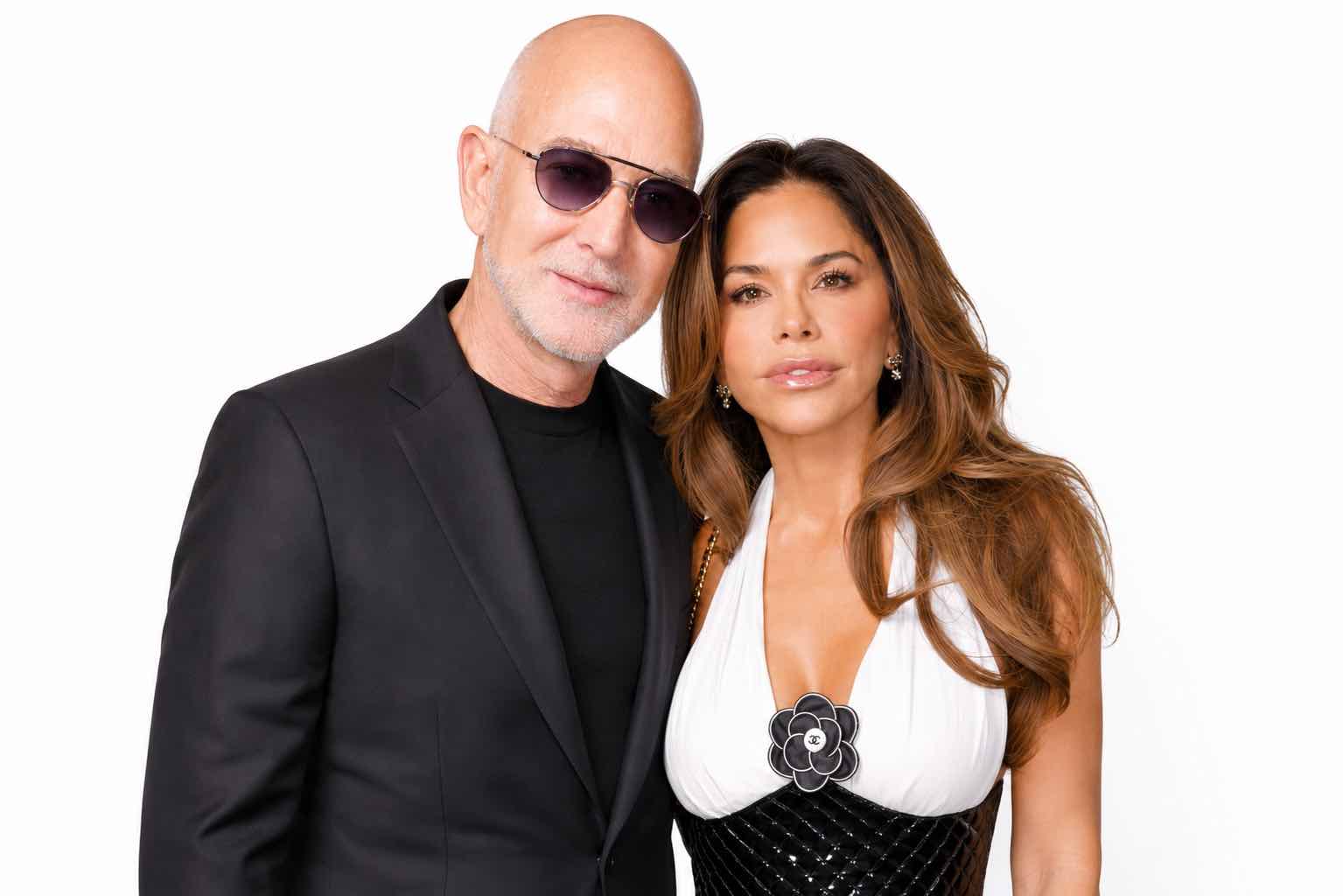
In a major development for downtown Little Rock, the city has received a $30 million grant from the Bezos Earth Fund to advance 30 Crossing Park, a transformative 23-acre urban green space on land reclaimed from former Interstate 30 infrastructure in the River Market district.
The announcement, made in early July 2026, positions the project as a catalytic investment that will connect existing riverfront parks and cultural assets while spurring economic redevelopment in the heart of Arkansas’s capital.
The funding comes from the philanthropic vehicle created by Amazon founder Jeff Bezos, who in 2020 made one of the largest individual commitments ever to climate and nature by pledging $10 billion of his personal resources to establish the Bezos Earth Fund.
While the organization operates independently with professional leadership, Bezos remains the driving force behind its mission and resources.
His partner, Lauren Sánchez Bezos, serves as Vice Chair and has been particularly vocal about the human benefits of accessible green space.
The 30 Crossing Park project occupies roughly 18 acres of Arkansas Department of Transportation right-of-way plus adjacent parcels, totaling about 23 acres. This land became available following the completion of major interstate widening and reconfiguration work under the broader 30 Crossing highway initiative. The site sits in a culturally rich corridor linking the Clinton Presidential Center, the existing Riverfront Park, the Museum of Discovery, the Witt Stephens Nature Center area, and other downtown anchors.
When fully realized, the park is envisioned as a vibrant destination featuring adventure play areas, active sports courts, a skate park, curated nature and wetland zones, multi-use trails, flexible lawns, sand sports, an urban waterfront connection, and spaces designed for arts, community gatherings, and everyday recreation.
The master plan, developed by the international design firm Sasaki in close collaboration with city officials, stakeholders, and the community, treats the park as both a recreational amenity and an economic engine. It aims to stitch together more than 100 acres of interconnected green space along the Arkansas River, create a new “urban living room,” and catalyze surrounding mixed-use redevelopment, including housing, hospitality, and commercial activity.
City estimates for the full build-out range from $93 million to $128 million.
The $30 million Bezos Earth Fund grant is earmarked for the initial phase and is explicitly designed to help leverage an additional $60–70 million in public, private, and philanthropic support.
Local leaders have welcomed the gift as a once-in-a-generation opportunity. Little Rock Mayor Frank Scott Jr. emphasized the unifying and economic potential: “Together, we are creating a destination that will unite our city, grow our economy, and positively reshape the riverfront and downtown for generations to come.”
Ruth Whitney, 2026 Chair of the Little Rock Regional Chamber of Commerce, called the park “a vibrant destination that attracts talent, tourism, and investment and will change the way the world experiences the city we call home” while expressing gratitude to Jeff Bezos, Lauren Sánchez Bezos, and the Earth Fund for the “catalytic investment.”
This grant is not an isolated gift but part of a deliberate $100 million tranche the Bezos Earth Fund recently announced under its Greening America’s Cities initiative. The program targets eight cities—Allentown, Pennsylvania; Atlanta; Cleveland; Indianapolis; Little Rock; Los Angeles; Salt Lake City; and Sioux Falls, South Dakota—with projects that convert underused or vacant urban land into parks, urban forests, wildlife habitats, and community green spaces.
It prioritizes native plantings, climate resilience (especially heat mitigation), equitable access, and long-term maintenance plans developed with residents.
To date, the broader Greening America’s Cities effort has deployed $150 million across 11 cities toward a $400 million goal.
The Earth Fund’s urban greening work sits within a much larger philanthropic architecture. Jeff Bezos launched the organization in 2020 with an explicit $10 billion commitment—the largest single philanthropic pledge ever made specifically to fight climate change and protect nature.
As of mid-2026, the fund has awarded approximately $2.4 billion across 371 grants to organizations working on every continent. Its core programs include a multi-billion-dollar focus on conserving and restoring nature (with priority landscapes in the Amazon, Congo Basin, Tropical Andes, Africa, the Pacific, and the United States); a $1 billion commitment by 2030 to transform food systems through carbon-absorbing crops and regenerative agriculture; efforts to decarbonize heavy industry and advance clean energy solutions; environmental justice initiatives; and support for protecting 30 percent of the planet’s land and ocean by 2030.
Bezos Created $10 Billion Earth Fund to Meet Climate Crisis, First Grants of $800M Go to Iconic Environmental Groups
Recent examples illustrate the scale and diversity of the portfolio. The fund has given $100 million to the World Wildlife Fund to harness nature-based climate solutions globally.
It launched a $100 million AI for Climate and Nature Grand Challenge to accelerate technological breakthroughs. It has backed large-scale restoration in critical ecosystems and supported Indigenous-led conservation.
The Greening America’s Cities program represents the fund’s most concentrated domestic urban investment to date, reflecting a recognition that livable, climate-resilient cities are essential to both human well-being and planetary health.
Bezos Earth Fund CEO and President Tom Taylor has framed the work plainly: green spaces “shouldn’t be a luxury” but woven into daily life for cooling, recreation, family time, and mental health.
Lauren Sánchez-Bezos has connected the program to personal experience, recalling childhood visits to a neighborhood park near her grandmother’s house in Albuquerque:
“It felt enormous to me as a kid… I felt safe there. Protected. … That’s what a great park does. It makes the world feel bigger and the world feel safer. That’s what we’re trying to give people with this program. Not just green space. A place that feels like yours.”
For Little Rock, the timing is significant.
The city has been advancing its Downtown Master Plan, which identifies the former highway ramp parcels as a flagship opportunity to increase downtown vitality, attract residents and visitors, and generate new tax revenue through surrounding development.
The 30 Crossing Park project is expected to deliver both immediate quality-of-life benefits and longer-term economic returns by making the River Market and adjacent districts more competitive for talent, conventions, and investment.
Phase 0 technical work is already underway or imminent, with the goal of producing shovel-ready documents to unlock additional public grants and private capital.
The Bezos Earth Fund grant arrives at a moment when cities across the United States are rethinking underutilized infrastructure—former highways, parking lots, and industrial parcels—as opportunities for green infrastructure that simultaneously addresses urban heat islands, stormwater management, biodiversity, and social equity.
Little Rock’s project stands out for its scale and its role in physically reconnecting previously fragmented parts of the downtown and riverfront. Because the land was already in public ownership and had been cleared through prior transportation investment, the marginal cost of creating high-quality park space is lower than if starting from scratch, making the $30 million investment unusually leveraged.
Looking ahead, city officials and partners will use the grant to advance design, community programming, and fundraising for subsequent phases.
The vision includes not only passive and active recreation but also spaces that can host events, markets, performances, and educational programming tied to the nearby cultural institutions.
Long-term stewardship models—potentially involving a dedicated conservancy or public-private partnership—are expected to be developed to ensure the park remains vibrant and well-maintained for decades.
In the wider context of American philanthropy, this gift underscores a growing trend among ultra-high-net-worth individuals to direct substantial resources toward both global systemic challenges and tangible local improvements that improve daily life.
Jeff Bezos’s $10 billion commitment, still only partially deployed, continues to shape the landscape of climate and nature funding. The Little Rock project demonstrates how that capital can flow to mid-sized American cities, not just coastal megacities or iconic wilderness areas, and deliver visible results in the form of new parks that residents can actually use.
As construction planning accelerates and additional dollars are raised, Little Rock residents will begin to see the outlines of a new public realm take shape where highway ramps once stood.
For a city long defined by its river and its history, 30 Crossing Park represents both a reclamation of land and an investment in a greener, more connected, and more economically dynamic future—one seeded by a $30 million commitment from the Bezos Earth Fund and the personal philanthropic vision of its founder, Jeff Bezos.