$30 million latest gift: the Goldrich family’s extraordinary legacy of survival becomes a gift of prevention
There are gifts that build buildings, and then there are gifts that rewrite what is possible for the people who walk through their doors.
A new $30 million commitment from the Cayton Goldrich Family Foundation to Cedars-Sinai belongs unmistakably to the second category—a gift born not from spreadsheets or strategic planning sessions, but from something far more intimate: a family’s own encounter with the disease it now hopes to outrun.
The result of that gift, the newly opened Cedars-Sinai Cayton BRCA Center, is being described by hospital leaders as the first of its kind in Southern California, a single coordinated home for the genetic testing, screening, fertility planning, prevention, and treatment that people carrying BRCA1 and BRCA2 mutations have historically had to piece together across months of scattered appointments and disconnected specialists.
What once took weeks of waiting rooms and referrals can now, for many patients, happen in a single day.
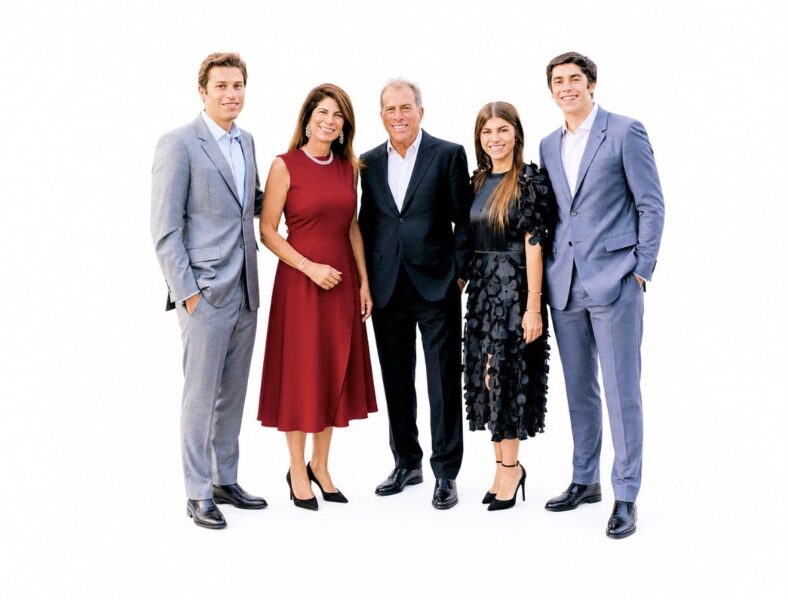
It is difficult to overstate how personal this cause is for the family behind it. Andrea Goldrich Cayton and her husband, Barry Cayton, the foundation’s trustees, have spoken openly about the fact that their decision to fund the center did not begin with a hospital board meeting—it began at their own kitchen table, with their own family’s history of BRCA mutations quietly shaping decades of medical decisions, screenings, and, for some relatives, difficult diagnoses.
They have described wanting to spare other families the fragmented, anxious experience of navigating this risk alone and to ensure that both immediate care and the deeper science of prevention would be given equal weight. That is not the language of donors seeking a plaque.
It is the language of people who have sat in exam rooms themselves, who understand what it means to hear the word “mutation” attached to their own bloodline, and who decided to do something enormous about it.
To understand the generosity on display here, it helps to understand where it comes from, and that story begins nearly a century ago in Poland, with a fourteen-year-old boy named Jona Goldrich.
When the Nazis occupied his native region in 1941, Jona’s father made the wrenching decision to smuggle his two younger sons out of the country, sewing diamonds into their clothing so they would have something to trade if it came to it. Jona and his younger brother Avram walked for four days through forested mountains to reach the Hungarian border, eventually finding their way to relatives who sold those diamonds to give the boys a few coins of spending money.
Their parents and older brother, who stayed behind, were captured and murdered in the camps. Jona and Avram eventually made it to Palestine, where Jona finished his schooling, began an engineering degree at the Technion, and served in the Palmach during Israel’s War of Independence. In the early 1950s, with no family left in Europe and a country still being born beneath him, he boarded a bus for the United States with fifty dollars in his pocket and rode it all the way to Los Angeles.
What Jona Goldrich built from that fifty dollars is the stuff magazine profiles are made of. He started as a window screen installer, then ran a small construction cleanup operation, and in 1959, partnered with a fellow Holocaust survivor, Sol Kest, to found Goldrich & Kest Industries.
Together they built residential towers in downtown Los Angeles when almost no one believed people would want to live there; pioneered some of the first apartment complexes in Marina del Rey; and eventually assembled a portfolio that would grow to more than two hundred properties across California—including senior living facilities, marinas, and dozens of low-income housing developments that Goldrich insisted on running with free after-school and summer programs for the children living in them.
He liked to say he got satisfaction from housing people who needed it and made money doing it. By any accounting, he did both extraordinarily well.
But it was what Jona did with that success that his family speaks of most and what makes the current gift to Cedars-Sinai feel less like a single grand gesture and more like the latest chapter in an unbroken story.
In 1987 he founded the Goldrich Family Foundation, with a mission statement broad enough to match his own restless generosity: curing disease, supporting schools and universities, promoting social justice, and above all, keeping alive the memory of the six million who did not survive what he did.
He was the driving force behind the creation of the Los Angeles Holocaust Memorial and later founded the Los Angeles Museum of the Holocaust itself, the first museum of its kind in the country founded by survivors, built so that the truth of what happened to his own parents and brother would never be allowed to fade.
Halfway around the world, at Tel Aviv University, his name is attached to an entire constellation of institutions he endowed—an institute for Yiddish language and culture, a chair in international banking, a theater archive, a sports center, and a fitness center—in recognition of a man who never stopped thinking of the country that gave him refuge as a teenager.
He was honored there in 2013 as one of four “philanthropic visionaries” of his generation, and it is a title that, reading through the sheer breadth of what he built, feels almost understated.
And in the world of publishing, Jona’s generosity reached even into the founding years of this very magazine—he was among the earliest supporters of Lifestyles Magazine and Meaningful Influence, believing before almost anyone else that the stories of givers like himself deserved a dedicated home in print.
When Jona Goldrich died in 2016 at the age of eighty-eight, he left behind his wife of fifty-six years, Doretta, his daughters Melinda Goldrich and Andrea Goldrich Cayton, his son-in-law Barry Cayton, and three grandchildren — Garrett, Lindsay, and Derek — along with, by any measure, one of the more remarkable second acts in twentieth-century American immigrant life.
What he did not leave behind was any doubt about where his philanthropic instincts would go next. His daughters had been absorbing his lessons for decades, and in the years since his passing, they have not merely preserved his legacy—they have expanded it, deepened it, and in some cases surpassed it.
Melinda Goldrich, now chair of the Board of Councilors at USC Shoah Foundation, has become one of the most visible champions of Holocaust education in the country, continuing to fund the archive of survivor testimonies her father once gave his own account to.
She led the family’s role as lead donor for the Shoah Foundation’s new headquarters, established the Jona Goldrich Center for Digital Storytelling in his honor, and sits on the boards of the Holocaust Museum LA, the Chabad Jewish Community Center of Aspen, and Americans for Ben-Gurion University, among others.
Andrea Goldrich Cayton, meanwhile, has channeled much of her own philanthropic energy toward children and education, supporting institutions like Cayton’s Children Museum and, alongside her husband Barry, serving as executive producer on “Ruth: A Little Girl’s Big Journey,” a documentary produced in partnership with the Shoah Foundation.
Both sisters have said, in their own words, that their father taught them the same lesson: that giving back and educating the next generation, especially children, about both atrocity and resilience was not optional—it was simply what you did with what you had been given.
Under the sisters’ stewardship, the family foundation — now formally the Cayton-Goldrich Family Foundation, with Andrea serving as president and Barry as treasurer — has steadily grown its giving, distributing tens of millions of dollars across dozens of grants every year to Jewish and Israeli organizations, healthcare institutions, and Holocaust remembrance efforts.
Its fingerprints are visible across an extraordinary range of causes: the Jewish Agency for Israel, Friends of the Israel Defense Forces, the American Society for Yad Vashem, Hillel at UCLA, Ramah in the Rockies summer camps, the Jewish Community Centers of Denver, and the Friends of the Jewish Community Center of Krakow, which in recent years has extended its work to support refugees fleeing the war in Ukraine.
And Cedars-Sinai has remained, throughout, something like a second home for the family’s generosity—a relationship that began with annual support and grew, in 2019, into the $10 million gift that established the Jona Goldrich Center for Alzheimer’s and Memory Disorders, a tribute named for their father and designed, fittingly, to spare other families the particular anguish of watching memory disappear.
That the sisters would eventually turn their attention to BRCA-related cancers feels, in hindsight, almost inevitable—not a pivot, but a continuation of the same underlying conviction that has guided this family for three generations now: that inherited risk, whether carried in memory, in trauma, or in genes, should never have to be faced alone, and that the right resources applied at the right moment can quite literally rewrite a family’s future.
The cause itself could not be more deserving of that conviction. Roughly one in four hundred people carries a BRCA mutation, a genetic reality that dramatically elevates the risk of breast, ovarian, prostate, and pancreatic cancers.
Hospital leaders have noted that the new center is specifically designed to close care gaps for communities known to carry elevated BRCA risk, including those of Eastern European Jewish, Korean, Mexican, and African American ancestry—populations that have too often been underserved by fragmented genetic care.
Dr. Cristina Ferrone, chair of the Jim and Eleanor Randall Department of Surgery at Cedars-Sinai and the physician leading the new center, has credited the Cayton Goldrich Family Foundation directly for making that outreach possible, saying the gift gave her team the resources to conduct outreach and coordinate care for these patients in a way that simply did not exist before.
Dr. Peter Slavin has echoed that gratitude publicly, praising the family’s generosity for enabling a more coordinated and compassionate path for the patients Cedars-Sinai serves.
What makes the Cayton-Goldrich story so resonant, in the end, is not simply the size of any single number—though $30 million is, by any measure, a transformative sum.
It is the fact that behind that number sit three generations of a single family whose entire philanthropic identity was forged in survival and gratitude: a fourteen-year-old boy who walked out of Poland with diamonds sewn into his coat and arrived in America with fifty dollars; the empire of housing and hope he built from it; the museums, universities, and memory institutions he funded so the world would never forget what he had lived through; and now his daughters, carrying that same instinct forward into cancer prevention, into memory care, into Holocaust education, and into the lives of children they will likely never meet.
In choosing to fund not just treatment but prevention, not just Los Angeles’s most connected patients but its most vulnerable communities, the Cayton Goldrich Family Foundation has done something rare in philanthropy: it has turned inherited pain into inherited hope, generation after generation, and handed that hope to strangers who will spend the rest of their lives grateful for a family’s foresight.