$28.7 million bet that the human heart can learn to heal itself, announced by Jonathan Simons
The Marcus Foundation announced a $28.7 million grant to Charles “Chuck” Murry, the head of the USC Stem Cell Center at the Keck School of Medicine, to push a two-decade laboratory obsession — regenerating heart muscle destroyed by a heart attack — into its first human clinical trial.
It’s the largest gift the foundation has ever made to USC and one of the largest it has ever committed to academic medicine, period.
Murry broke the news himself on LinkedIn the same day, describing the funding as support for “a first-in-human clinical trial of heart regeneration in patients with cardiogenic shock, while advancing the development of next-generation regenerative therapies.”
“The work that Chuck Murry and his team are doing could transform the entire field of regenerative cardiology,” said Jonathan Simons, chief science officer of The Marcus Foundation.
Simons should know something about turning philanthropic money into cures—he spent 14 years running the Prostate Cancer Foundation before joining Marcus in 2021, and in that stretch he helped steer more than 800 research awards across 22 countries and roughly $590 million into peer-reviewed science.
He calls this kind of award, informally, a “genius award”—a rare, oversized, single-scientist bet meant to compress the painfully slow last mile between a working lab discovery and an actual patient.
“Murry and his team have advanced gene-edited cellular therapy to the point that the time is right to support cells as living medicine in this new form of treatment for myocardial infarction,” Simons said.
The problem this money is aimed at is one of cardiology’s oldest and cruelest. The heart is one of the least regenerative organs we have. Once its muscle scars over after a heart attack, it doesn’t grow back—ever. That dead tissue drags down the heart’s ability to pump blood, and it’s the slow, often fatal engine behind heart failure.
For decades, cardiovascular medicine has gotten very good at propping up a damaged heart—stents, beta blockers, defibrillators, transplants—without ever actually fixing it. Murry’s idea is blunter and more ambitious: grow real replacement heart-muscle cells from stem cells in a lab, inject them straight into the scar, and engineer them to physically wire into the surviving tissue and beat in rhythm with it. “These cells are a new kind of living medicine,” Murry said. “Once they are injected into the heart, they become active in repairing and synchronizing with the rest of the heart muscle.
We’ve been working on this for more than two decades and are now at the threshold of a breakthrough in cardiology.”
The grant does more than bankroll the trial.
A second, quieter research track will study how the immune system reacts to the transplanted cells, with the goal of eventually cutting out the immunosuppressive drugs that normally shadow any kind of cell or organ transplant.
If Murry’s team can build cardiomyocytes the body simply tolerates, it removes one of the last big obstacles standing between “personalized cell therapy” and a true off-the-shelf product anyone could receive.
The trial itself is set to open at Keck Hospital of USC in 2027, run alongside the USC Cardiac and Vascular Institute, with a second site at the University of Washington — the school where Murry spent 28 years on faculty and where a good chunk of this technology was first built.
It’s a small, careful first step: about 18 patients who’ve survived a severe heart attack with major muscle damage will receive the stem-cell-derived cells directly into the injured region of the heart. Like any first-in-human study, the priority is safety and feasibility, not miracles—though researchers will be watching closely for any early signs that the cells are doing what they were designed to do.
The human stakes behind that small number are enormous.
Without a regenerative option, many patients with this level of heart damage don’t survive it, and a lot of those who do leave the hospital struggle just to walk to the mailbox for the rest of their lives. The hope is to get people back to something close to who they were before the heart attack—not just alive, but functional.
“Our renowned researchers and clinicians will have yet one more powerful therapy to improve the heart health of our patients and help further establish Keck Hospital of USC as the regional destination for cardiovascular care,” said Dr. Steven Shapiro, USC’s senior vice president for health affairs, who has run Keck Medicine and the Keck School since 2021.
The rest of USC’s leadership was just as effusive.
“This upcoming clinical trial has the potential to change and save the lives of millions of patients struggling with the downstream effects of damaged heart tissue after a heart attack,” said Keck School of Medicine Dean Carolyn Meltzer, who has led the school since 2022.
“The Marcus Foundation is now an integral part of this lifesaving mission.” USC President Beong-Soo Kim, elected the university’s 13th president just this past February after serving as interim president since mid-2025, framed it as part of a bigger pattern: “The Marcus Foundation leads the way when it comes to supporting visionary science that will have a positive impact on society. This award also lays the groundwork for additional research opportunities as we accelerate the development of more advanced cellular therapies to save lives.”
Murry’s path to this moment goes back almost 30 years, and it started by accident.
As a third-year medical student at Duke, he wanted a spot in an oncology lab and couldn’t get one. He landed in a different lab mostly because he liked the professor—not because the science grabbed him. It grabbed him anyway.
That detour led to a discovery that reshaped how scientists understood the way heart cells die after a heart attack, and it pulled him toward a PhD and, eventually, a career built almost entirely around one stubborn question: where do you find enough replacement heart-muscle cells to actually fix a broken heart? “I figured making more cells was probably something that would remain unsolved until the next generation took the reins,” he’s said. “When stem cells came out, we could see, ‘Okay, now we have a source. ‘ So we pivoted.”
That pivot happened at the University of Washington, where Murry spent 28 years building what became the UW Medicine Heart Regeneration Program and, later, the Institute for Stem Cell and Regenerative Medicine, which he co-founded in 2006 and eventually directed.
Colleagues at the time weren’t shy about telling him he was making a mistake. “Well-intentioned people gave me the tough-love talk,” he recalled. “They said, ‘Chuck, we think you’re throwing away your career. ‘ But I couldn’t let go of it. Or it wouldn’t let go of me.”
The early results were genuinely dramatic—his team used human stem cell-derived heart cells to rebuild damaged tissue in monkey hearts, pushing pumping capacity from around 40 percent back up toward 50—proof the cells could physically repair scarred muscle. But the new tissue beat out of step with the rest of the heart, a dangerous glitch called engraftment arrhythmia, and that single problem stalled any thought of human trials for years while Murry’s lab worked to solve it.
The fix, when it came, was genetic. In 2024, Murry and his colleagues reported that editing four specific spots in the genome of the transplanted cells reversed heart-attack damage in rhesus monkeys while cutting arrhythmias by 95 percent—the result that finally convinced Simons and the Marcus Foundation that, as they put it, “the time is right.” Murry has always held himself to a blunt personal standard for when a therapy is actually ready: “I wouldn’t have done this in my mother at that point.
My internal compass has always been, if you wouldn’t have done it in your mom, you’re not ready to do this in someone else’s loved one.”
By his own account, that bar has finally been cleared.
“Across my career, I’m proudest of taking heart regeneration to the point where we could make it work in an animal that predicts what might happen in a human,” he’s said. “I feel a sense of urgency. I think patients are waiting, and science is ready for this to move.”
Murry left Seattle for Los Angeles in August 2024, recruited to chair USC’s Department of Stem Cell Biology and Regenerative Medicine and to direct the Eli and Edythe Broad Center for Regenerative Medicine and Stem Cell Research—effectively making him the head of USC Stem Cell.
He arrived with an unbroken run of NIH funding as a principal investigator dating back to 1996 and more than 200 peer-reviewed papers behind him. Back at UW, he handed the reins of the stem cell institute to Jennifer Davis, who ran it as interim director after his departure and was named permanent director in October 2025—which means the University of Washington arm of this new trial will be led by the very institute Murry spent decades building before passing it on.
USC’s own stem cell program dates back to 2006, when Eli and Edythe Broad gave $30 million to get it off the ground; the Broad Foundation has since put nearly $113 million into sister centers at USC, UCLA and UCSF combined — a total this single Marcus Foundation gift to one researcher’s program now dwarfs on its own.
The timing matters, too.
Heart disease is still, by a wide margin, the country’s biggest killer.
The CDC estimates someone in the U.S. has a heart attack roughly every 40 seconds — about 805,000 a year — and that cardiovascular disease takes a life every 34 seconds, adding up to over 919,000 deaths in 2023 alone, or one in every three deaths nationwide.
Survival has gotten dramatically better since the 1970s, when hospital survival for older heart attack patients hovered around 60 percent; today it’s over 90 percent. But that success has a shadow side—more people now live long enough afterward to develop chronic heart failure, hypertensive heart disease, and arrhythmias.
The Heart Failure Society of America puts the current number of Americans living with heart failure at 6.7 million, on track to hit 8.7 million by 2030 and 11.4 million by 2050, with roughly one in four adults now expected to develop it in their lifetime.
The projected cost by 2050: as much as $858 billion.
Against that backdrop, stem cell cardiology has had a rough couple of decades. A 2025 review of 27 clinical trials of stem cell therapies for advanced heart failure, run between 2014 and 2024, came to a blunt conclusion: no stem-cell therapy is standard of care for heart failure, and nothing in this space has ever won regulatory approval.
One of the field’s most closely watched attempts, Capricor Therapeutics’ ALLSTAR trial of donor heart-derived cells in post-heart-attack patients, was shut down after an interim look showed it likely wouldn’t hit its main goal of shrinking scar tissue—this despite tens of millions of dollars in backing from California’s state stem cell agency.
Set against that graveyard of near-misses, Murry’s approach—actually gene-editing the transplanted cells to solve the arrhythmia problem that has sunk earlier attempts—is a genuinely different bet, and the Marcus Foundation is now underwriting it at a scale that’s unusual even by the standards of well-funded medical philanthropy.
The foundation’s willingness to swing that big traces directly back to the life and death of the man whose name is on the door. Bernie Marcus co-founded The Home Depot in 1978 with Arthur Blank, backed by the investor Ken Langone, after getting fired from a previous hardware chain.
The company he built turned him into a multibillionaire, and he and his wife, Billi, became early signatories of the Giving Pledge, the campaign Warren Buffett and Bill and Melinda Gates launched in 2010 to get the world’s wealthiest people to commit the bulk of their fortunes to charity.
The Marcuses founded The Marcus Foundation back in 1989, and over the following 35 years they poured more than $2 billion — by some counts closer to $2.7 billion — into more than 400 nonprofits, focused heavily on medical research, veterans’ care, children’s services, community development, and Jewish causes in the U.S. and Israel.
Marcus died at his home in Boca Raton in 2024, at 95. Estimates pegged his net worth at the time somewhere between $10.3 billion and $11 billion.
His death didn’t slow the giving down—if anything, it sped it up.
Jay Kaiman, the foundation’s president, said within days of Marcus’s passing that the foundation would now have to give away significantly more than the $2.7 billion already deployed and do it in a much shorter window, honoring Marcus’s wish that most of his fortune be spent out within roughly two decades of his death rather than sit in an endowment forever.
Do the math on that mandate—somewhere between $6 billion and $8 billion over twenty years—and it works out to $300 million to $400 million a year, a pace that would put the foundation among the largest Jewish-affiliated philanthropic operations on earth, in the same league as the Adelson Family Foundation and Schusterman Family Philanthropies.
Forbes’ 2026 list of America’s top philanthropists ranked “Billi Marcus and family” at number 19, crediting the foundation with $290 million given away in 2025 alone—including $30 million to Stanford Medicine’s neurosurgery department for a brain-computer interface aimed at stroke victims, $19 million to the Foundation for Defense of Democracies, and $16 million to the Secure Community Network.
In the weeks before he died, Marcus himself had personally locked in $25.9 million for a new stroke-surgery technique through the Marcus Stroke and Neuroscience Center in Atlanta and closed out a $60 million commitment—pushing his lifetime giving to one program past $140 million—to RootOne, a Jewish Education Project initiative that subsidizes teen trips to Israel.
Running that accelerated giving machine now falls to a small group of people.
Kaiman handles day-to-day operations as president.
Frank Blake, who led Home Depot as CEO from 2007 to 2014, has taken over as the foundation’s chairman. Billi Marcus remains an active voice in where the money goes, and the next generation—Bernie’s son Fred Marcus, a professor at Emory, and his stepson Michael Morris, who owns and publishes the Atlanta Jewish Times—are positioned to take on a bigger role over time.
It’s this small circle, with Simons acting as the translator between family intent and scientific opportunity, that decided Murry’s USC program deserved the foundation’s biggest single university gift ever.
For Simons, the USC award fits a pattern he perfected at the Prostate Cancer Foundation and has since carried over to Marcus: find a scientist who has already ground through the hardest, slowest, least glamorous years of the work — the false starts, the failed experiments, the years spent fixing one stubborn mechanistic problem — and then hand them the kind of single, decisive check that turns a mature lab program into an actual funded trial.
Murry’s arc, from an accidental lab assignment at Duke to a gene-editing fix for arrhythmia in monkeys three decades later, is almost exactly the profile Simons has spent his career hunting for. His line about the “time being right” isn’t just a comment on the science—it’s a window into how this foundation decides where to place its biggest bets.
What comes next will unfold over years, not months. Murry’s team still has to lock down manufacturing and the regulatory pathway for the gene-edited cells, enroll that first small group of roughly 18 patients across Keck Hospital and the University of Washington, and start gathering the safety data that will decide whether this moves toward a bigger trial down the line.
If it works even modestly—restoring real pumping capacity without triggering dangerous arrhythmia or locking patients into lifelong immunosuppression—it would be one of the first real demonstrations that heart-attack damage doesn’t have to be permanent, something cardiology has circled for a generation without ever quite proving.
Murry sees the moment as the payoff of a career-long bet he made against the advice of people who thought he was wasting his talent. “I think it put a flag in the sand that said, ‘Come on, people! This can work. Let’s get it done,'” he’s said of the monkey data that led here. “I feel a sense of urgency. I think patients are waiting, and science is ready for this to move.”
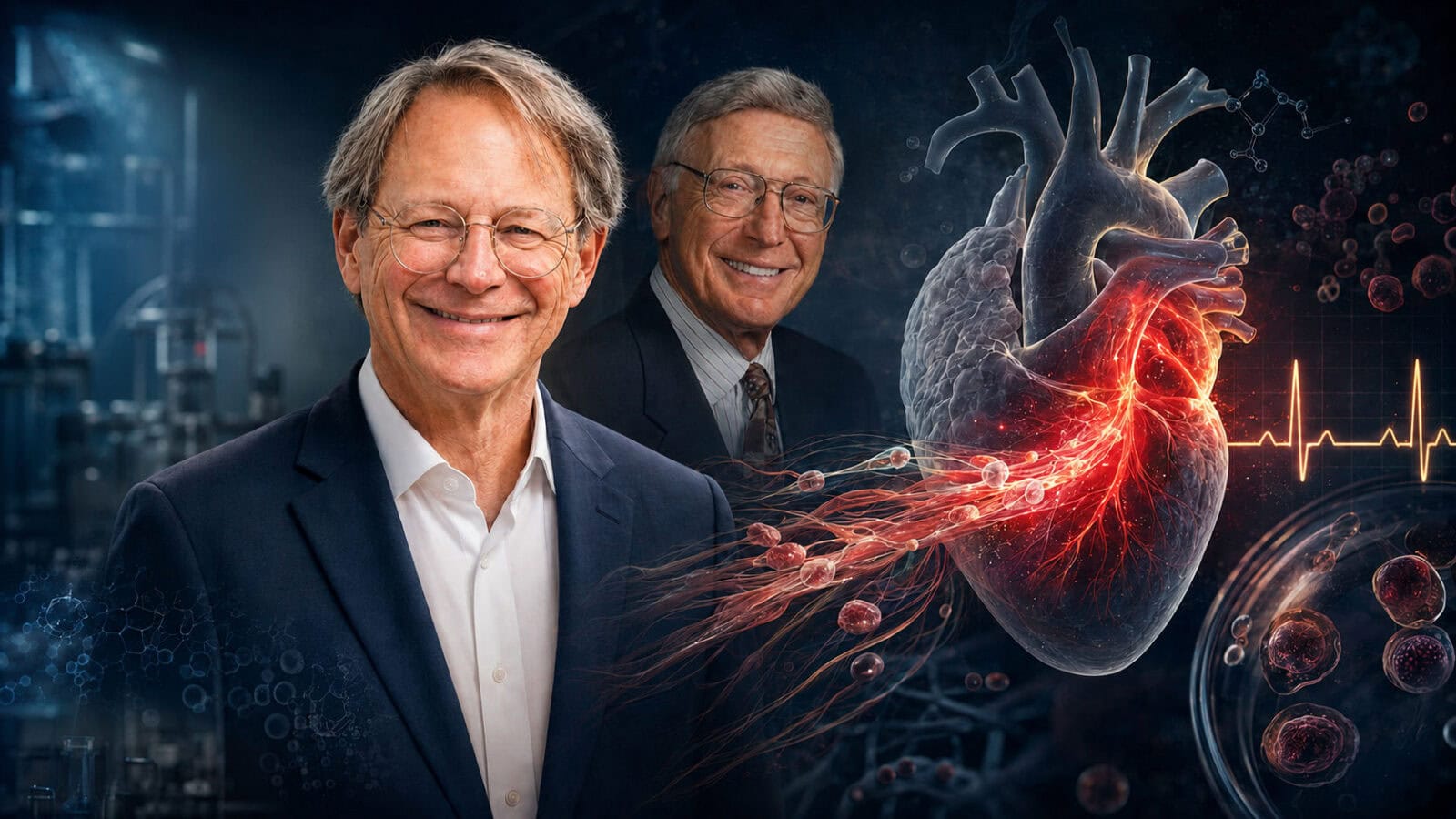
Top Illustration: Jonathan Simons and Philanthropist and Lifestyles Magazine/Meaningful Influence cover subject Bernie Marcus in the background
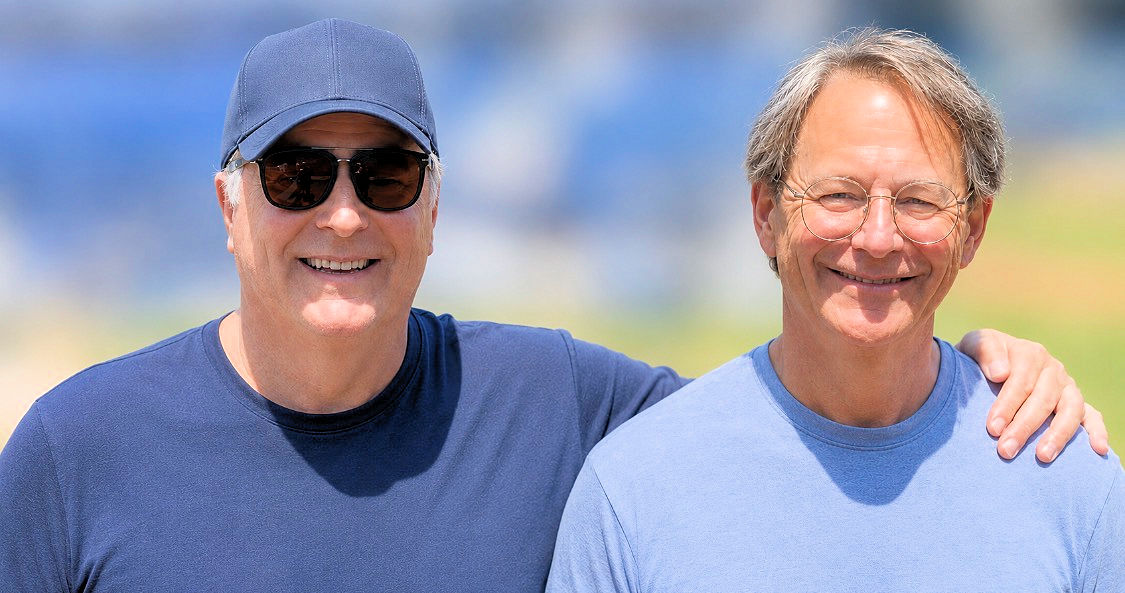
Photo (Bottom): Jonathan Simons, chief science officer of The Marcus Foundation, with Lifestyles Magazine/Meaningful Influence founder Gabriel Erem