$27 million latest gift to Hillel International: how the Marcus family’s $2.7 billion giving legacy keeps growing
The Marcus Foundation has committed $27 million over the next three years to Hillel International, deepening a philanthropic partnership that has quietly reshaped how the world’s largest Jewish campus organization recruits, trains, and retains its people.
The gift, announced this month, is the third in a series of major talent investments the Atlanta-based foundation has made in Hillel over the past decade, and it lands at a moment when Jewish student life on college campuses faces some of its sharpest pressures in a generation.
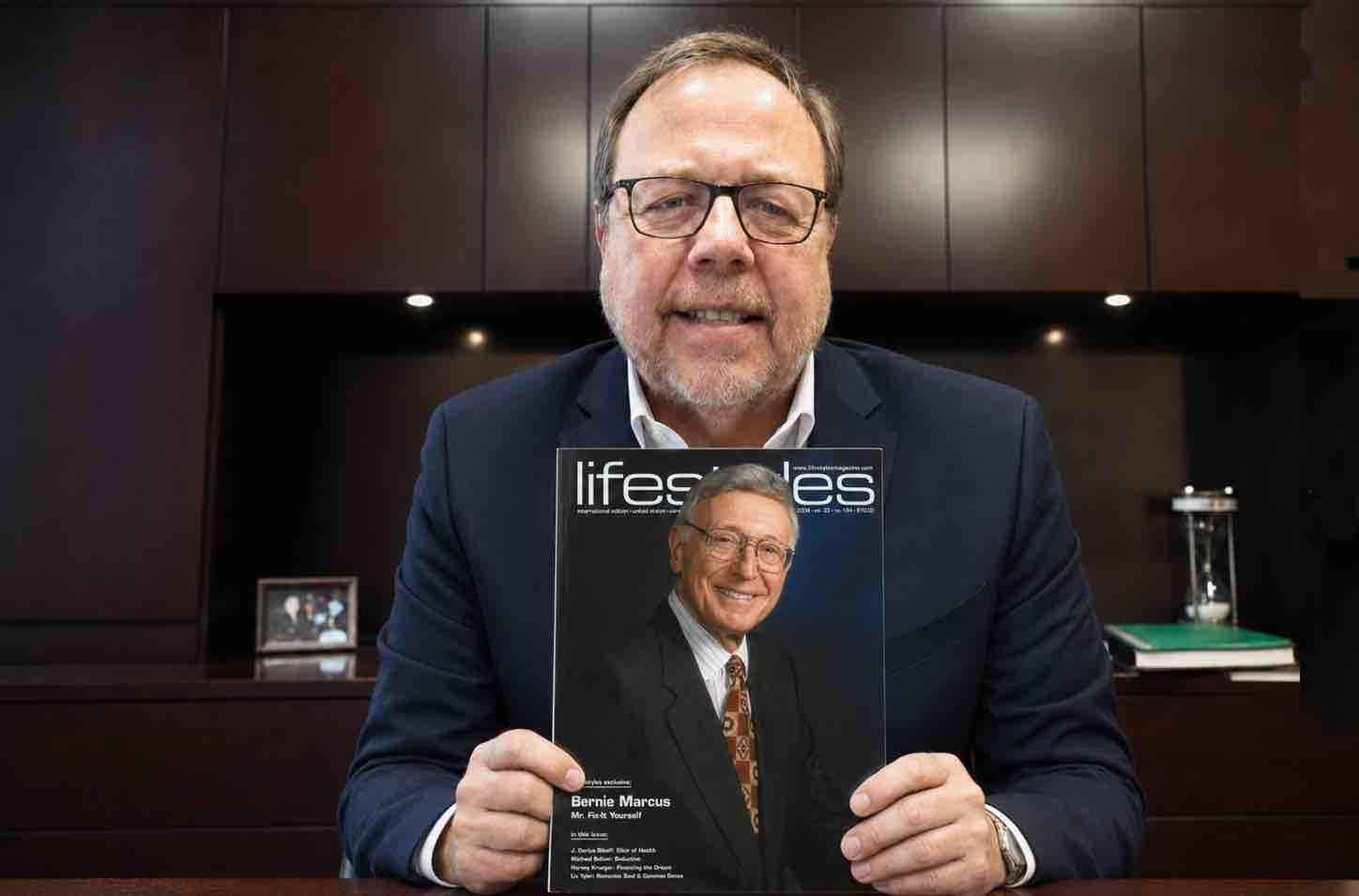
Jay Kaiman, president and director of the Marcus Foundation, has steered this strategy for years, carrying forward the philanthropic instincts of founder Bernie Marcus, the Home Depot co-founder whose name has become synonymous with large-scale, outcomes-driven giving.
“Bernie recognized a long time ago that we needed to support campus life because it was going to be and is very difficult today,” Kaiman said.
“He was talking about it way before it became what the realities are today, so this is a continuation of him looking at the landscape, making a decision that Hillel played a key role in that landscape.”
Hillel International today supports nearly 200,000 students across more than 850 campuses worldwide, and the new commitment is designed to strengthen that reach at a time when Jewish students are navigating a markedly harder social environment.
Since Hillel and the Marcus Foundation first partnered in 2008 — with an initial $3 million gift to build the Marcus Hillel Center at Emory University in Atlanta — the relationship has evolved deliberately away from bricks and mortar.
“A very intentional decision,” Kaiman has said, “not to fund infrastructure and buildings, but to fund people.” That philosophy traces back to Marcus’s own affinity for the frontline “orange aprons” who built Home Depot’s success from the ground up.
That people-first approach crystallized in 2016, when the foundation gave $38 million over five years to launch Hillel’s Talent Grants initiative—at the time, the largest single gift in Hillel’s history—aimed at recruiting, training, and retaining professional staff.
The foundation renewed that bet in 2021 with a second five-year, $38 million grant. The new $27 million commitment brings the foundation’s cumulative investment in Hillel’s talent pipeline to more than $100 million over ten years.
The results have been striking.
Employee retention across the Hillel network has climbed from 50 percent to 90 percent, while leadership hiring from within Hillel’s own internal talent pipeline has grown from 30 percent to 75 percent.
Over the same decade, student engagement with Hillel programming has more than doubled, from roughly 93,000 to 192,000 students annually—growth that has arrived alongside, not despite, a difficult few years for Jewish campus life.
That difficulty is central to why this gift matters now. Since the fall of 2023, Jewish students have faced a wave of antisemitic incidents on campuses nationwide, and many report feeling pressure to conceal their identity.
Families are responding by choosing schools differently than they did a decade ago—Jewish enrollment has noticeably declined at several long-favored Northeastern campuses, while Hillel International President and CEO Adam Lehman says students and their families are increasingly drawn to schools in the Southeast and Southwest.
The new funding will help Hillel build out professionally staffed chapters at growing campuses in that region, including Clemson, Auburn, and James Madison University, so that students choosing those schools still have access to a vibrant Jewish community.
Beyond staffing, the $27 million will fund a broader early-career talent pipeline spanning Jewish education, Israel education, ritual leadership, and community advocacy, along with a new generation of student leadership fellowships and convenings—including Hillel’s first-ever gathering of more than 1,000 student leaders, planned for February 2027.
Hillel projects the grant will help cultivate somewhere between 75,000 and 78,000 new student leaders across its network.
“At a defining moment for Jewish life on campus, we’re proud to deepen our partnership with Hillel to strengthen the critical role Hillel plays,” Kaiman said.
“Today, too many Jewish students feel they must hide who they are—their identity, their connection to Israel, and their pride in being Jewish. This grant is an investment in changing that reality. ”
Lehman, for his part, called talent “Hillel’s enduring theory of change,” adding that the commitment “will ensure that Hillel has the capacity to foster Jewish joy, pride, and leadership across the hundreds of schools we serve and enable an expanded talent and leadership pipeline that can fuel a stronger Jewish future.”
The gift is best understood within the arc of Bernie Marcus’s broader giving legacy.
Marcus, who co-founded Home Depot with Arthur Blank in 1978, established the Marcus Foundation with his wife, Billi, in 1989, and it has since become one of the primary vehicles behind a philanthropic career that has touched more than 400 nonprofit organizations.
Marcus has personally given away more than $2 billion over his lifetime, while the Marcus Foundation itself has distributed north of $2.7 billion through roughly 3,500 grants since its founding.
On the most recent industry rankings of America’s top philanthropists, the Marcus family’s lifetime giving was tallied at $2.7 billion, up $700 million from the year prior.
Marcus and Billi signed the Giving Pledge in 2010, committing roughly 90 percent of their fortune to causes spanning Jewish life, veterans’ care, medical research, free enterprise, and children’s welfare. That commitment has produced some of the most recognizable philanthropic landmarks in Atlanta and beyond: $250 million toward the Georgia Aquarium, $80 million to expand the Shepherd Center, funding behind the Marcus Autism Center and Autism Speaks, and support for the Marcus National Blood Services Center operated by Magen David Adom in Israel.
For Kaiman, who has overseen the foundation’s giving strategy closely for years, the Hillel investment is simply an extension of what Marcus always intended his fortune to do. “He worked very hard for his money,” Kaiman said, “and we get the honor to direct it to things that were important to him.”