
$20 million: a new gift to UNC Lineberger’s cellular immunotherapy program carries the fingerprints of the scientists who built it
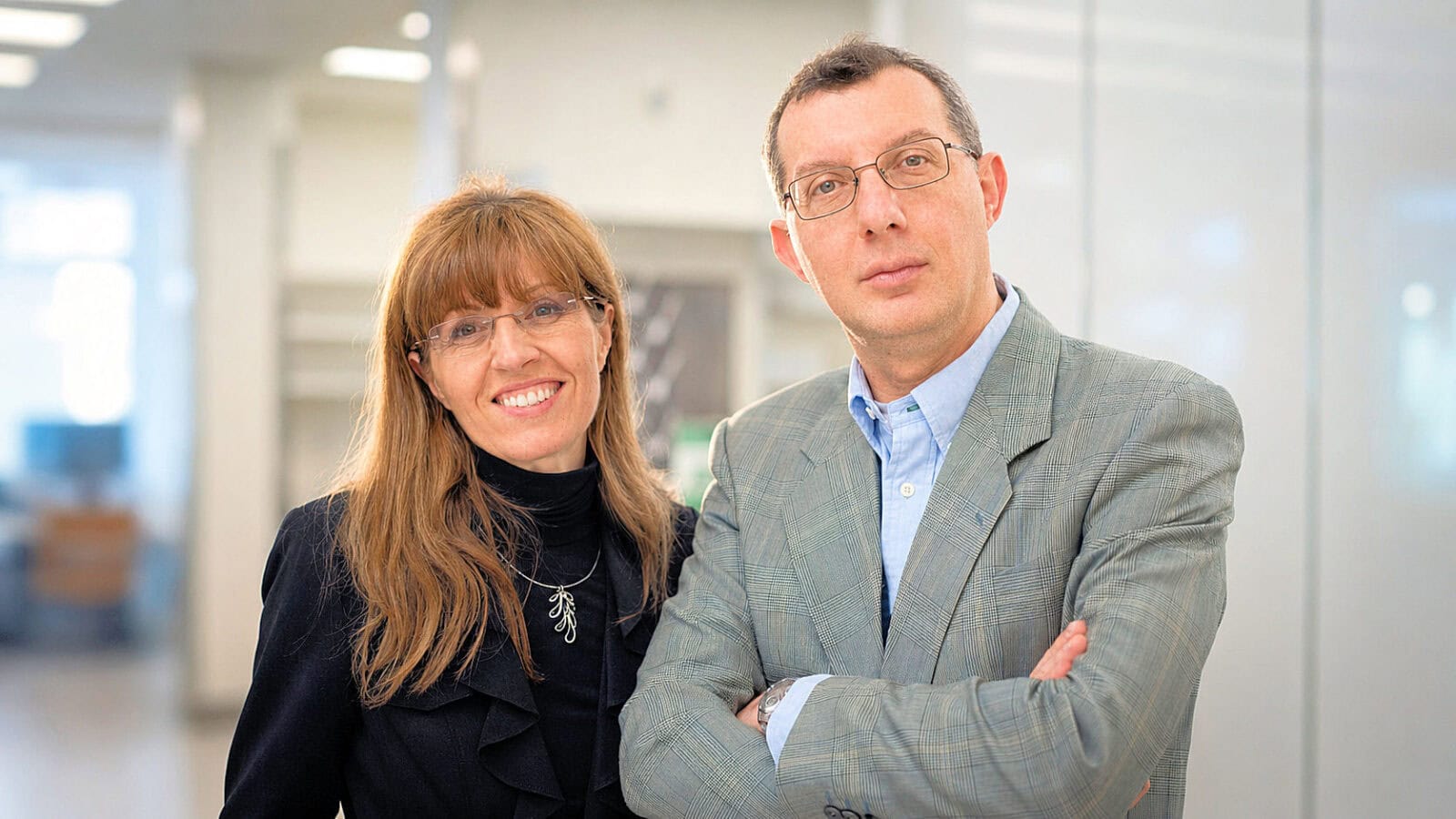
The commitment, announced Aug. 6, 2026, arrives at a cancer center run by a husband-and-wife research team whose own family history shaped the science it now funds.
The call came the way most transformational gifts do at a university: through the development office, through lawyers, through paperwork that never names a face.
A donor who wants to stay anonymous told UNC-Chapel Hill they would give $20 million to the Lineberger Comprehensive Cancer Center’s Cellular Immunotherapy Program—money for clinical trials, for a building, and for salaries.
On paper, it reads like an institutional transaction. In practice, it lands on a program built almost entirely around two people who moved to Chapel Hill in 2015 because a university offered them the freedom to chase a personal loss into a laboratory.
Barbara Savoldo and Gianpietro Dotti are married.
They are also, respectively, the co-director of UNC Lineberger’s Immunotherapy Program and director of its Advanced Cellular Therapeutics Facility and the director of the Cellular Immunotherapy Program itself, according to UNC-Chapel Hill’s announcement of the gift.
They are two of the four named faculty leaders whose work the new money is explicitly intended to protect—the university’s language calls it “recruitment and retention of faculty thought leaders.” For Savoldo in particular, the gift touches ground that is not abstract. Nine years ago she and Dotti used their own money to start a fund named for her youngest sister, who was dying of the same category of disease their lab was built to fight.
“Carolina is defining the future of cancer care,” UNC-Chapel Hill Chancellor Lee H. Roberts said in the university’s announcement of the commitment.
“At UNC Lineberger, therapies designed and manufactured in Chapel Hill are moving from discovery to clinical trials, creating new possibilities for patients with few other options. This extraordinary commitment will strengthen that work and our ability to serve people across North Carolina while advancing care nationwide. We are deeply grateful for the donor’s vision and generosity.”
The gift, according to the university’s account, is aimed at three things: near-term clinical trials for cancer, the expansion of Lineberger’s Advanced Cellular Therapeutics (ACT) Facility, and the recruitment and retention of the faculty who run the program.
The money will help pay for T-cell engineering and manufacturing on UNC’s own campus, along with the less visible infrastructure a modern cell-therapy trial requires—regulatory specialists who understand investigational new drug applications, clinical trial coordinators, cell-processing staff at the ACT Facility, and oncologists spanning multiple disease specialties.
Researchers at UNC are currently studying CAR-T therapies for lymphoma, neuroblastoma, glioblastoma, lung cancer, head and neck cancers, pancreatic cancer, triple-negative breast cancer, and ovarian cancer, with a future study planned for acute myeloid leukemia.
Dr. Cristy Page, CEO of UNC Health and dean of the UNC School of Medicine, framed the donation as an extension of relationships the cancer center has built over years rather than a single transaction.
“It is always so special when donors see us as a partner in pursuing their passion through philanthropy, and this is a shining example of that,” Page said.
“This gift gets to the heart of our mission of service and reflects the stellar legacy that our experts at UNC Lineberger and within our Cellular Immunotherapy Program have built. I am truly grateful for this generous show of support, which will lead to more tailored care and better outcomes for patients.”
Dr. Robert L. Ferris, executive director of UNC Lineberger and chief of oncology clinical services at UNC Health, said the size of the gift reflects the caliber of the four scientists whose names anchor the program: Dotti; Savoldo; Dr. Natalie Grover, clinical director of the Cellular Therapy Program; and Dr. Jonathan S. Serody, director of the Cellular Therapy Program at UNC Medical Center.
“This incredible commitment to our Cellular Immunotherapy Program is an investment in innovative research, clinical excellence, and, most importantly, better outcomes for patients and families from across North Carolina and around the world who have been impacted by cancer,” Ferris said.
“Our internationally renowned experts in the field of immunotherapy have made UNC Lineberger a destination for world-leading science and a commitment to compassionate care, and I am grateful for a gift of this magnitude that will help us continue to lead the way.”
To understand why a $20 million gift would single out faculty retention as a priority, it helps to know how Lineberger built this program in the first place — and to know Dotti and Savoldo’s own story, which the university has told publicly in pieces over the years but rarely at length.
Dotti and Savoldo met in Italy, where she was completing a fellowship and he was working in a lab, according to a UNC-Chapel Hill feature on the couple.
They shared, in the university’s description, “a common passion” for finding better cancer treatments. In 2015, UNC Lineberger recruited them jointly to Chapel Hill to build what the university calls a “clean facility”—a Food and Drug Administration-monitored space where cell therapies could be manufactured with minimal risk of contamination.
That space became the Advanced Cellular Therapeutics Facility, a 6,000-square-foot operation roughly five miles from the main campus, built around six independent clean-room suites and the equipment needed to isolate, engineer, and multiply a patient’s own immune cells into what doctors there sometimes call “an army,” according to facility documentation from UNC Lineberger.
The ACT Facility earned accreditation without a single deficiency citation from the Foundation for the Accreditation of Cellular Therapy, and it now manufactures every CAR-T product used in UNC’s early-phase clinical trials, according to UNC Lineberger.
UNC’s CAR-T clinical trials program is now the second largest among U.S. academic medical centers.
The science the facility exists to manufacture is, at its simplest, a kind of biological retrofit. CAR-T therapy takes a patient’s own T-cells—the white blood cells whose job is to eliminate threats—and genetically re-engineers them to carry an antibody trained on that patient’s specific cancer. “It seems like science fiction, but it’s not,” Dotti told UNC.
“CAR-T cells can recognize targets and kill them.”
The reprogrammed cells are then multiplied by the millions in the ACT Facility’s clean rooms before being infused back into the patient.
“You want to have an army of cells for a patient so they can treat and take care of cancer right away,” Savoldo said.
Doing that multiplication on UNC’s own campus, rather than outsourcing it to a private manufacturer, is part of what makes the program distinctive—it saves time and money and keeps the science close to the patients it treats.
The results, where UNC has published them, are notable for a field this new. CAR-T therapy was first developed in 2010 by researchers at the University of Pennsylvania and has shown roughly 40% remission rates in aggressive blood cancers nationally.
At UNC, nearly 150 patients have gone through CAR-T clinical trials since the program launched, and about 60% of patients in the facility’s early Hodgkin lymphoma trial reached remission—a rate Savoldo says has climbed further in a newer trial that adds a molecule to help the engineered cells travel more effectively to the tumor site.
“The remission rate is even better with the new trial we are conducting,” she said. “In addition to the CAR-T cells, we have included a molecule that helps T-cells traffic to the tumor site. Some people don’t have other options for treatment, so this has been remarkable.”
One of those patients, Donielle DuBois, traveled to Chapel Hill for CAR-T treatment after her Hodgkin lymphoma returned following nearly four years of remission; more than two years after her infusion, under the care of Grover and fellow UNC Lineberger physician Anne Beaven, her cancer remains in remission, according to UNC Lineberger’s account of her case.
But the disease that runs closest to this particular $20 million gift’s stated purpose — funding trials for “near-term cancer targets” — is one where UNC’s own progress has been harder-won: glioblastoma, an aggressive and, so far, incurable brain cancer.
And that disease is where the Dotti-Savoldo story stops being a professional biography and becomes something closer to what the university itself has called personal.
In July 2019, Savoldo’s youngest sister, Sonia, was diagnosed with glioblastoma. Sonia sought treatment at the Carlo Besta Neurological Institute in Milan, regarded as Italy’s leading hospital for the disease and, by coincidence, an institution that had already been collaborating with UNC Lineberger since 2016 to develop CAR-T therapies for glioblastoma, according to UNC Lineberger’s reporting on the family’s gift.
“Glioblastoma is a tumor with a dismal prognosis, and novel treatments are urgently needed to improve outcomes,” Savoldo said at the time.
Knowing there was no curative treatment for her sister’s disease, Savoldo and Dotti used their own money to establish the Sonia Savoldo GBM Fund at UNC Lineberger—a fund built to advance immunotherapy research for glioblastoma and, just as deliberately, to help other patients and families facing the same disease cover costs during what can be weeks or months away from home for treatment.
In an interview with Istituto Besta, Savoldo described the fund as something closer to a gift for her sister than a research line item.
“We created a fund in her name to support research on immunotherapy for glioblastoma and to support patients and their families,” Savoldo told the Milan institute, noting she also has another sister, Alessandra. “The creation of the fund was her Christmas gift, and it made her truly happy. She said it made her feel like she was contributing to something—that it would be her legacy.”
Sonia Savoldo died in 2022, before the clinical trial her sister and brother-in-law had been racing to open ever reached its first patient.
“Sonia was genuinely excited that we were working on developing a therapy for people like her,” Savoldo later told UNC. The trial opened that December—a Phase 1 study, led by Dr. Yasmeen Rauf and built on CAR-T cells Dotti’s lab had engineered against a target called B7-H3, delivered directly into the fluid around the brain rather than through the bloodstream.
“This clinical trial will enroll glioblastoma patients who have previously failed one or more treatments,” Rauf said when the trial launched.
“We are very excited to announce a Phase 1, single-center, open-label study using CAR-T cells targeting the B7H3 antigen in patients with a diagnosis of recurrent glioblastoma.”
Grover and Serody, the two other faculty leaders named in the university’s gift announcement, occupy a different but related piece of the program. Grover, clinical director of the Cellular Therapy Program, has led several of UNC’s lymphoma trials, including the Hodgkin’s study that put Donielle DuBois into lasting remission.
Serody, director of the Cellular Therapy Program at UNC Medical Center and division chief of hematology, was himself a recipient of the Battle award in 2023, alongside colleague Jen Jen Yeh, for his own contributions to the center’s cancer research.
Between the four of them, UNC Lineberger’s cellular immunotherapy work now spans the full arc of what a modern academic cancer program needs to run a trial from concept to infusion: laboratory science, clinical leadership, manufacturing oversight, and hospital-based care.
Day-to-day, that manufacturing runs through people whose names rarely make it into a philanthropy announcement.
John West, who directs cellular therapy production at the ACT Facility, oversees the patient-by-patient work of turning a blood draw into a treatment.
“I oversee patient product manufacturing on a day-to-day basis, but I have my hands in all aspects of the management of the facility,” West told UNC Lineberger, describing a process that, among other things, produces the CAR-T therapies used across UNC Health.
By late 2025, that trial—formally listed as LCCC2059-ATL—was showing signs of the kind of progress that rarely comes for glioblastoma patients. Investigators presenting interim results at the Society for Neuro-Oncology’s 2025 annual meeting reported that among nine evaluable patients across three escalating dose levels, the infusions were well tolerated, with no dose-limiting toxicities and only two cases of mild cytokine release syndrome, according to CURE.
Two patients had partial responses and two more had stable disease, for a 44% disease control rate, with a median overall survival of 10.2 months among patients who had already exhausted other options. “This is an ongoing clinical trial, and we are enrolling on dose level 5 at this time,” Rauf told the meeting. The trial remains open for enrollment.
Savoldo has said publicly that staying close to that trial is not simple for her, professionally or otherwise. “While it sometimes evokes painful memories, being involved in this trial connects me to these patients and their families, motivating me to do more,” she told UNC.
It is not the kind of quote that shows up often in university press releases about faculty research, and it is not the kind of thing the new $20 million gift’s language—”faculty thought leaders,” “near-term cancer targets”—was written to capture. But it is, by the university’s own account, close to the center of what this program is and why its two most prominent scientists have stayed in Chapel Hill for a decade building it.
That decade of work has drawn recognition beyond the family that started it. Earlier this year, Savoldo and Dotti were named recipients of the 2026 Hyman L. Battle Distinguished Cancer Research Award, an honor established by the Battle Foundation of Rocky Mount in 2007 to recognize exceptional cancer research at UNC-Chapel Hill, according to the UNC School of Medicine’s Department of Pediatrics.
The award cited their “pioneering work in engineered CAR T-cell therapies, an approach that has transformed cancer care and extended the lives of patients at UNC and beyond.” They were recognized at a reception in the Lineberger Cancer Center atrium in June, a building where, a few months later, university leaders would announce that a donor was giving $20 million to keep the work—and the people doing it—in Chapel Hill.
That sequencing matters to how UNC is describing this particular gift. Faculty retention in academic cancer research is, in blunt terms, a bidding war: the scientists capable of running programs like Lineberger’s are recruited aggressively by rival cancer centers, and a program’s clinical trial pipeline lives or dies on whether its senior investigators stay put long enough to see multi-year studies through. Ferris’s own arrival at Lineberger came through exactly this kind of recruitment—he was named executive director in 2024, succeeding Dr. Shelley Earp, who had led the center twice across nearly three decades, according to UNC Lineberger.
A $20 million commitment that explicitly earmarks funds for “recruitment and retention of faculty thought leaders” is, in practice, a hedge against losing scientists like Dotti, Savoldo, Grover, and Serody to another institution mid-trial—and a down payment on hiring the next generation before they build their own labs somewhere else.
It is also, more plainly, a bet on momentum.
UNC Lineberger has been a national cancer research center for more than 50 years, but its cellular immunotherapy program is comparatively young — a decade old this year, built from the ground up after Dotti and Savoldo’s recruitment in 2015.
In that time it has grown from a single clean facility to a pipeline spanning blood cancers and solid tumors, drawn nearly 150 patients into its trials, and become, in Ferris’s words, “a destination for world-leading science.”
The new gift’s authors wrote language into the announcement suggesting they see the program’s next phase—expanded manufacturing capacity, more trial infrastructure, more disease specialties—as a continuation of that trajectory rather than a rescue of a struggling one.
“Finally, these funds will help build on the momentum of the innovative discoveries happening today and expand upon them in the future,” the university’s announcement states. “This support will provide resources to pursue new discoveries, acting as an incubator for emerging opportunities.”
For a gift with no name attached to it, that word—momentum—is doing a lot of work. It is the kind of language that could describe any well-run research program at any major university.
What it does not describe, and cannot describe in a press release, is the specific reason the glioblastoma trial exists at all: a scientist’s sister, diagnosed in 2019, who did not live to see the treatment her sister and brother-in-law built in her name reach the finish line, but who told her family, before she died, that funding it had made her feel like she was leaving something behind.
The $20 million will not go toward that trial exclusively, and UNC has been careful to describe the gift’s purpose broadly—across lymphoma, neuroblastoma, lung, head and neck, pancreatic, breast, and ovarian cancers, with acute myeloid leukemia trials still to come.
But the language UNC chose for the announcement—near-term trials, facility expansion, keeping the scientists who lead this work in Chapel Hill—describes almost exactly the conditions under which the glioblastoma program now sits: a Phase 1 trial that is open, enrolling, and producing results serious enough to be presented at a national neuro-oncology meeting, run by a scientist whose personal history with the disease is a matter of public record because she chose to make it one.
Chancellor Roberts closed the university’s statement on the gift by thanking the donor for what he called “vision and generosity.”
The money lands in a lab already shaped by someone else’s name—one that, unlike the donor’s, the university has never asked to keep private.
Photo: Barbara Savoldo and Gianpietro Dotti