$12 million to college fund caps three decades of giving for Jamie and Judy Dimon, whose foundation has distributed nearly $290 million
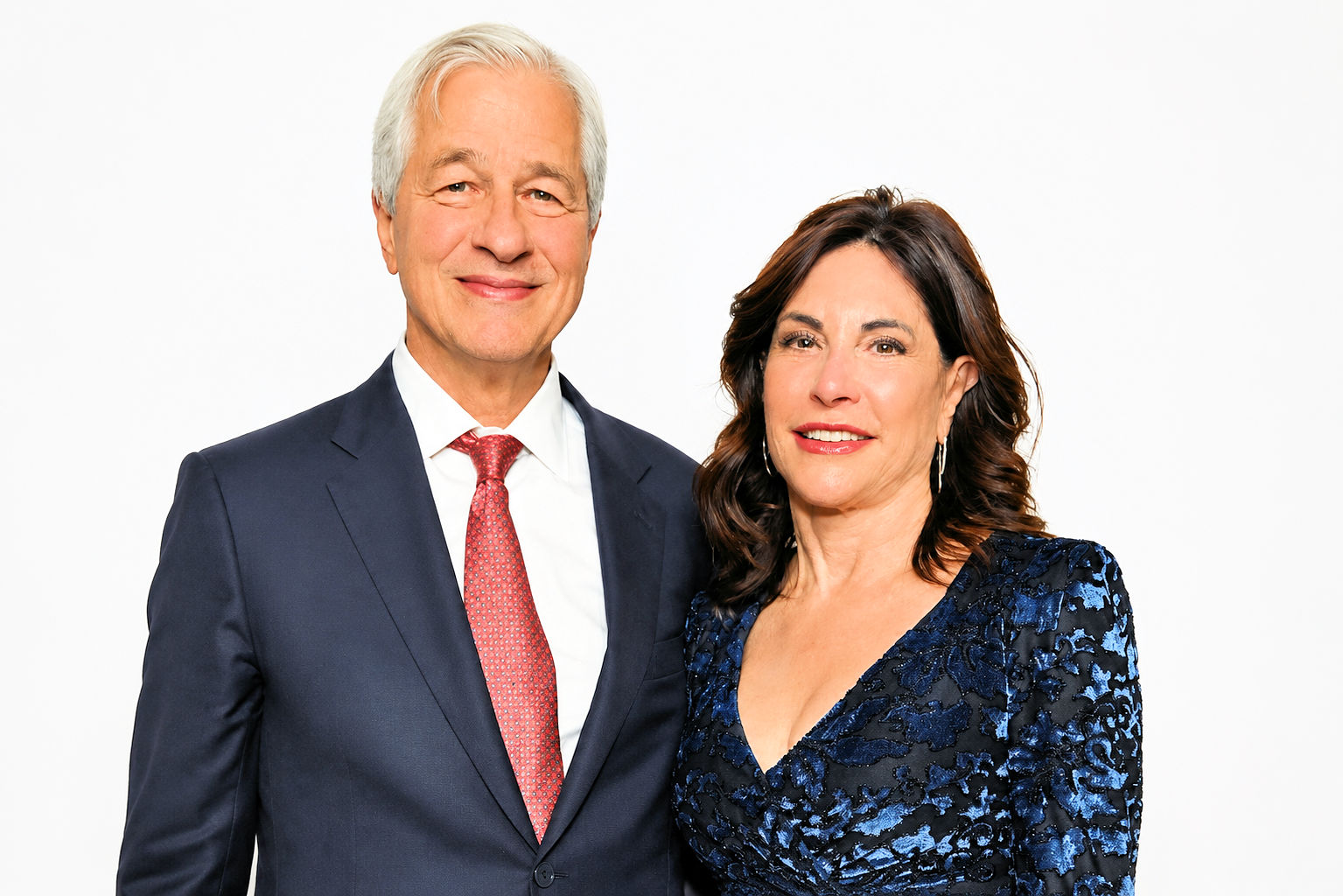
Jamie and Judy Dimon have never been especially loud about their giving.
There is no gala circuit persona, no naming-rights obsession, no annual glossy report trumpeting the couple’s largesse.
What there is, instead, is three decades of a private family foundation quietly moving money toward the same handful of convictions — that education is the lever, that health is the floor beneath it, and that permanence matters more than applause.
That pattern is once again on display with the announcement that The James and Judith K. Dimon Foundation has given $12 million to the United Negro College Fund, the largest single gift the foundation has ever made to UNCF and one that will seed $1 million in permanent endowment capital at each of 12 historically Black colleges and universities, from Benedict College in South Carolina to Tuskegee University in Alabama.
The gift, formally named The Dimon Fund to Advance Economic Opportunity, is built into UNCF’s $1.5 billion capital campaign and designed to be invested rather than spent — endowment principal that compounds instead of a check that gets cashed once.
Twelve schools, each selected for governance strength and for outsized records of producing teachers and nurses, will each receive $1 million toward their own $5 million institutional match inside UNCF’s pooled endowment fund.
It is a structural bet, not a ribbon-cutting one, and it fits a giving philosophy the Dimons have followed for a long time: fund the foundation, not just the moment.
To understand why they chose to build rather than simply donate, it helps to know who Jamie and Judy Dimon actually are, beyond the JPMorgan Chase headlines.
Both were the first in their families to attend college.
Jamie, the grandson of a Greek immigrant banker, built his career from a young analyst at American Express to the chairman and chief executive of the largest bank in the United States, and along the way survived throat cancer, an experience that by most accounts sharpened rather than dulled his sense of urgency about giving back.
Judy Kent Dimon, a Tulane graduate, built her own, quieter career in education reform, one that long predates her husband’s rise to Wall Street’s most recognizable name. In the early 1990s she helped establish the National Center for Community Schools, a model that has since been adapted more than 15,000 times in districts across the country and abroad. In 2000 she co-founded a $50 million public-private effort to expand community schools across Chicago, and later helped launch South Bronx Rising Together, a grassroots collaboration aimed at lifting one of New York’s most under-resourced neighborhoods.
There is a small, human detail from their marriage that tends to get repeated whenever people describe the two of them as partners rather than a boldface name and his spouse: for their 15th wedding anniversary, Jamie gave Judy a stock certificate formally transferring to her one-third of his net worth, a gesture that made her, on paper and in practice, a full co-owner of whatever came next, including the foundation that now bears both their names.
That foundation, created in 1996, has grown from a modest family vehicle into a $181 million-plus institution, and its giving has scaled accordingly. It gave away roughly $320,000 in 2016.
The next year that jumped to $5.8 million, and it has stayed in that range or higher ever since — $4.9 million across 37 grants in 2023 alone, according to tax filings (Inside Philanthropy; Hinchilla). Unlike foundations that spray small grants across hundreds of causes, the Dimons’ giving is narrow and repetitive by design, returning again and again to a short list of institutions that reflect the couple’s own biography: New York City public education, career pathways for young people who look like the first-generation strivers Jamie and Judy once were, and medical research.
The medical thread runs deep and personal. In 2020 and again in 2021, the foundation sent $2 million apiece to Memorial Sloan Kettering Cancer Center and to Cornell Medicine, and in 2024 it gave another $2 million to Memorial Sloan Kettering to fund a center devoted to researching, preventing and treating HPV-related cancers — the same family of disease Jamie Dimon himself once fought.
Farther from home, in Louisville, Kentucky, the foundation gave $500,000 in 2023 to the Wendy Novak Diabetes Institute, a gift the Dimons made, in their own words, “in honor of and with our deepest affection for Wendy and David Novak,” and followed with another $250,000 the next year, helping fund a new islet cell research and transplant program that opened this past.
On education, the pattern is just as consistent.
Recent filings show seven-figure grants to New York’s Fund for Public Schools and New Visions for Public Schools, alongside support for CareerWise New York, Big Picture Learning in Providence, the Dreamyard Project in the Bronx, and the Bronx Community Foundation — the connective tissue of Judy Dimon’s decades-long focus on getting young people from low-income neighborhoods into careers that can actually sustain a family.
That work now runs through FutureReadyNYC, the public-private partnership the foundation helped scale starting in 2022, which aims to give at least 100,000 New York City public high school students career-connected experience by 2030 — essentially Judy’s community-schools philosophy, updated for an economy that now demands a direct line between classroom and career.
Jamie Dimon’s own connection to UNCF is not new either. He served for years on the organization’s board of directors before this gift, which means the $12 million endowment commitment lands not as a distant billionaire’s press release but as a longtime board member finally being able to make the kind of gift he presumably wished he could authorize years earlier.
The couple described their own motivation in plain, almost domestic terms: “As the children of first-generation high school and college graduates, we were imbued with a thirst for knowledge and a drive to succeed — principles that we have passed on to our own children and that we wish to share with all the students at the selected HBCUs,” Jamie and Judy Dimon said in a joint statement announcing the gift.
UNCF’s leadership framed the gift as something rarer than money — permanence. “By choosing to build endowment rather than fund a single moment, Jamie and Judy Dimon have given our member institutions something rare and lasting,” said Milton H. Jones Jr., chair of the UNCF Board of Directors.
“They have given them the freedom to govern with confidence, to plan for decades, and to keep faith with more students who walk through their doors.”
Dr. Johnnetta Betsch Cole, UNCF’s president-in-residence and co-chair of its capital campaign, who helped cultivate the partnership, called the donation “both a vote of confidence and a catalyst,” while UNCF President and CEO Dr. Michael L. Lomax tied the gift directly to the campaign’s founding logic: “Endowments create permanence.
Permanence creates independence. Independence creates the freedom to innovate, to lead, and to serve generations of students.”
What emerges is less a story about two extraordinarily wealthy people writing a check than about two people who never stopped being the first in their families to walk onto a college campus, and who have spent thirty years trying to make sure the path behind them stays open for the next student who looks like they once did.
UNCF, founded in 1944, has raised more than $6 billion over its history and now supports more than 10,000 students a year across 36 member HBCUs.
The Dimon gift will not close that fundraising campaign on its own, but for the twelve schools receiving it, it changes the math of the next several decades — turning a single act of generosity into something that, by design, is meant to still be working long after the headline fades.