$11 million gift reflects Elaine Potter’s long wager on hard questions
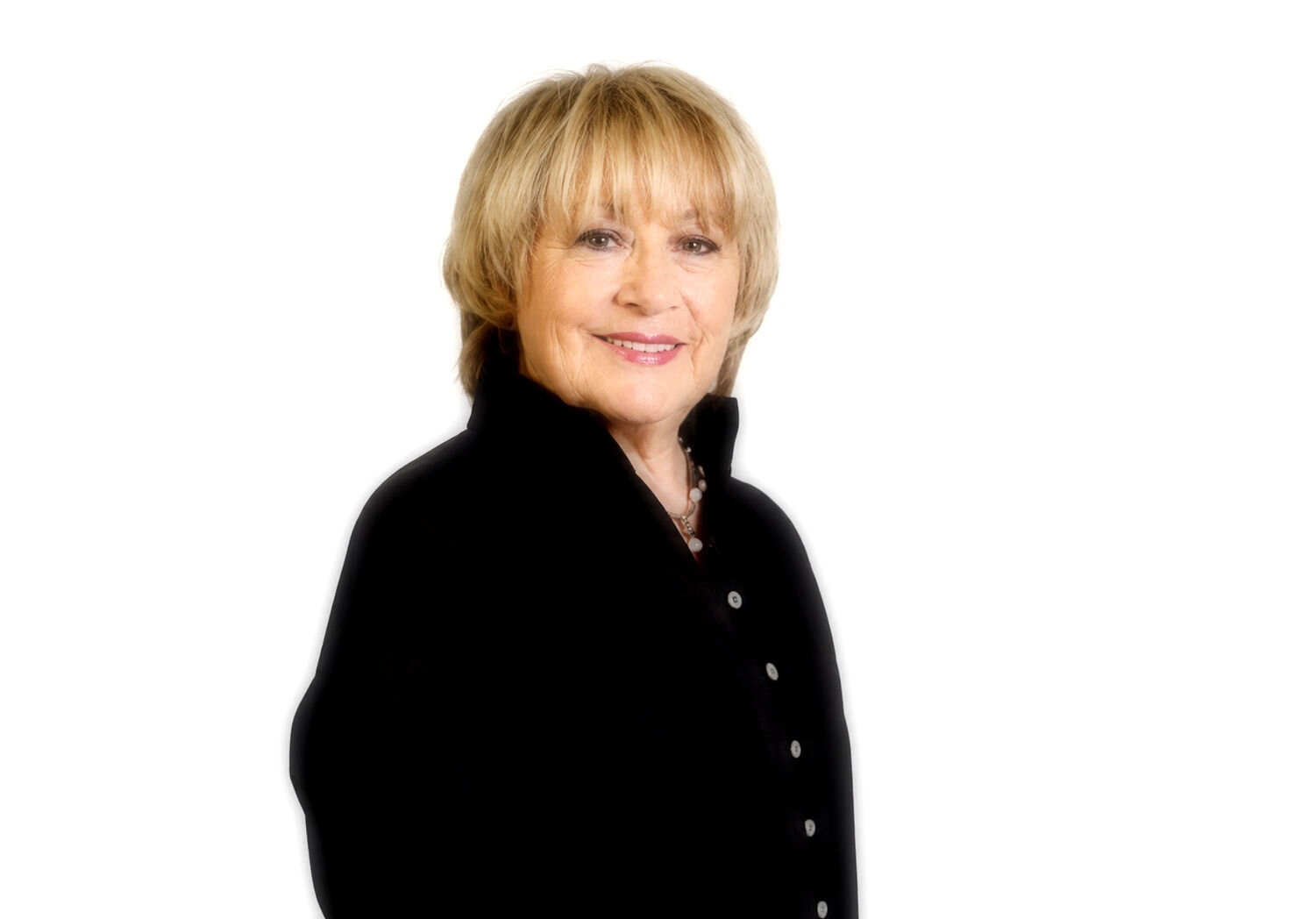
Long before Elaine Potter’s name was attached to a physics institute, it was attached to one of the most consequential investigations in British journalism.
As a young reporter on the Sunday Times Insight team in the 1970s, working under the legendary editor Harry Evans, Potter helped expose the thalidomide scandal, the story of a drug marketed as a cure for morning sickness that caused devastating birth defects in thousands of children.
“Week after week, month after month we ran stories about thalidomide,” she later told graduating students at Kingston University, which awarded her an honorary doctorate.
“In the end we achieved a more than 10-fold increase in compensation for all the victims of the drug and, some years later, after an application to the European court, a judgment in our favour that liberalised sub judice rules, thus expanding press freedom in the UK”.
Half a century later, that same instinct for going after questions other people had given up on is now underwriting an attempt to answer one of the biggest open questions in physics: whether spacetime itself obeys the rules of quantum mechanics.
Potter, along with her husband David, has committed $11 million through their family charity, the David and Elaine Potter Foundation, to create the David Potter Institute for Quantum Information and Spacetime at University College London.
It is the largest single gift the foundation has ever made, and on its face it sits far outside Elaine’s own field. But her career has always been organized around a single conviction: that some questions are too important to leave unanswered simply because they are hard, expensive, or unfashionable to pursue.
Elaine Potter grew up in apartheid-era South Africa, where, by her own account, her passion for investigative journalism took root early.
She left the country at 21, working first at the regional Kent Messenger through a National Union of Journalists training scheme, before pursuing a doctorate at Nuffield College, Oxford, on the political role of the press in South Africa, work later published as her first book, The Press as Opposition.
It was around this time that she met David Potter, a fellow South African then completing his own doctorate in mathematical physics.
She went on to the Sunday Times, where beyond the thalidomide reporting she co-authored Destination Disaster, an investigation into the 1974 DC-10 crash outside Paris, edited a Holocaust memoir titled A Jump for Life, and collaborated on The Murdoch Archipelago, a study of Rupert Murdoch’s media empire.
The decision to abandon academia traces directly back to a year David Potter spent in the United States.
During a 1974-75 secondment, Potter taught as an assistant professor at UCLA in California, and it was there, watching the American semiconductor industry take shape from inside a physics department, that he first grasped what the microchip was about to do to the world.
He later described the experience as the moment his imagination caught fire. Four years after founding Psion, that instinct produced The Organiser, widely credited as the world’s first mass-market handheld computer, and by 1998 Potter had assembled an unlikely coalition of fierce competitors, Nokia, Ericsson, Motorola and Matsushita, into Symbian, the joint venture whose software became the standard for early smartphone operating systems.
Motorola’s presence in that partnership meant an American company sat at the table for the deal that helped define his legacy, a fitting echo of the year in California that had set him on this path in the first place.
That journalism career shaped the foundation the couple built together in 1999, funded by proceeds from David’s technology company Psion, and it shaped, even more directly, what may be their most personal joint project: the Bureau of Investigative Journalism, which they founded in 2010 with a $2 million grant.
Elaine has said the idea drew inspiration from ProPublica, the nonprofit investigative newsroom founded two years earlier in New York, a rare instance of an American philanthropic model directly inspiring a British one.
The Bureau has gone on to receive additional funding from major American philanthropies including the Gates Foundation and the Open Society Foundations, and it has published investigations reaching well beyond Britain, including reporting on U.S. drone strikes.
Elaine continues to chair the Centre for Investigative Journalism and sits as a trustee of openDemocracy, Index on Censorship, and the University of Cape Town Trust, a spread of commitments that all trace back to the same belief in rigorous, well-funded inquiry that now extends into experimental physics.
The foundation itself has become something of a family institution.
David and Elaine’s eldest son, Sam Potter, studied physics at Magdalen College, Oxford, worked for several years at HSBC Private Bank before moving into film production, and now serves as chair of the foundation’s board of trustees, working alongside his parents and family friends including lawyer Michael Polonsky and former Psion finance director Michael Langley, whose own children, Adam Polonsky and Charlotte Langley, have since joined the board as well.
The new institute at UCL will be co-directed by Professor Jonathan Oppenheim and Professor Sougato Bose, with Professor Peter Barker leading its experimental program, bringing together researchers in quantum information theory, gravity and high energy physics to design real laboratory tests of whether spacetime is fundamentally quantum or remains classical.
“We are now in the position of being able to design and build towards experiments that could settle a question that generations of physicists have struggled with,” Oppenheim said of the effort the gift makes possible.
For her part, Elaine has framed the gift in terms consistent with everything else she has funded across four decades: “The new Potter Institute is a vehicle through which we can help provide the academic freedom to pursue big ideas, the impact of which may shape the future in ways we cannot yet predict.”
It is, in that sense, the same wager she made as a young reporter chasing a story everyone told her was too difficult to prove, applied now to a question that may be the hardest one in all of physics.