
$10 million latest gift to launch new College of Business and Digital Innovation campus caps Douglas D. Schumann’s $35 million-plus commitment to higher education
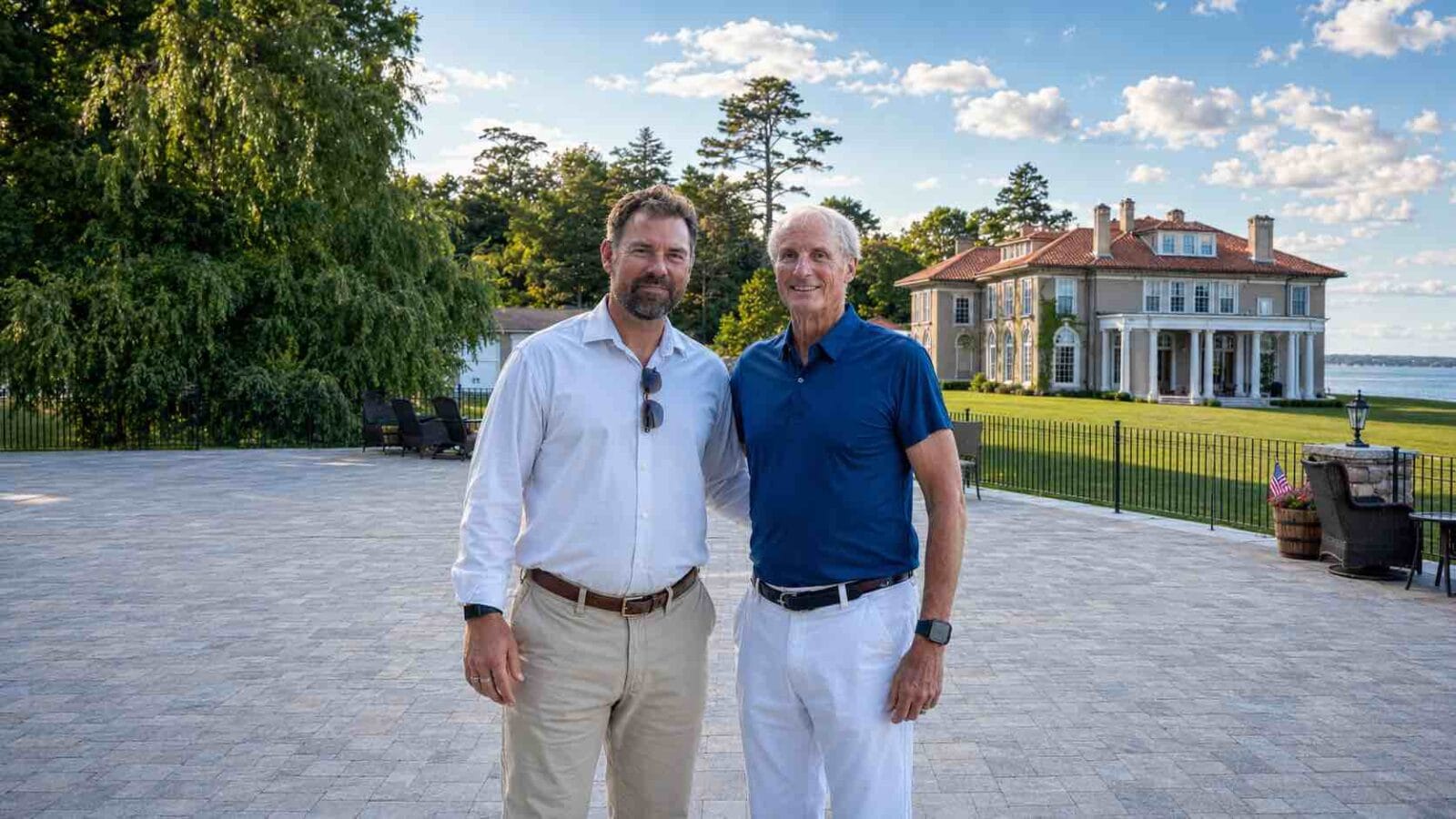
The University of New Haven announced a $10 million philanthropic gift from alumnus Douglas D. Schumann to support the launch of its College of Business and Digital Innovation at its new campus in Riyadh, Saudi Arabia, a historic first that positions the university at the forefront of global higher education.
The gift supports the development of University of New Haven – Riyadh (NHU-Riyadh), the first independently licensed U.S. international branch campus in the Kingdom of Saudi Arabia.
Approved by the Saudi Council of Ministers in 2025 and the university’s U.S. accreditor earlier this year, the campus will open in Misk City, the not-for-profit innovation district in the heart of Riyadh, welcoming its first students in fall 2026.
The new College of Business and Digital Innovation will prepare students to lead in a fast-changing global economy, combining a rigorous American business education with a focus on the digital skills, entrepreneurship, and innovation at the center of the kingdom’s transformative Vision 2030.
Schumann’s gift will underwrite the college’s launch, from its facilities and technology to the programs and faculty that will define its earliest years.
Housed within a new 62,000-square-foot campus in Misk City, the college is designed to provide a world-class learning environment for students from Saudi Arabia and across the region, featuring advanced classrooms, collaborative learning spaces, innovation and entrepreneurship hubs, and technology-enabled labs supporting hands-on education in business, analytics, artificial intelligence, and digital transformation.
A distinguished entrepreneur, philanthropist, and longtime supporter of American higher education, Schumann earned a Bachelor of Science in Mechanical Engineering from the University of New Haven in 1969 and received an honorary Doctor of Engineering degree from the university in 2003.
He built his fortune as the founder of P-Q Controls, a manufacturer of industrial joysticks, a career in precision engineering that runs as a through line from his mechanical engineering studies to the entrepreneurial success that now funds his philanthropy.
That success has translated, over decades, into one of the more remarkable and quietly sustained giving records in American technical and engineering education.
The $10 million Riyadh commitment is, notably, not Schumann’s only nine-figure act of generosity this year, nor his largest.
In October 2025, Wentworth Institute of Technology in Boston, where Schumann also holds a degree, announced a $25 million gift from him, the largest single contribution in the 120-year history of that institution, to formally rename its engineering school the Douglas D. Schumann School of Engineering. That gift capped a giving relationship with Wentworth, where Schumann earned a degree from the Aircraft Maintenance program in 1964 and received an honorary degree in 2008, which by his own account has spanned 35 years. “I have consistently sought to assist them in various ways over the last 35 years,” Schumann told the Boston Globe when the engineering school gift was announced, adding, “Wentworth holds a special place in my heart.”
Long before the $25 million naming gift, his cumulative support at Wentworth had already left a physical and academic imprint on the campus: he was the lead donor behind the Douglas D. Schumann Fitness Center, which opened in 2012 and helped cement Wentworth’s identity as a residential campus, and behind the Douglas D. Schumann Library and Learning Commons, which transformed a fifty-year-old facility into what the university now calls the collaborative heart of the institution.
He also endowed the Douglas D. Schumann Professorship, currently held in the Department of Electrical and Computer Engineering, along with two named scholarships, the Douglas D. Schumann P.E. Scholarship and the Douglas D. Schumann Electromechanical Engineering Scholarship, both designed to reward financial need paired with resourcefulness and a can-do attitude.
During the height of the COVID-19 pandemic, he stepped in again with a $500,000 gift to establish the Wentworth Cares Fund, which provided emergency relocation assistance, housing refunds, and access to counseling services for students facing hardship.
A trustee of Wentworth since 1989 and a trustee emeritus since 1999, Schumann has held nearly every kind of relationship an alumnus can have with an institution: student, board leader, named benefactor, and now the namesake of an entire school.
Taken together, Schumann’s confirmed giving across his two alma maters, the $25 million naming gift and prior seven-figure-plus commitments at Wentworth, and now the $10 million gift to the University of New Haven’s Riyadh campus, place his disclosed lifetime philanthropy to higher education at well north of $35 million, a figure that almost certainly understates his true cumulative generosity, since neither institution has published a specific dollar figure for the decades of smaller, undisclosed contributions that preceded these headline gifts.
University of New Haven donor records show Schumann had already been recognized at the Trustees Club giving level as far back as 2007, evidence of a long and continuous relationship with the university that predates this year’s landmark gift by nearly two decades. That pattern, steady, loyal support that eventually culminates in a transformative capstone gift, mirrors exactly what has now played out at Wentworth and is playing out again at the University of New Haven.
For Schumann, the Riyadh gift is deeply personal.
“This gift is, above all, a tribute to my parents, Dorthy Dunlop [Dot] Schumann and Charles Frederick [Chick] Schumann,” said Douglas Schumann.
“They believed that opportunity should never be limited by where a person happens to be born, and that education is the surest way to open doors. Helping to launch a college that will do exactly that, for students half a world away, honors their legacy in the truest sense. Their generosity and their faith in others are the reason this gift exists, and I am proud to carry it forward in their name.”
University leaders described the gift as a defining moment, both for the institution and for international education more broadly.
Independently licensed American campuses remain exceptionally rare around the globe, and NHU-Riyadh is the first of its kind in Saudi Arabia, giving students across the region direct access to a U.S.-accredited degree.
“Douglas Schumann’s extraordinary generosity allows us to do something that has never been done before,” said Jens Frederiksen, Ph.D., president of the University of New Haven. “As a proud alumnus, Doug has long demonstrated his commitment to expanding access to education and innovation. This gift is supporting the opening of the first independently licensed American university campus in Saudi Arabia, and it positions us to lead the next chapter of global education. The College of Business and Digital Innovation will equip a new generation to shape the digital economy, and it will stand as proof of what becomes possible when bold vision, global partnership, and philanthropic leadership come together to create unparalleled access to educational opportunities.”
Whether viewed through the lens of Riyadh’s newest business school or Boston’s newly renamed engineering school, Schumann’s philanthropy tells a consistent story: an engineer-turned-entrepreneur methodically reinvesting the fruits of a career built on precision manufacturing into the two institutions that shaped him, first in incremental, often unheralded gifts sustained across decades, and now in a pair of era-defining commitments announced within roughly nine months of each other.
The university envisions the College of Business and Digital Innovation serving as a model for how American higher education can extend its reach responsibly and ambitiously across borders, and for Schumann, it is simply the latest, and far from the last, chapter in a lifetime of giving back to the schools that gave him his start.
Photo: President Jens Frederiksen and Douglas D. Schumann