
$1 billion raised, and the Mannings, Harrisons, Cooks and a handful of anonymous believers behind it: inside the remarkable philanthropic campaign remaking UVA Health
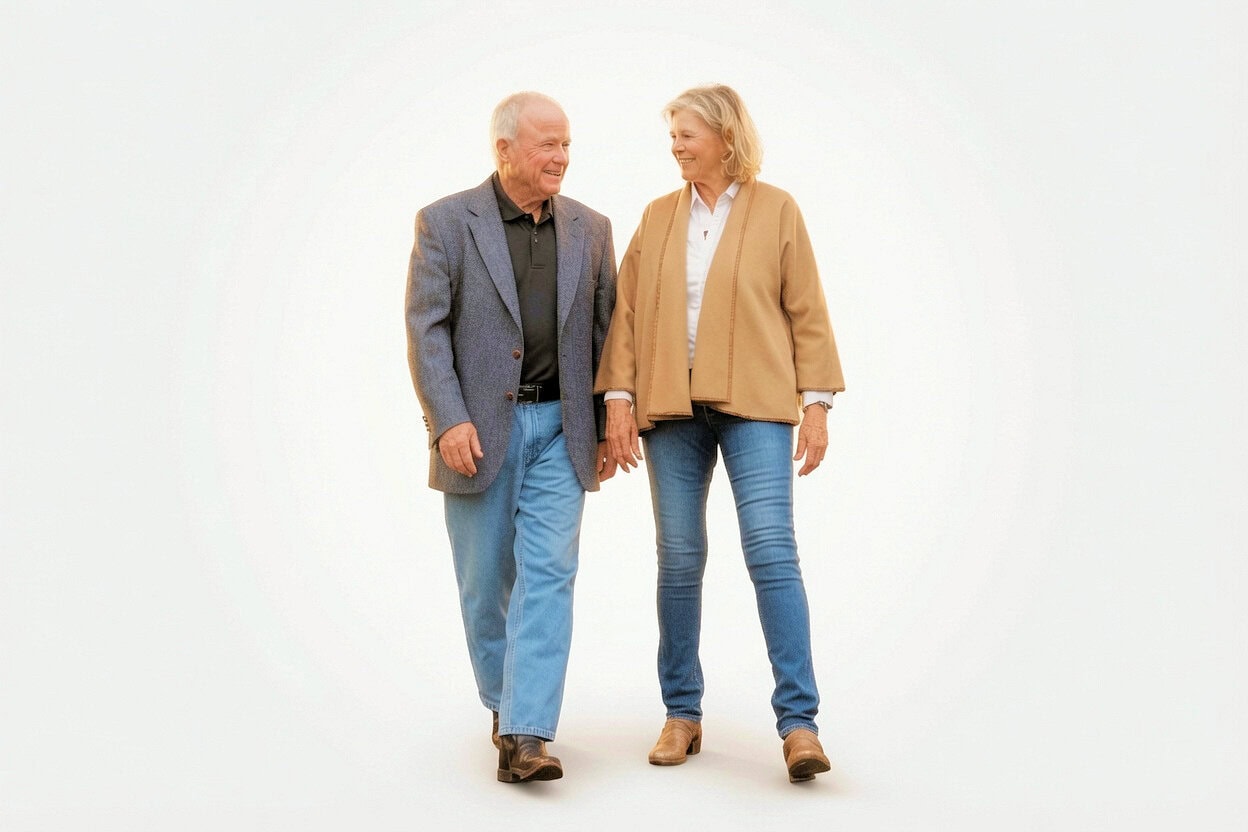
Paul Manning still remembers what it felt like to watch a family member move through a health system that couldn’t offer enough answers.
It’s part of why he and his wife Diane stood beside Virginia’s governor at the University of Virginia and put their name — and $100 million — behind a promise: that no Virginian would need to leave the state to get the most complex care imaginable.
Manning, a healthcare investment executive who sits on UVA’s Board of Visitors, framed the gift not as an act of charity but as a bet on speed — on shrinking the distance between a scientific discovery and a therapy a patient can actually receive.
That single commitment, matched by contributions from the university and the Commonwealth, became the cornerstone of the Paul and Diane Manning Institute of Biotechnology and, in time, the anchor of UVA Health’s entire fundraising campaign.
What followed was not one dramatic announcement but a slow accumulation of people who recognized something of themselves in that mission.
The children of the late David and Mary Harrison walked into a Board of Visitors meeting carrying a $55 million commitment split two ways — and carrying, more quietly, their own family’s history with disease.
Their father and brother had both suffered from Alzheimer’s.
Their mother had been treated for Parkinson’s. So $30 million of the gift went straight into the Manning Institute to build the Harrison Family Translational Research Center in Alzheimer’s and Neurodegenerative Diseases, a hub where neuroscientists and clinicians are now working on new ways to diagnose and treat Alzheimer’s, Parkinson’s and Huntington’s disease. It was, in effect, a family trying to rewrite what happens to the next family that gets the diagnosis theirs did.
Not every name behind the campaign wanted to be a name at all.
Among the earliest supporters of the Manning Institute were Maggie Cook, a physician and UVA graduate, and her husband Will Cook, her classmate from the same graduating class.
Their gift established the Cook Family Biotechnology Institute Fund, one of the first leadership commitments to the institute, structured deliberately as unrestricted support so university and health system leaders could direct it wherever the science moved fastest.
It’s an unglamorous kind of generosity—money with no fixed destination, handed to people the Cooks trusted to know where it was needed most.
Then there were the donors who wanted no destination attached to their names at all.
Two separate individuals—each unrelated, each choosing to remain anonymous—arranged for $25 million to pass to the Manning Institute through their estates.
Neither gift was announced with fanfare of its own; both surfaced together, almost as a footnote, when UVA Health’s vice president for advancement, Mark Luellen, mentioned them to the Board of Visitors just before a closed session.
The two latest gifts, $50 million combined, happened to be exactly what pushed UVA Health’s campaign past its $1 billion goal.
Another anonymous donor gave more than $10 million to launch the Translational Orphan Blood Cancer Research Initiative, chasing cures for the rarest and most complex leukemias, lymphomas, and myelomas—diseases so uncommon that pharmaceutical companies rarely find them profitable to study.
Even the smaller gifts carry a face behind them.
The Ben and Catherine Ivy Foundation, longtime supporters of brain tumor research nationally, committed funding to three UVA scientists — Natasha Sheybani, Hui Li and Roger Abounader — to push forward glioblastoma research at the Ivy Brain Tumor Center, funding the kind of early-phase pharmacological work that determines which experimental drugs are worth testing in patients at all.
Add it all up and a pattern emerges that has little to do with wealth and everything to do with proximity to loss.
A father with Alzheimer’s.
A mother with Parkinson’s.
A rare blood cancer with no name recognition and no incentive for big pharma to chase it.
A tumor that moves faster than most treatments can keep up with.
Each gift, whatever its size, seems to trace back to someone’s specific memory of watching medicine fall short — and a decision to spend money making sure it falls short less often for the next family.
UVA President Jim Ryan put words to what all of it adds up to: “These extraordinary gifts will support the Manning Institute’s research and aid in developing new treatments for hard-to-treat or incurable diseases, which will change lives across the Commonwealth and beyond.”
Mark Esser, the Manning Institute’s chief scientific officer, has said the goal is for the institute to become a global leader in biomedical research, built on exactly this kind of accumulated trust—gift by gift, family by family, most of them never seeking credit for what they set in motion.
More than 52,000 donors ultimately contributed to UVA Health’s share of the campaign, a base so broad that even after billions of dollars moved through the university’s coffers overall, most of the money behind any single research breakthrough will trace back not to a headline gift but to someone whose name never made the news at all.
What binds the visible donors to the invisible ones is the same instinct: to take a private grief or a personal conviction and turn it into a laboratory, a scholarship, a clinical trial — something that outlives the person who paid for it.