
$1 billion new commitment from philanthropist Dan Gilbert will remake Renaissance Center and hand it to Detroit in perpetuity-raising his giving to more than $2 billion
For nearly half a century, the Renaissance Center has been the first thing anyone sees of Detroit.
Its towers rise from the river like a postcard of the city’s ambitions, and of its disappointments too.
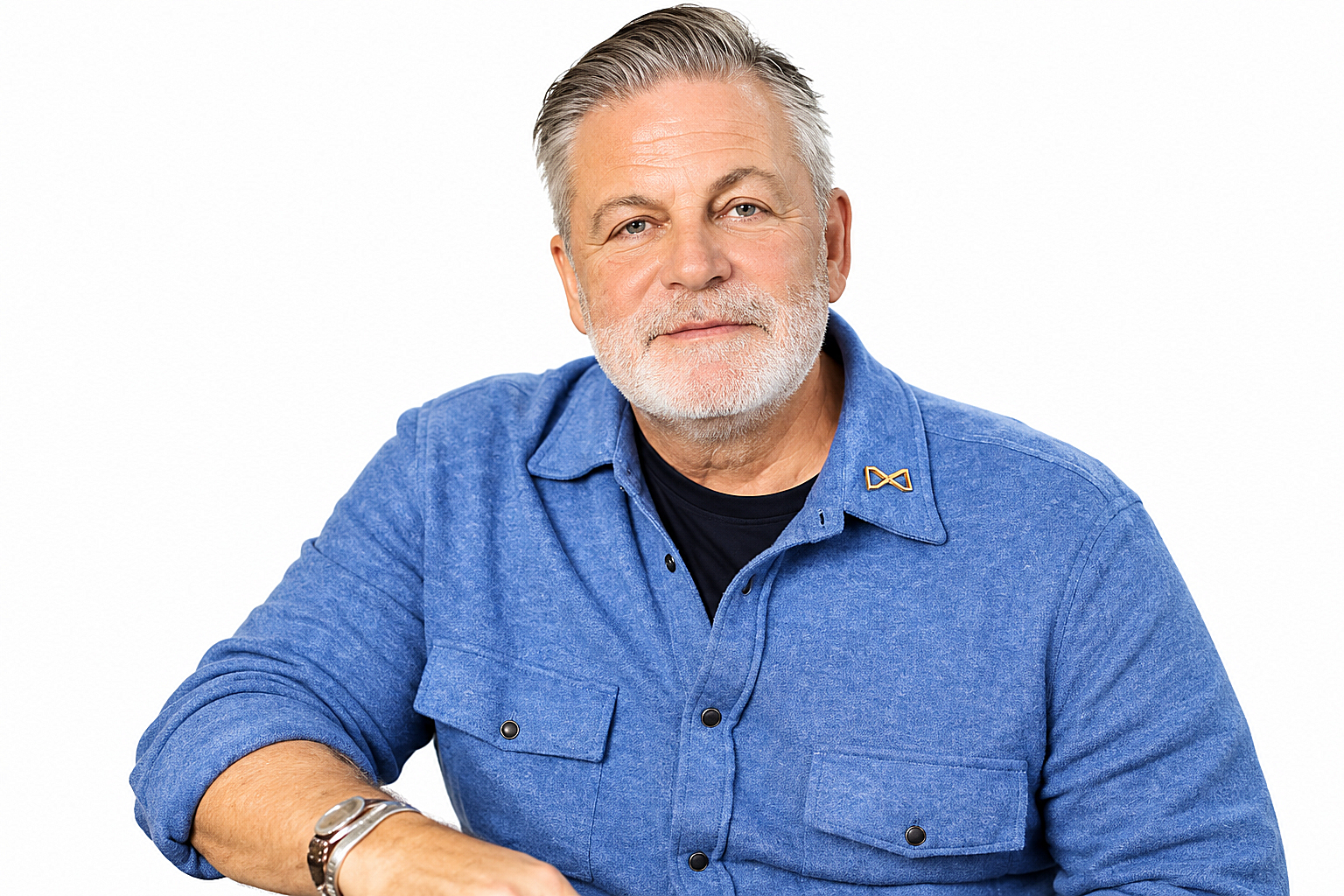
Now Dan Gilbert, the founder of Rocket Companies and one of Detroit’s most committed civic investors, promised that the landmark’s next chapter will belong to the city itself.
Dan Gilbert’s Jewish identity is an active part of his civic life, not a footnote to it.
Before the Detroit skyline started changing around him, he was doing quieter work in the city’s Jewish community.
He served on the board of the Jewish Federation of Metropolitan Detroit and as president of JARC, a Detroit nonprofit that provides homes and support for people with developmental disabilities.
JARC is where his commitment shows most personally.
He brought in his lifelong friend David Carroll, who later led the organization’s board himself, and it remains one of the steadiest threads in his philanthropy.
In October 2020 the Federation gave Gilbert its Fred M. Butzel Memorial Award, the highest honor it gives a Detroit Jewish citizen. It was also one of his first public appearances since his 2019 stroke.
Friends and colleagues, including Rabbi Paul Yedwab of Temple Israel, spoke about him, and Gilbert thanked the community for placing him among the past recipients.
Through the Gilbert Family Foundation and his own giving, the values he learned growing up in Detroit’s Jewish community carry into his larger work: rebuilding neighborhoods, expanding opportunity and funding the search for cures. Few donors show as clearly how faith and family can shape a whole city.
Gilbert has pledged about $1 billion in development capital to create a new nonprofit. It will redevelop, own and operate the Renaissance Center and the 35-acre east riverfront district around it, which today is mostly surface parking.
The terms are unusual for a deal of this size.
Neither Gilbert nor any of his companies will take a profit, and the money will never be paid back.
Once the project is finished, revenue will cover operating costs, debt, reserves and upkeep. Anything left over goes to Detroiters and the community.
“It means that Dan will contribute $1 billion and his contribution will never be repaid,” said Jared Fleisher, CEO of Bedrock, Gilbert’s real estate company, at Monday’s announcement downtown.
Gilbert called the Renaissance Center a symbol of Detroit and the riverfront one of its most treasured assets.
“I cannot think of a better way to accomplish these goals,” he said, “than through a nonprofit organization dedicated to this mission in perpetuity.”
The release describes the pledge as believed to be the largest contribution ever made to a nonprofit redevelopment effort in an American city.
Its structure makes it more generous than the headline suggests.
The new organization will be a 501(c)(4) social welfare nonprofit, not a traditional charity, so Gilbert’s contribution is not deductible as a charitable gift for federal income tax purposes. In plain terms, he is giving up both the profits and the tax break.
The plans are physical and specific.
The two towers closest to the river would come down to make room for five acres of riverfront park.
The central Marriott tower would shrink from about 1,300 rooms to 858. One remaining tower would become housing and another would be renovated as offices.
Across the wider district, the vision includes affordable housing, space for Detroit-based small businesses and 18 acres of programmed public civic space.
Bedrock has described the goal as the best broadly accessible, family-friendly waterfront destination in the country.
Developers expect more than 8,000 local construction jobs and 2,600 permanent jobs.
They estimate $301.5 million in direct fiscal benefit to the city over 30 years and about $3 billion in new visitor spending.
The overall project costs about $2.2 billion and will take roughly a decade.
Gilbert’s pledge covers close to half.
General Motors, headed by Lifestyles Magazine/Meaningful Influence cover subject Mary Barra, has owned the complex since 1996 and is contributing $250 million, promising in 2024 to donate any profits it receives to education in Detroit.
Construction is expected to start in 2027.
The partners are also seeking public support, including a state brownfield incentive package, and a neighborhood advisory council is negotiating a community benefits agreement.
The nonprofit structure adds an important guarantee to those talks: whatever the district earns beyond its own needs stays in Detroit.
Two well-known Detroiters will help shape the new organization.
The Rev. Dr. Wendell Anthony, president of the Detroit Branch of the NAACP, will sit on the founding board and help recruit a diverse and experienced board to oversee it.
“Dan Gilbert is openly establishing a new model for community development not only for Detroit but for cities across the nation,” Anthony said, calling the reborn complex “Renaissance II.”
Bill Emerson, former CEO of Rocket Companies, will help guide the nonprofit through its early years. Bedrock will manage the project at no cost.
Mayor Mary Sheffield said that for Gilbert to make a billion-dollar investment “and to guarantee that only the city and its people can benefit—truly shows the depth of his generosity.”
To understand why Gilbert would give away his most visible project, it helps to look at what he has built over the past 15 years.
In 2012 he and his then-wife Jennifer signed the Giving Pledge, promising to give away at least half their wealth during their lifetimes.
Since 2010, Gilbert and his companies have committed more than $1 billion to community and medical causes, much of it to Detroit.
The first defining gift was rooted in family.
Their oldest son, Nick, was born with neurofibromatosis type 1, a genetic disorder that causes tumors to grow along the body’s nerves.
The Gilberts started the Gilbert Family Foundation in 2015 and a sister nonprofit, NF Forward, in 2017.
Together they have put more than $131 million into NF research, making the family the world’s largest private funder of the field.
Nick lived with the disease for 26 years and became its most recognizable young advocate.
He passed away in 2023.
That same year, his parents made the largest single gift of their lives up to that point.
They committed nearly $375 million to Henry Ford Health’s new campus in Detroit’s New Center.
It created the Nick Gilbert Neurofibromatosis Research Institute, the first standalone research institute devoted only to NF, along with $190 million over ten years for its research and operations.
It also brought a 72-bed Shirley Ryan AbilityLab rehabilitation hospital to the city. That part of the gift was also personal.
After a stroke in 2019, Gilbert recovered at Shirley Ryan in Chicago, where he met patients whose insurance ran out before their recovery did.
So the Gilberts added a $10 million fund to pay for rehabilitation for Detroiters with little or no coverage.
When he announced the gift, Gilbert stood up from his wheelchair at the podium.
“We’re here today because we believe that Detroit deserves the very best,” he said.
Two years earlier, in 2021, the Gilbert Family Foundation and the Rocket Community Fund launched a $500 million, ten-year commitment to Detroit’s neighborhoods.
It started with $15 million to clear the delinquent property taxes of an expected 20,000 low-income homeowners.
By the end of 2025, the two organizations had invested nearly $300 million, ahead of schedule.
More than $100 million went to foreclosure and eviction prevention, home repair and homeownership, and another $183 million to small businesses, parks, the arts, and community spaces.
The Make It Home program alone has helped about 1,700 families go from renting to owning.
Seen together, the gifts follow a clear pattern.
The NF work began with a son’s illness.
The rehabilitation hospital came out of a father’s stroke.
The neighborhood fund came out of a belief that a family should not lose its home over back taxes.
The Renaissance Center pledge applies the same instinct to the whole city.
It is no longer a single family’s cause or a single neighborhood’s need but the waterfront everyone in Detroit shares.
That waterfront has been waiting a long time.
Within a decade, the parking lots east of the RenCen will become parks, homes, storefronts, and a marina, all owned by an organization whose only shareholders are the people of Detroit.
The towers on the river will still be the first thing visitors see.
If the plan is implemented, they will also stand for something new: a billion dollars given with no expectation of getting it back.