
$35 million gift from Gail Miller gives mental health research a home built on hope
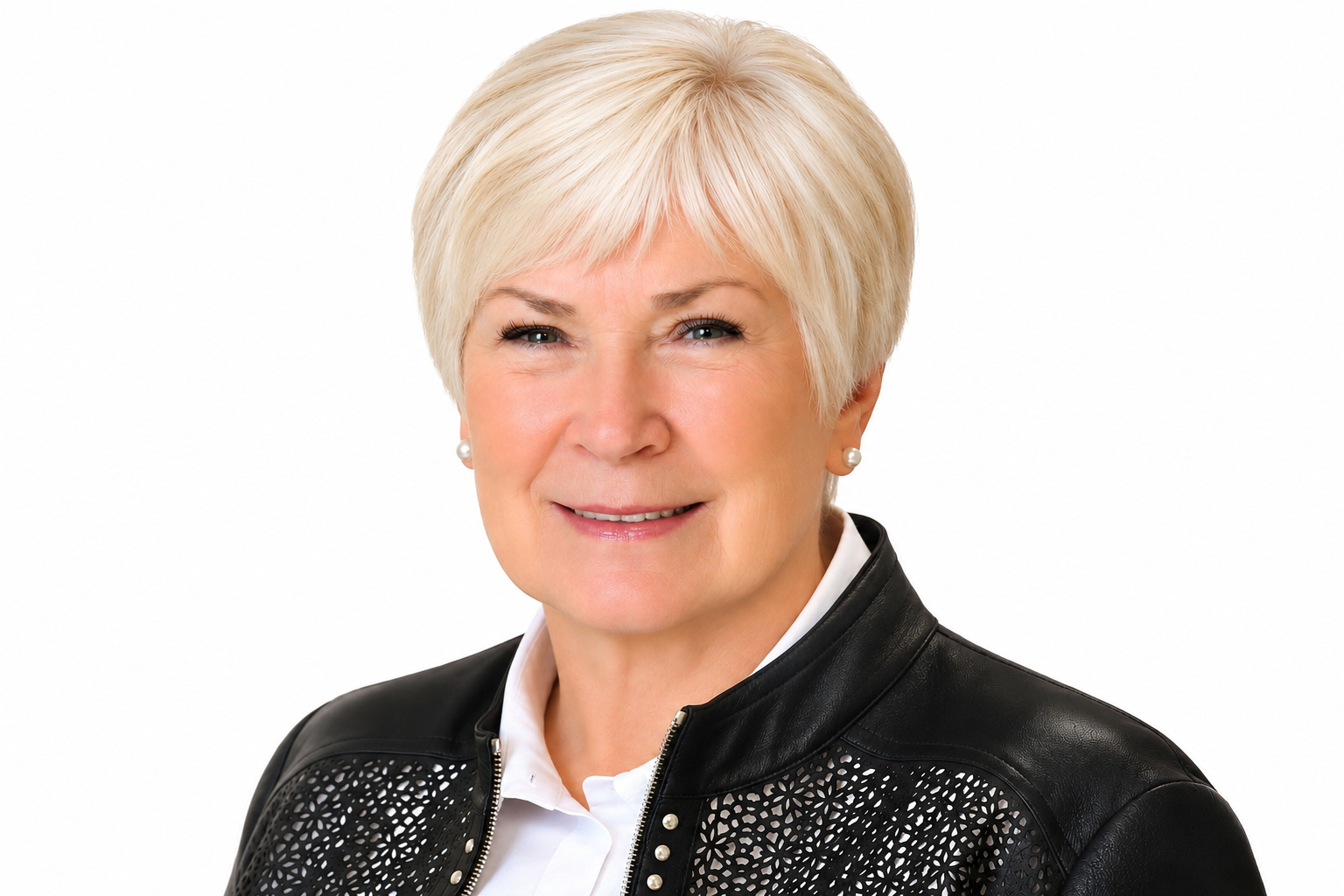
Gail Miller has stood at a lot of podiums.
She has cut ribbons on hospitals, christened business schools, and stood at center court in the arena her husband built.
Most recently, at the Huntsman Mental Health Institute in Salt Lake City, she did something rarer for a woman of her stature.
She told a room full of people about the time she lost herself.
Miller said there was a stretch of her life when she felt she was “living in a shadow.”
She was Larry’s wife, and she was a mother, and she had begun to see herself only “through a screen.”
So she sought help.
“I became involved in therapy for many years—and it saved me,” she said, dabbing at tears with a tissue.
“It saved my family and it saved my marriage. It helped me to find my way back.”
With that, Miller and the Larry H. & Gail Miller Family Foundation, which she chairs, announced a $35 million gift to complete and equip the Translational Research Building at the Huntsman Mental Health Institute at the University of Utah.
Pending approval by the university’s trustees, the 185,000-square-foot building in the University’s Research Park will carry a new name: the Larry H. & Gail Miller Family Translational Research Building.
The money will finish construction, fill the building with labs, imaging, and technology, and help the institute recruit and keep the physician-scientists who will work there.
It opens in fall 2027.
The university calls it the world’s first research building devoted solely to mental health, and the design aims to close the long gap between discovery and the person waiting for it.
Researchers will be grouped into “hubs” around shared problems, with wet labs and computer-based dry labs on the same floors, and they will work alongside experts in artificial intelligence, public policy, business, and law.
At the heart of the building sits a 7-tesla MRI, more than twice as powerful as a standard hospital scanner, which researchers are already using to ask whether the thin air of Utah’s high altitude helps explain the state’s higher rates of depression and what can help people whose antidepressants have stopped working.
Teams will study suicide prevention using the world’s largest set of data on suicide deaths, along with addiction, youth mental health, psychosis, bipolar disorder and maternal mental health.
They will test focused ultrasound, a noninvasive way to reach the deep brain circuits tied to depression and addiction, and psychedelic medicine for conditions that have resisted standard care.
The building will also house the Utah site of the Adolescent Brain Cognitive Development Study, the country’s largest long-term study of brain development and child health, which follows nearly 12,000 young people from ages 9 and 10 into adulthood.
“By connecting these perspectives,” said Greg Miller, Gail’s son and vice chairman of the Larry H. Miller Company board, “the building aims to accelerate the development of new approaches to mental health, mental healthcare, and medicine—and get them to patients in half the time.”
Then Greg introduced his daughter. Sabrina Humphrey told the room that after the birth of her second child, she began having severe anxiety and panic attacks, overnight, for the first time in her life.
“What I thought would pass quickly turned into something that completely consumed every aspect of my life,” she said. Before, she had believed anxiety could be fixed by shifting one’s mindset.
She was humbled.
Two days before her daughter’s first birthday, she was admitted to the Huntsman Mental Health Institute.
Recovery took time, several kinds of treatment, and a great deal of patience. Today she is home raising her children and chasing goals that excite her.
“Life is relatively boring,” she said, “and I could not be more grateful.”
It may have been the best line of the day, and it captured what the building is for.
“Behind every study and discovery, every advancement and treatment, is a real person,” Humphrey said, “someone who wants to feel better, who wants to be present for their family, someone who just wants their life back.”
University of Utah President Taylor Randall admitted he had been overcome “at least five times” during the remarks. He spoke about the students on his own campus, where roughly a third struggle with anxiety, another third with depression, and about one in ten regularly think about suicide.
This fall, he said, the university’s mental health first responders had to expand their capacity by nearly 50 percent. “This isn’t just a building,” Randall said.
He described a college student graduating sooner and a young mother taking walks with more than one child.
The gift also brings together two of Utah’s great self-made families.
The Huntsmans founded the institute in 2019 with a $150 million gift, the largest single gift in the university’s history at the time.
The Utah Legislature followed with $90 million for the research building.
Christena Huntsman Durham, CEO of the Huntsman Mental Health Foundation, said her family had hoped from the day they broke ground that others would join them.
“We couldn’t ask for better partners in this than the Millers,” she said. She paid tribute to her parents, Jon and Karen Huntsman, and to Larry and Gail Miller, who risked so much “so that we can stand here today and put dollars into philanthropy.”
The Miller foundation had already been part of the institute’s campus, with a $3.5 million gift toward the Kem and Carolyn Gardner Mental Health Crisis Care Center.
With this gift, it becomes one of the building’s defining partners. It is a meaningful signal in a field where, as foundation president Miranda Barnard put it, most Americans believe the country is in a mental health crisis, yet fewer than 2 percent of charitable dollars go to mental health causes.
To understand why this gift feels like a natural chapter in the Miller story, it helps to start at the beginning.
Karen Gail Saxton grew up in Salt Lake City and met Larry Miller in the seventh grade.
They started dating in ninth grade and married in March 1965 at Memory Grove, on a day Gail picked because she had a vacation day from her job as a telephone operator.
For years, she supported their young family while Larry bounced between jobs until he found his calling in Toyota parts departments, first in Utah and then in Denver, where he built one of the country’s top-selling parts operations.
In 1979, on a trip home for a friend’s wedding, Larry asked dealer Hugh Gardner, half joking as always, when he would sell him his Toyota store in Murray.
“How about today?” Gardner said.
The Millers put in the $88,000 they had saved over eight and a half years, borrowed the rest, and opened Larry H. Miller Toyota.
That one store grew into one of America’s largest privately held auto groups, along with Megaplex Theatres, a minor-league ballclub, and, most famously, the Utah Jazz.
In 1985, with the team at risk of leaving the state, the Millers bought half for $8 million and a year later bought the rest for $14 million to keep it from being sold.
Gail later said that Larry wasn’t much of a basketball fan back then.
He simply understood that Utah was unlikely to get another team if it lost this one.
Even in those years, the Millers’ giving had a homespun quality.
Larry served on community boards and cashed the small stipend checks, tucking the money into the pocket of a suit coat hanging in the closet.
Gail recalled that, through the year, that pocket covered small needs for people who could use a few hundred dollars.
Whatever was left at Christmas went to families in need. Looking back, she has called that coat pocket her practice for philanthropy.
In 1996 the couple formalized their scholarship work through the Larry H. Miller Education Foundation, and in 2007 they created the family foundation to carry the giving across generations.
After Larry’s death in 2009, Gail, who had never gone to college or trained in business, became head of the whole enterprise.
She later oversaw two of the biggest deals in Utah history: the sale of the Jazz to Qualtrics founder Ryan Smith for about $1.66 billion, and the sale of the dealerships to Asbury Automotive for $3.2 billion.
Those transactions helped the family grow its foundation.
The family’s business interests moved into real estate, health care and investments. In 2025, the Millers returned to pro sports by buying control of Real Salt Lake and the Utah Royals, and Gov. Spencer Cox called Gail “the matriarch of this state.”
She has said all along that she does not count her wealth in money.
“My wealth is counted in relationships,” she once said.
Her giving leaves a record that reads like a map of Utah.
At Salt Lake Community College, the Millers began funding scholarships decades ago, donated land and buildings for the college’s Miller Campus in Sandy, and, in 2022, gave $10 million, the college’s largest single cash gift.
The college responded by naming the Gail Miller School of Business, the first business school in Utah named exclusively after a woman.
In 2017, the foundation gave $5.3 million to the University of Utah to create Driving Out Diabetes, which sends a Wellness Bus into neighborhoods where people are most at risk of type 2 diabetes, the disease that took Larry’s life.
That same year, Gail pledged to match up to $10 million in donations for Salt Lake County’s new homeless resource centers.
Utahns met the match; the Gail Miller Resource Center opened in 2019, and last December she gave another $10 million to Shelter the Homeless.
Her giving to that organization now tops $22 million.
“Homelessness is not a problem that one organization can solve alone,” she said then, calling the gift an invitation for others to join.
The Millers’ most moving gift may be the one that came from Larry’s coin collection.
In 2020, the family gave $50 million, its largest single gift to any organization at the time, to help Intermountain Healthcare build a second Primary Children’s Hospital in Lehi.
Larry had left instructions for his nearly 1,600 rare coins to be sold after his death, but Gail could not bear to part with them for more than a decade.
Eventually she sent the collection, valued at more than $25 million, to auction for the new hospital.
It was a deliberate nod to the penny drives that Utah schoolchildren held generations ago to help build the original Primary Children’s.
The hospital now stands on the Larry H. & Gail Miller Family Campus.
“Our children have been helped by Primary Children’s in our hour of need,” she said at the dedication.
Smaller threads run through it all.
The foundation endowed a directorship in constitutional studies at Utah Valley University and supported a new experiential-learning building at Utah State’s Jon M. Huntsman School of Business, a quiet bit of Miller-Huntsman partnership years before this one.
It has also given to the Utah Housing Preservation Fund, a technical college in Ogden, and the new Museum of Utah.
And the Millers are deliberately training the next generation to keep going. Through the Miller Legacy Project, family members as young as 12 research, nominate, and choose organizations to support.
In one recent year, every eligible family member took part, including 41 grandchildren and six great-grandchildren.
That may be the clearest way to read this week’s gift.
A family that has spent nearly half a century giving to schools, hospitals, and shelters is now putting $35 million toward one of medicine’s hardest problems.
Three generations are willing to stand up and talk about their own struggles.
Gail Miller has long repeated the family motto: “go about doing good until there is too much good in the world.”
Recently, she added something more personal.
Asking for help, she told the room, is not a failure.
It is how you find your way back, and the new building bearing her family’s name is meant to help many more people do the same.