
$20 million from 42 year old “Giving Pledge” member billionaire Ben Delo launches a fund for the young ambitions of 56 nations
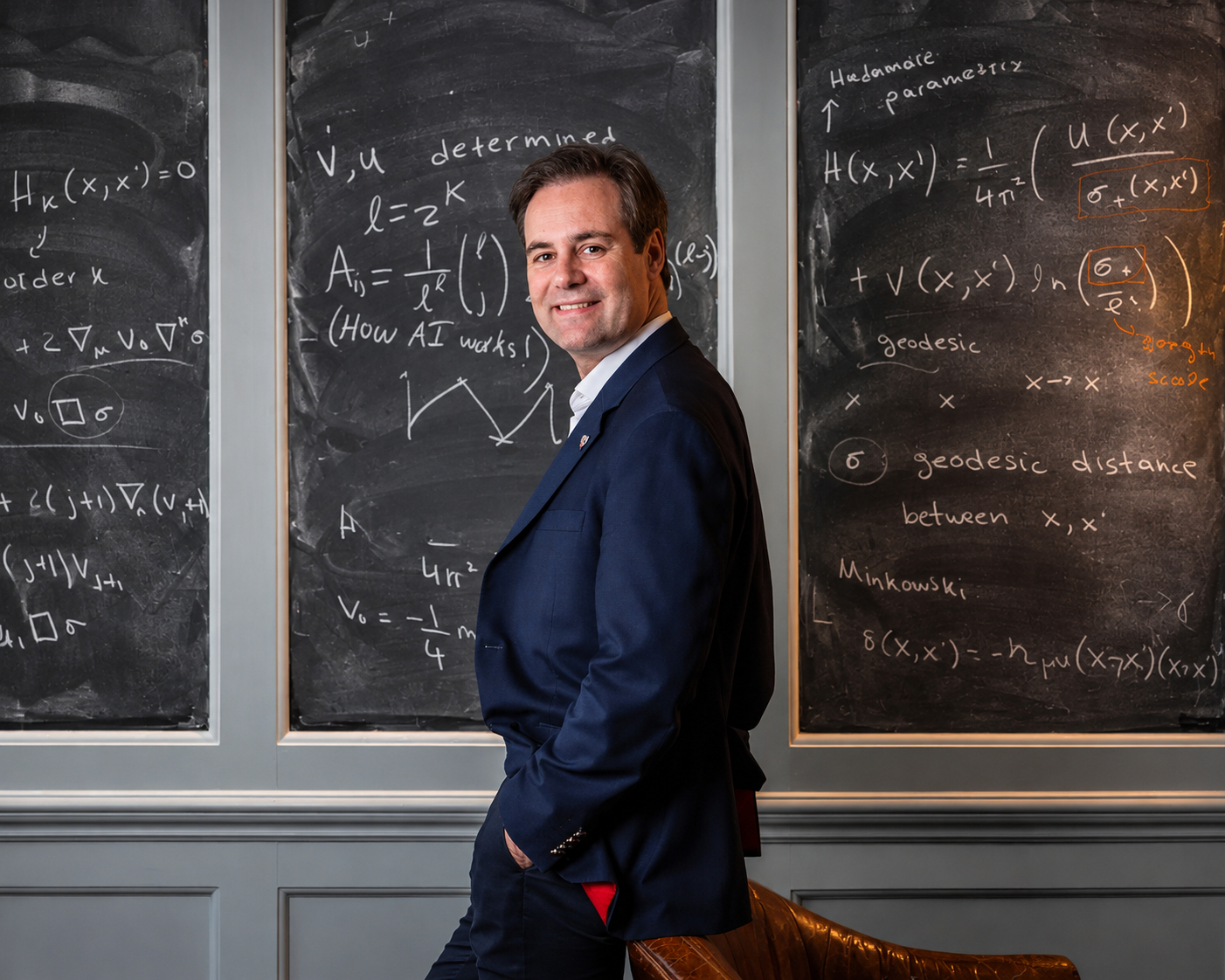
Ben Delo still remembers the list he wrote at sixteen.
When a British school asked him to set down his ambitions, the teenager from Sheffield answered in three blunt lines: computer programmer, internet entrepreneur, and millionaire.
He went on to pass all three goals by a wide margin.
Now, at 42, he is asking a different question, one he put to presidents and prime ministers in St. John’s, Antigua and Barbuda, as the Commonwealth Heads of Government Meeting drew to a close this week: what happens to the ambitions of young people who never get the chance to act on them?
His answer is the Commonwealth Aspiration Fund, launched with a $20 million pledge from Delo that the Commonwealth describes as the largest private gift ever made in its support.
The new fund will back education, skills training, youth employment, and entrepreneurship across all 56 member nations, a network of 2.7 billion people, more than six in ten of whom are under 30.
Commonwealth Secretary-General Shirley Botchwey will lead it, and it will run independently, working closely with the Commonwealth Secretariat under an oversight board.
Grantmaking begins in 2027.
The way the gift is built tells you a lot about the man behind it.
Delo is giving a $10 million lead gift outright and has promised a further $10 million in matching funds as other donors come in.
If the match is met, his commitment is meant to bring in $30 million in total, which is one tenth of the fund’s $300 million endowment goal.
Delo will lead that campaign himself.
A permanent endowment, a challenge match to draw in other donors, and a founding donor who stays on to raise the rest: it is the playbook of American university fundraising, now used for a body that has spent most of its 77 years relying on member-state contributions.
Botchwey said she hoped the gift would “put the Commonwealth Aspiration Fund on the map.”
Delo said he was honored to be its first backer and urged other philanthropists to join, noting that young people around the world increasingly meet institutional barriers and economic uncertainty where they should find opportunity.
The fund’s focus on aspiration is personal.
Delo was born in Sheffield in 1984 to a civil engineer father and a schoolteacher mother and moved through a string of primary schools before being diagnosed with Asperger’s syndrome at 11.
At Lord Williams’s School, a state comprehensive school in Thame, Oxfordshire, he finally received the structured support he needed and began to thrive.
That led to Worcester College, Oxford, and a double first in mathematics and computer science.
The gap between a talented child who is overlooked and one who is given a real chance has shaped his giving ever since.
In 2020, he co-founded the Sheila Coates Foundation, named for the autism advocate whose help he credits with changing his education.
It has since supported some 13,000 autistic students in British schools, and earlier this year he gave it a £25 million endowment so the work can continue in perpetuity.
The American thread in Delo’s story starts early and runs throughout. His career began at IBM, which hired him after a summer internship.
There he was named as an inventor on patents granted by the US Patent and Trademark Office, including software that automatically repaired web links to archived or moved material.
He went on to build high-frequency trading systems at hedge funds and banks and, in 2012, moved to Hong Kong to work for J.P. Morgan.
That is where he began experimenting with Bitcoin.
Two years later he co-founded BitMEX, a cryptocurrency derivatives platform that at its peak handled more than a trillion dollars in annual trading volume.
He is widely credited as the co-founder most responsible for the perpetual swap, a contract Bloomberg’s Izabella Kaminska called one of crypto’s most important inventions. By 2018, he was reported to be Britain’s youngest self-made billionaire.
The defining American influence on his philanthropy came the following year, when Delo signed the Giving Pledge, the commitment created by Bill Gates, Melinda Gates, and Warren Buffett, and promised to give away most of his wealth during his lifetime.
At 35, he was one of the youngest signatories ever, and he said he was inspired by Gates, Buffett, and the pledgers who came before him.
He also described the pledge as a chance to learn from more experienced donors. His first focus was strikingly American.
He funded the Center for Human-Compatible AI at the University of California, Berkeley; a pandemic-preparedness collaboration involving the Johns Hopkins Center for Health Security; and work on the effects of nuclear weapons at Decision Research, the nonprofit founded by psychologist Paul Slovic.
He worked with Open Philanthropy, the grantmaker funded by fellow pledgers Dustin Moskovitz and Cari Tuna, to find the most promising projects.
He stepped back from BitMEX’s leadership in 2020 and has said that, since then, philanthropy has been his main work.
Over time his giving has grown into four areas: free inquiry and academic freedom, mathematics education and research, neurodiversity, and collaboration across the Commonwealth.
Through these he has given more than £100 million, by his own account.
At Worcester College he endowed teaching fellowships in mathematics and computer science.
At the London Institute for Mathematical Sciences, he pledged £20 million this year, again split between an upfront gift and matching funds, to help an independent research institute in Mayfair aim for Nobel- and Fields Medal-level work.
The Commonwealth gift follows the same pattern of giving the first dollar and asking others to bring the rest.
The Commonwealth commitment did not come out of nowhere.
In 2023 he launched the Ben Delo Commonwealth Leadership Programme at King’s College London, which provides scholarships for master’s-level executive education to mid-career civil servants from member states and British Overseas Territories.
In its first two years it took in 117 participants from 20 countries, with funding extended to support as many as 125 more.
“It is the people who live within the Commonwealth that serve as the primary actors that shape, sustain, and realize its potential,” Delo said when the program was renewed.
The Aspiration Fund applies that same belief, investing in the next generation’s capacity to lead rather than in institutions, and on a much larger scale.
The timing matters.
Leaders gathered in Antigua under the theme “Accelerating Partnerships and Investment for a Prosperous Commonwealth,” and the meeting’s agenda centered on how to widen education, skills and entrepreneurship for a population younger than almost anywhere else on earth.
In Entebbe a few days earlier, Ugandan President Yoweri Museveni had welcomed the idea of a youth aspiration fund to train Africa’s fast-growing young population.
In the Caribbean, the Pacific, and South Asia, the same question keeps coming up: how do you turn a demographic surge into an economic one before the window closes?
For American readers, the Commonwealth can seem like something distant, a ceremonial club linked to the British Crown.
The United States is not a member. But the nations in the network include some of America’s closest trading partners and fastest-growing markets, from Canada and India to Nigeria, Kenya, and Australia.
They are also the countries that send many of the students who fill American graduate programs and the founders who build companies in American tech hubs.
A young coder in Lagos, a young entrepreneur in Kingston, or a young engineer in Dhaka who gets a first chance through this fund is very likely to become a partner, customer, or colleague of American firms and universities.
Delo’s model also gives American donors a familiar way in: a named lead gift, a dollar-for-dollar match, and an endowment designed to last.
The work is just beginning.
The $300 million target is still to be raised, and the first grants will not be made until next year. But the outline is clear, and so is the motivation.
A boy who once needed someone to notice what he could do has grown into a donor trying to build that recognition into a system that reaches across 56 countries.
Delo’s list at sixteen was about what he wanted for himself.
His gift in Antigua is about what millions of young people might write on theirs.