
$20 million latest gift from David and Jan Ellison Baszucki builds a home for metabolic psychiatry at hospital—raising their philanthropic giving to over $170 million
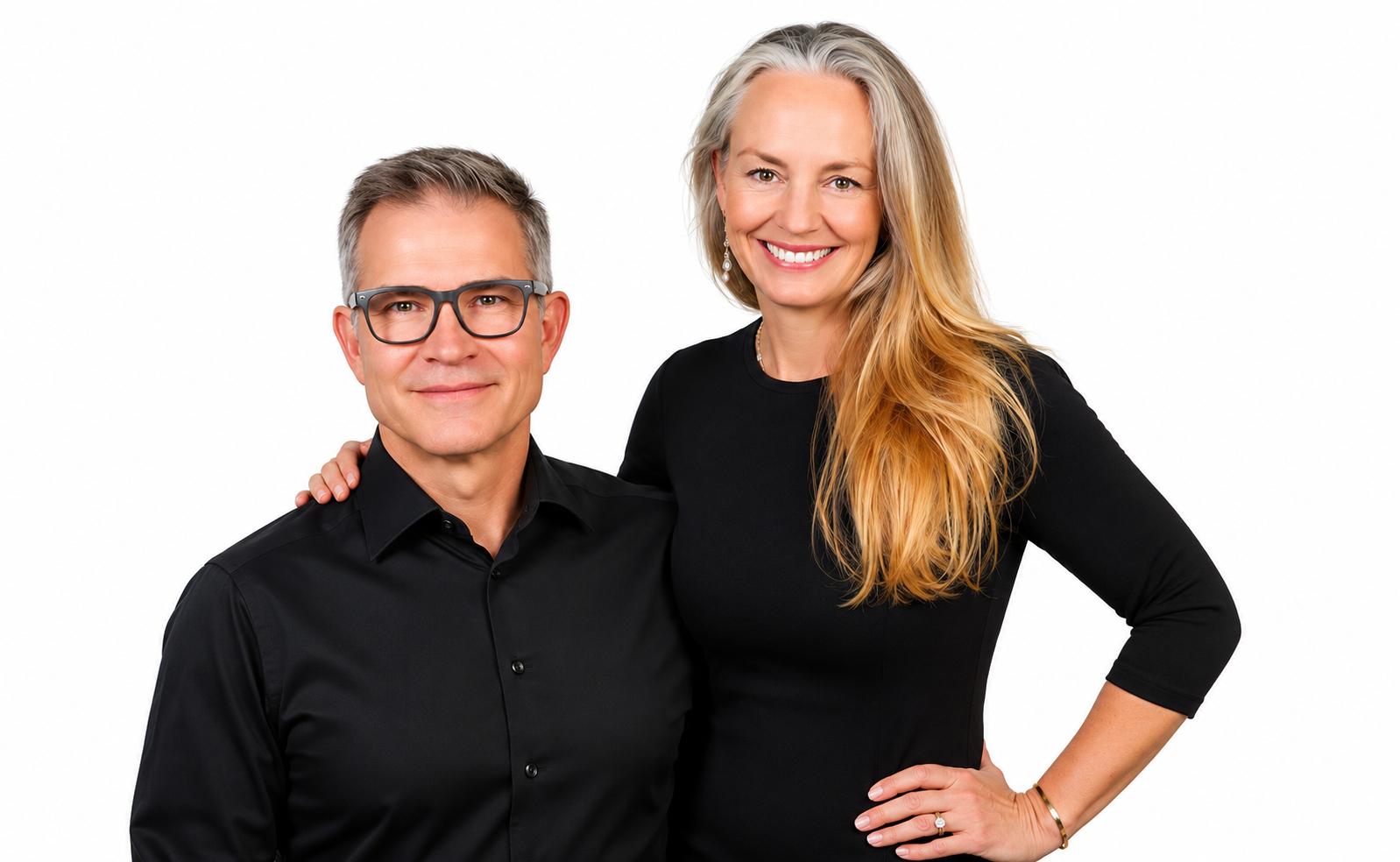
Ten years ago, Jan Ellison Baszucki and David Baszucki got the call every parent dreads.
Their eldest son, Matthew, then a 19-year-old freshman at UC Berkeley, had a manic episode and was hospitalized.
He was diagnosed with bipolar disorder with psychotic features. Five hard years followed. There were more hospital stays, roughly 40 doctors and therapists, and close to 30 medications.
At one low point, Matthew left home in a psychotic state and slept on the streets of Los Angeles.
By the medical standards of the day, his illness was “treatment resistant.” By his family’s account, they were running out of hope.
Today the Baszuckis turned that experience into one of the most significant gifts yet made to an emerging field of medicine.
Baszucki Group, the philanthropy David, the founder and CEO of Roblox, started with Jan, a best-selling novelist, has given $20 million to McLean Hospital.
McLean is a psychiatric hospital in Belmont, Massachusetts, part of Mass General Brigham and Harvard Medical School’s largest psychiatric affiliate.
The grant creates the McLean Center for Metabolic Psychiatry, which its leaders describe as the country’s first center of its kind.
It will be the flagship of the newly launched Global Network for the Advancement of Metabolic Psychiatry, known as MetPsy, a worldwide community of researchers and clinicians that the Baszuckis also fund.
From inside the family, the gift feels like a thank-you note.
In late 2020, Jan was searching for anything that might help her son when she heard Dr. Christopher Palmer on a podcast.
Palmer is a Harvard psychiatrist at McLean who was studying how diet and metabolism affect mental illness. She reached out. Palmer has said he was ready to tell her he wasn’t taking new patients and that he’s glad he took the call anyway.
In January 2021, working with his Stanford psychiatrist, Palmer and a specialist dietitian, Matthew, began a medically supervised ketogenic diet.
The diet is high in fat and very low in carbohydrates, and neurologists have used it for about a century to treat epilepsy.
Within four months, his mood had steadied, his sleep returned, and his thinking cleared.
“My brain felt like it could work again,” Matthew has said. He finished college, went into a tech career, took up music and weightlifting again, and slowly tapered his medications with his doctors’ guidance.
More than five years later, he says, “It feels like I don’t have the illness anymore.”
Jan has always said Matthew’s story is one family’s story, not a promise.
Today she cast the gift as an invitation.
“The launch of MetPsy reflects our family’s commitment to continuing to advance the field of metabolic psychiatry worldwide,” she said.
“As this network grows, we hope fellow funders will join us in expanding access to evidence-based metabolic interventions—a clinical approach that has restored the health and future of our son Matthew, and offers that same hope to many more.”
The new center will be directed by Dr. Dost Öngür, chief of McLean’s Psychotic Disorders Division and a Harvard professor of psychiatry. It rests on three pillars under one roof: clinical care, research and training.
Adults with serious psychiatric conditions can add a ketogenic diet to their usual treatment under close medical supervision. Öngür says it is meant for patients who haven’t improved as much as hoped or who struggle with side effects, and it adds to medication and psychotherapy rather than replacing them.
The center has already started taking referrals. It expects to see about 50 to 75 patients in its first year and about 75 a year after that.
Alongside the clinic, researchers will run clinical trials to learn which nutritional treatments help which patients and when.
They will also look at other metabolic tools, including GLP-1 medications.
Öngür calls it “the first mental healthcare service focused on ketogenic therapy within a larger, established institution,” and hopes it will become a blueprint other academic medical centers can follow.
Palmer’s own path closes the circle. His work with the Baszuckis led, five years later, to this center. He and his clinical and training practice, MH², will co-lead the center’s medical education program, preparing a new generation of clinicians to use metabolic treatments responsibly.
Palmer is open about the limits: the diet isn’t a cure, it can be hard to stick with, and not everyone sees results like Matthew’s.
But by his estimate, about half of the patients who follow it closely for months get some relief. In psychiatry, where many patients cycle through treatments that don’t work, that kind of result gets attention.
The McLean gift is the latest chapter in a body of giving that has grown quickly. The Baszuckis started Baszucki Group after Roblox went public in 2021. David committed any extra pay he receives as CEO to philanthropy.
Even before that, the couple had given $6 million to UC San Francisco, where the Baszucki Lymphoma Therapeutics Initiative now works on CAR T-cell therapy.
That cause is personal too: Jan’s father survived lymphoma thanks to that treatment. Their Baszucki Brain Research Fund began backing bipolar disorder research almost immediately.
In 2022, they joined Google co-founder Sergey Brin and Keystone Capital chairman Kent Dauten in a combined $150 million commitment to bipolar research and treatment.
Since then, the family has funded more than a dozen clinical trials of ketogenic therapy worldwide, including a $2 million gift to McLean’s ReThink Bipolar trial.
They have also funded a $3 million endowed chair in metabolic neuroscience at Stony Brook University, a $6 million study at the University of Pittsburgh on how the ketogenic diet affects bipolar disorder, and Metabolic Mind, a nonprofit that shares research and patient stories.
By early 2025, after just three years of operation, Baszucki Group said it had given more than $100 million in philanthropy, including more than $60 million for mental health research, treatment, and impact investments.
Months later, the Baszuckis committed $50 million to launch the Coalition for Metabolic Health, which focuses on metabolic health across chronic disease.
With today’s $20 million for McLean, the couple’s public philanthropic commitments now total well over $170 million.
That doesn’t count their share of the 2022 bipolar pledge, which was never broken out, or the many smaller grants that seldom make headlines.
Big numbers aside, the story is still about one young man getting his life back and his parents’ decision to make that recovery more than a private miracle.
Every patient referred to the new center in Belmont arrives with a family, and many of those families have been through the same years of searching the Baszuckis know so well.