
$150 million latest effort from Mike Bloomberg will expand overdose prevention initiative
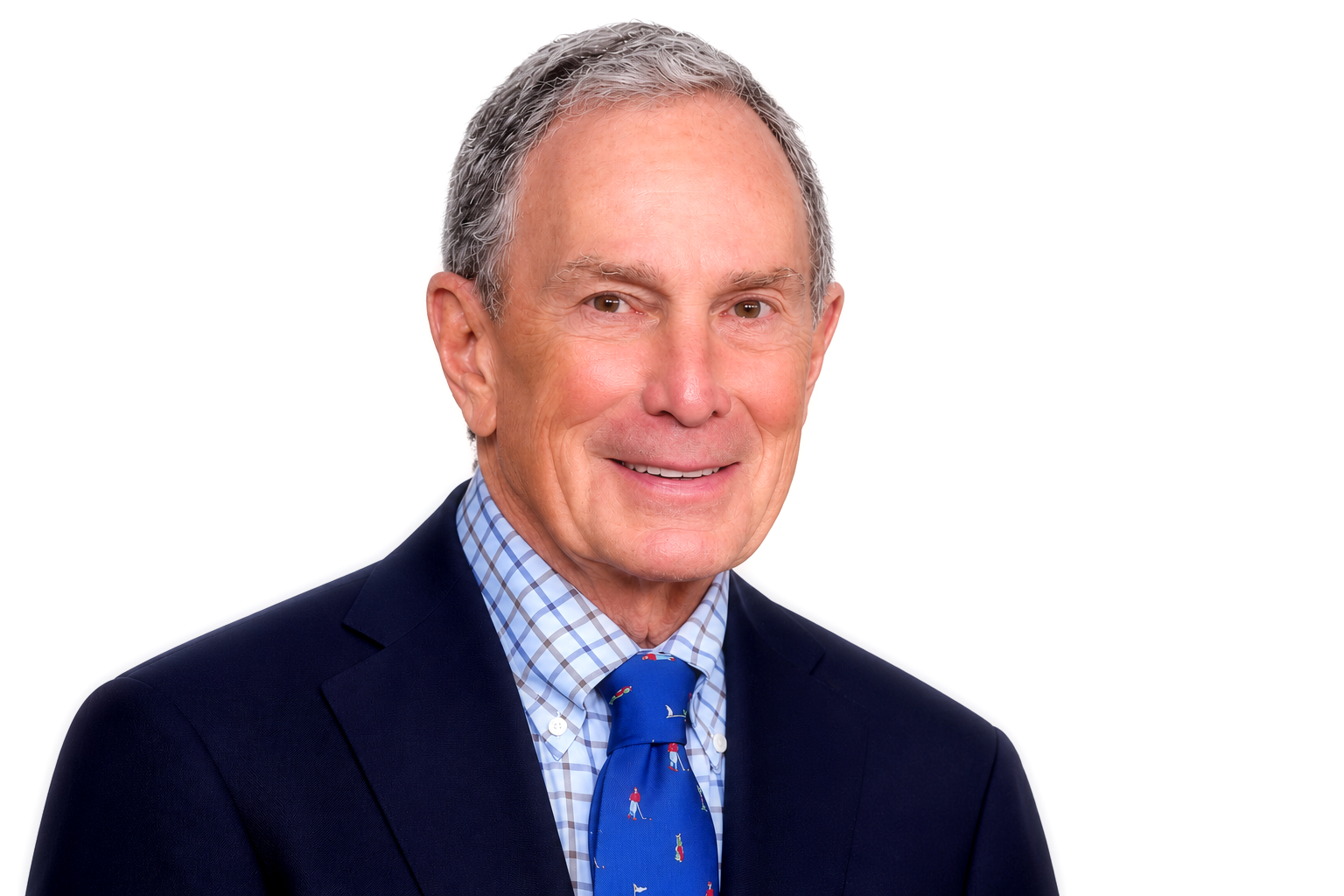
Mike Bloomberg is putting another $150 million behind an effort to change what happens when someone with opioid addiction enters a jail cell or arrives in a hospital emergency department: make treatment available before another opportunity to save a life slips away.
The commitment, announced Tuesday, October 20, will expand Bloomberg Philanthropies’ Overdose Prevention Initiative to Washington state while continuing its work in Kentucky, New Jersey, New Mexico, North Carolina, and Wisconsin.
For the businessman, philanthropist, and former three-term New York City mayor, the announcement brings his organization’s investment in the overdose effort to $335 million since 2018.
Its central ambition is straightforward, even if the work of delivering it is not: access to opioid-use-disorder treatment for all incarcerated people and treatment availability in every hospital emergency department across the six participating states.
Those are goals of the expansion; the services the announcement establishes are already universally available.
“Even one death from an overdose is too many,” Bloomberg said in a statement accompanying the commitment.
“The overdose epidemic continues to be one of the hardest public health crises our nation faces. Now is the time to accelerate this hard-fought progress, expand access to treatment, and save more lives.”
He announced the funding at the ninth annual Bloomberg American Health Summit in Baltimore, where the conversation stretched well beyond addiction.
The gathering at the Baltimore Marriott Waterfront brought together more than 500 Bloomberg American Health Initiative fellows and local and national public health leaders, with Maryland Gov. Wes Moore and Baltimore Mayor Brandon Scott among the featured speakers. Gun violence, pressure on health-care funding, and the effects of digital technology on young people also figured in the day’s discussions.
That setting gave Bloomberg’s announcement a broader backdrop: public health officials trying to sustain progress while confronting new pressures on the systems that deliver care.
Moore warned that federal funding cuts and Medicaid changes would strain health services. Bloomberg, meanwhile, praised Scott’s work to reduce violence in Baltimore, telling the gathering, “He’s the real thing, and he’s doing a real good job.”
The overdose commitment fit into the same conversation about what state and local institutions can do to prevent avoidable deaths.
The new money is not launching an unfamiliar cause for Bloomberg. His philanthropy began the overdose initiative in 2018, responding to declining American life expectancy and the role of opioid deaths in that decline.
Its approach has been to work with states and partner organizations on the practical machinery of prevention: medication treatment, access to the overdose-reversal drug naloxone, changes in policy, and better use of data.
This next phase puts particular emphasis on two places where the consequences of a missed opportunity can be severe: correctional facilities and emergency departments.
The initiative aims to make those settings points of entry into treatment, rather than places where an immediate crisis is managed without addressing the addiction behind it. Bloomberg Philanthropies says its work encompasses prisons, jails and other community settings serving people at high risk of overdose.
Washington’s addition gives that emphasis a pointed history. In explaining the expansion, the foundation cited a landmark 2007 study of people released from prison in Washington state that found their risk of dying from an overdose during the first two weeks after release was 129 times that of the general population.
That is a historical finding, not a measurement of today’s risk, but the foundation says more recent research continues to show the danger surrounding release from incarceration.
The emergency-department effort addresses another critical moment: the chance to connect someone who has survived an overdose with treatment.
The foundation cited research linking medication treatment after a nonfatal overdose with a lower risk of subsequent death, making the case that surviving the immediate emergency should be the beginning of care rather than its endpoint.
Washington joins the initiative despite recent improvement in its overdose picture. Bloomberg Philanthropies says the state still has one of the country’s highest overdose death rates.
Its inclusion also marks a geographic shift: as Washington comes in, the foundation is concluding its work in Pennsylvania and Michigan, the two states where the initiative began eight years ago. The foundation says those states have built infrastructure that can sustain progress independently.
In Pennsylvania, it points to a concrete change inside the prison system: all 24 state prisons now provide buprenorphine, a medication used to treat opioid use disorder.
In Michigan, the work included helping establish an online portal that lets community organizations order naloxone by mail, along with changes that allow them to distribute it without individual prescriptions.
Those are less conspicuous achievements than a nine-figure funding announcement.
They are also the kinds of changes the initiative is designed to leave behind: medication available inside a prison, an ordering system that puts overdose-reversal drugs into community hands, or a hospital able to offer treatment when a patient is ready to accept it.
The foundation’s stated aim is to make treatment and prevention available where people at greatest risk already encounter public systems.
Michigan Gov. Gretchen Whitmer emphasized that practical side in a statement accompanying the announcement.
“Getting naloxone into the hands of people who can save a life is key to the state’s strategy,” she said. Pennsylvania Gov. Josh Shapiro similarly credited the expansion of treatment and prevention while saying the work would continue until every Pennsylvanian had access to needed care and support.
Bloomberg Philanthropies reports progress elsewhere, too. All prisons in New Jersey and Wisconsin now provide medications for opioid use disorder, it says.
Across New Jersey, Michigan, and Pennsylvania, more than 75% of hospital emergency departments now provide those medications, up from an average of 28%.
Those figures describe specific settings and states; they do not mean the new six-state goal of universal access has already been met.
The program has also supported expanded Medicaid-covered opioid-use treatment for postpartum parents in Kentucky and greater access to fentanyl test strips in New Mexico.
Beyond its focus states, the foundation says it has helped more than half of U.S. states use evidence-based guidelines for spending opioid settlement money—the billions of dollars paid by drug manufacturers and distributors to resolve litigation over the crisis.
There are limits to what the announcement establishes. The foundation reports that overdose deaths in its focus states declined faster than the national average in 2024, but that comparison alone does not establish how much of the improvement its funding caused.
The October 20 release also does not provide a state-by-state allocation of the new $150 million or a firm deadline for reaching every emergency department and all incarcerated people across the six states.
For Bloomberg, the commitment is a substantial addition to an established public health portfolio rather than a stand-alone gift. Bloomberg Philanthropies says it distributed $4.3 billion in 2025 across its work, which includes public health, education, the environment, the arts and government innovation.
The overdose initiative is one part of that much larger operation, but its next phase sets an unusually tangible test: whether treatment becomes available throughout the correctional and emergency-care systems it has targeted.
The money is now pledged.
The harder work will be turning that promise into routine care—so that a person’s access to treatment does not depend on which prison holds them or which emergency-department door they enter.
That is the standard Bloomberg’s latest commitment has set for the six states.