$30 million gift from Steven H. Lavin opens a new chapter in how doctors train
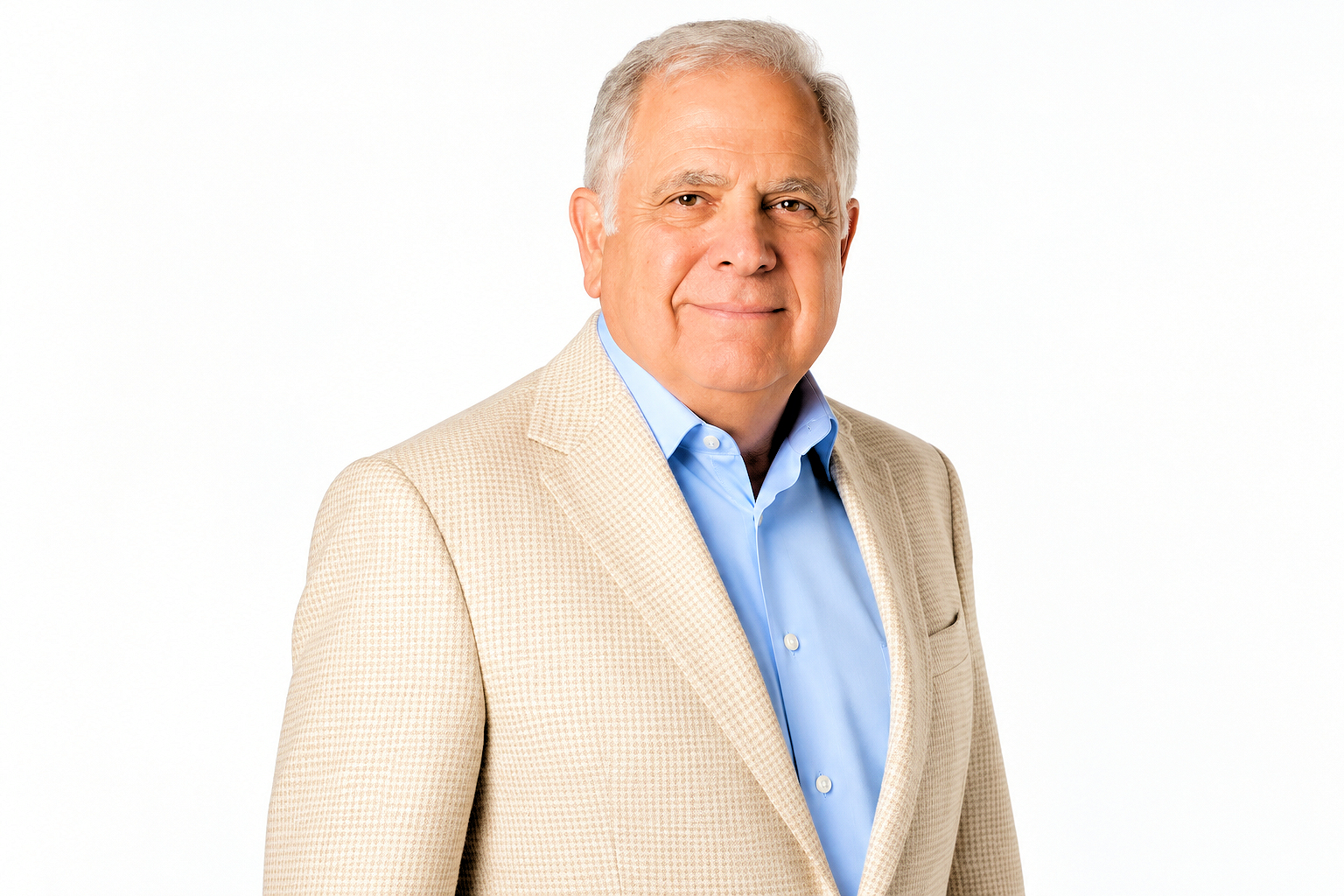
Steven H. Lavin’s family foundation has given $30 million to the Hebrew University of Jerusalem to launch a Center for Advanced Medical Education.
The center will use artificial intelligence and other new technology to change how Israel trains its physicians.
The goal is simple to state and hard to achieve: train more doctors in Israel, keep more of them in Israel, and provide better care for patients across the country.
The gift answers a problem that has become hard to ignore.
More and more Israelis go overseas for medical training, settle there, and never come back, just as the country needs them most. Israel is projected to have only three doctors per 1,000 people by 2035.
Lavin says the October 7 attacks in 2023 made the cost of that drain clear to him.
“People are training abroad and staying abroad… they start to build their life, and they don’t want to return,” he told The Jerusalem Post.
He did not leave the thought there. Over a conversation with his friend Ambassador Yossi Gal, Hebrew University’s Vice President for Advancement and External Relations, the concern became a plan: a partnership to build a system that lets more Israelis study medicine at home and start their careers and families there.
Lavin’s idea goes beyond maintaining numbers. He has stressed the value of training a generation of physicians within Israeli culture who understand their patients’ language, history, and daily lives.
Professor Eli Pikarsky, Dean of Hebrew University’s Faculty of Medicine, shares that view.
He calls a doctor’s cultural readiness one of the profession’s most important and most difficult parts, and a central part of the program now being designed.
The approach is practical and humane. Pikarsky describes a model in which much of the basic learning moves from crowded lecture halls into technology-powered individual and group modules. That frees senior physicians for the work only they can do.
He describes a familiar scene: a mentor examines a patient with a student, then has to sit down at 10 o’clock at night, tired and with a family waiting, to write up feedback.
“This is not the way to do it,” he said. In the new system, an automated tool takes notes during the bedside discussion and drafts a structured outline.
The mentor reviews it, decides what to keep, and gives the student personal guidance.
Other tools will let students practice the hard art of talking with patients before they face a real one and help students teach each other, which Pikarsky sees as one of the best ways to learn.
Both men take seriously the worry that technology could make medicine less personal.
Their answer is that it should do the opposite.
“If we don’t use the tools available to us for this training, we won’t be getting the best medical service there is,” Lavin said.
The point is to stop “inefficiently using highly trained people” and give mentors back the time to observe students, work through complex cases, and connect with them.
The gift is a natural next step for a man whose career has joined business, law, and community service.
Born in 1955, Lavin earned an accounting degree from the University of Illinois and a law degree from Loyola University Chicago before building a career as a corporate attorney.
He served as chairman of Bank Leumi USA and, in 2023, became chairman of OSI Group, the global food company his father, Sheldon Lavin, built into a major supplier to McDonald’s and other leading brands.
With his wife, Dawn, and their sons, Michael and Alexander, he has carried the family’s sense of duty into a new generation.
Much of that duty flows through the Sheba Foundation, the Lavin family’s private foundation in Highland Park, Illinois. Steven Lavin is its president, and Dawn and Michael serve alongside him, all without pay.
The foundation’s giving has grown sharply in recent years. In 2024 alone it made 51 grants totaling more than $4.3 million, backed by about $64 million in assets and $6.4 million in new family contributions. Its largest priority is health.
More than $4 million has gone to Rush University Medical Center in Chicago, including $2 million in 2024 for a cancer center in a new medical facility.
The family’s name is also on a leadership role: the director of RUSH MD Anderson Cancer Center serves as The Sheba Foundation Director of the Rush Cancer Program.
The foundation has also supported cancer research at the University of Chicago, brain research at the Weizmann Institute of Science, the National Multiple Sclerosis Society, and the Ronald McDonald House.
The Lavins’ giving is equally rooted in Jewish community life. The family gave $1.1 million to North Suburban Synagogue Beth El to support the congregation and its security, and more than $770,000 to the Jewish United Fund of Metropolitan Chicago for social services, along with additional JUF grants for emergency needs.
They also gave together years ago: Steven, Dawn, Michael, and Alexander Lavin appeared as donors to the Jewish Federation’s Centennial Campaign.
Close to home, after the 2022 Highland Park Fourth of July shooting, the foundation gave $100,000 to a fund for the victims.
Since October 7, the Lavins’ support for Israel has been direct and quick.
The foundation paid for family expenses and milking stations at Kibbutz Nir Oz, one of the communities hit hardest that day. It also funded medical equipment for Sheba Medical Center, a bomb shelter through NA’AMAT USA, oxygen and medical gear for United Hatzalah in northern Israel, emergency education resources at Tel Aviv University, and services and scholarships through Friends of the Israel Defense Forces.
Hebrew University was already part of the family’s circle before this gift, with a $222,000 grant for food-safety research. That fits a family whose business feeds millions of people every day.
Seen against that record, the new Center for Advanced Medical Education is easily the largest gift on the family’s public record and the clearest statement of its values. Steven Lavin has spent decades supporting the hospitals, synagogues, and humanitarian groups that hold communities together.
With this commitment, he is building something lasting: a system meant to make sure the next Israeli doctor learns, practices, and builds a life at home.
For Israeli medical students, it means a reason to stay. For their teachers, it means time to teach well.
And for patients across Israel, it means the doctor they need is more likely to be there.