
$15 million latest gift from global philanthropist Len Blavatnik opens the door wider for next foreign policy leaders
Some philanthropists give to buildings.
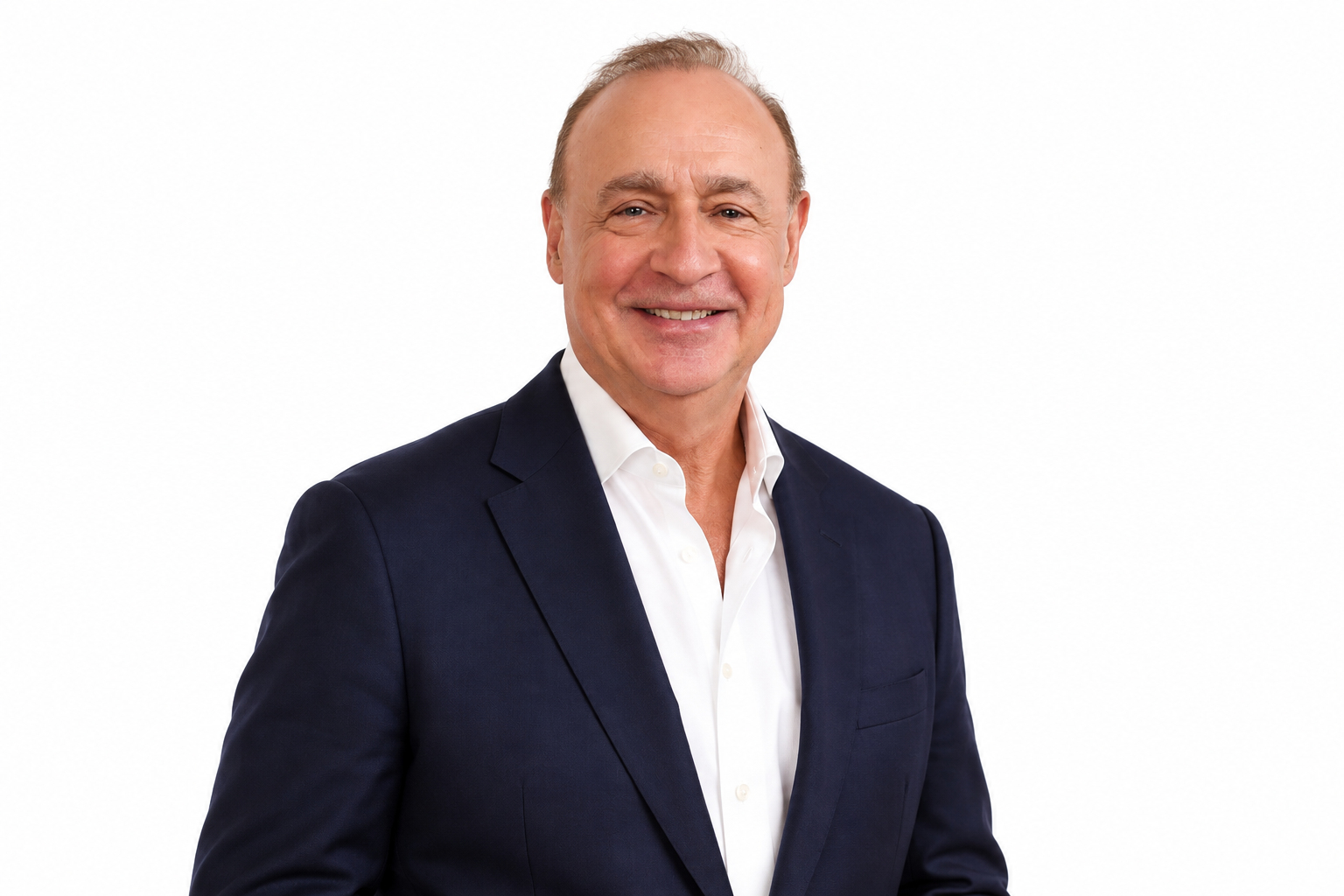
Len Blavatnik has spent two decades giving to people, especially the gifted young scientists, scholars, and public servants who will shape the century ahead. His newest commitment is a $15 million gift from the Blavatnik Family Foundation to the Council on Foreign Relations.
It will strengthen and expand the Blavatnik Internship Program, and it may be one of the clearest expressions yet of that belief.
The gift combines endowment and current-use support, so it serves the program now and secures its future. It also more than doubles the foundation’s founding investment.
When the program launched in January 2020 with a $12 million gift, it already signaled confidence in young talent.
With this new commitment, the foundation’s total investment rises to $27 million.
That is a rare thing in philanthropy: a donor coming back, years later, to deepen support for something that has proven itself.
And it has proven itself.
In just over six years, the Blavatnik Internship Program has supported more than 1,000 young professionals and become one of the most sought-after opportunities in foreign policy.
It draws an average of 58,000 applicants a year for 140 places, roughly one in every four hundred.
Those numbers point to a whole generation eager to understand and serve a complicated world.
The program gives a select few of them a seat at one of the most respected institutions in American public life.
The new gift will make that seat more substantial. CFR will now offer full-time internships for its summer cohort, giving participants a longer and more immersive experience.
They will work closely with CFR’s scholars, take part in its programs, and come to understand how serious foreign policy work actually gets done.
The funding will also cover the program’s rising operating costs, the kind of practical support that keeps a celebrated program strong year after year.
Blavatnik, the founder of Access Industries and a life member of the Council, described his hopes simply. “We hope this expanded program will open doors for the next generation of leaders and equip them to tackle the defining challenges of our time,” he said.
The phrase “open doors” matters here.
These are paid internships.
For many talented students and recent graduates, an unpaid position in New York or Washington has never been realistic, however brilliant they are.
CFR President Michael Froman said the gift “expands access to paid internships, ensuring that talented students and recent graduates can pursue opportunities regardless of financial circumstances.”
The result is a foreign policy community that looks more like the country it serves and draws on a much wider range of experience and ambition. Froman called the program “one of the most competitive and prestigious internship programs in the field.”
He added that the gift ensures CFR “remains a place where tomorrow’s leaders come to learn, engage, and prepare for careers in service to the nation and the world.”
He closed with words that sum up the moment: “We are deeply grateful to Len Blavatnik and the Blavatnik Family Foundation for their extraordinary generosity, vision, and long-standing partnership with CFR.”
For anyone who has followed Blavatnik’s giving, the gift fits a familiar and admirable pattern.
His philanthropy is ambitious in scale but personal in focus.
It is aimed at the moment when a promising career can either take off or stall.
In 2010 he made one of the largest gifts in the University of Oxford’s 900-year history to establish the Blavatnik School of Government, which prepares students from around the world for careers in public service.
The CFR internship program carries the same conviction to the start of the professional pipeline: good governance depends on giving capable young people the training, mentors, and confidence to lead.
The same instinct runs through his support for science. The Blavatnik Awards for Young Scientists, run with the New York Academy of Sciences, recognize outstanding early-career researchers in the United States, the United Kingdom, and Israel.
In the U.S., laureates receive $250,000, the largest unrestricted prize available to early-career scientists in the country.
Blavatnik has compared the award to an early-career Nobel Prize, and the comparison holds. It reaches researchers when recognition and freedom can change the course of a life’s work.
His commitment to medicine has been equally significant. In 2018 the foundation pledged $200 million to Harvard Medical School, the largest gift in the school’s history, to speed up therapeutic discovery. That followed years of support for the Blavatnik Biomedical Accelerator, which helps turn early-stage laboratory findings into real treatments.
It also built on the Blavatnik Fellowship in Life Science Entrepreneurship at Harvard Business School, Blavatnik’s own alma mater.
At Yale, the foundation has given $80 million to create the Blavatnik Fund for Innovation and a parallel fellowship. In each case the aim is the same: get discoveries out of the lab and into the lives of patients.
His generosity extends to culture as well. In London, the Blavatnik Building at Tate Modern recognizes the largest donation in Tate’s history.
The foundation has supported the National Portrait Gallery, the Courtauld, the V&A, the Royal Academy, and, most recently, the National Gallery, where Room 34 is now named the Blavatnik Family Foundation Room.
In New York, Blavatnik serves on the board of Carnegie Hall, and he is a board director of Tel Aviv University.
Altogether, the Blavatnik Family Foundation, which is entirely self-funded, has contributed more than $1.5 billion to over 300 organizations.
Even against that remarkable record, the CFR gift stands out for its intimacy. Its unit of impact is not a gallery or a laboratory but a single young person.
It might be a first-generation college graduate drafting a memo on maritime security, a student from a small town sitting in on a conversation about global health, or a recent graduate who would otherwise have taken another job to pay the rent.
Multiply that by 140 a year, and by every year of the program’s future, and the true scale of the gift becomes clear.
Its returns will come in diplomats, analysts, scholars, and public servants whose careers began here.
It is a quiet kind of genius in philanthropy to see that the most lasting investment in a nation’s future may be an investment in the people who will one day be responsible for it.
Len Blavatnik has made that investment once at the Council on Foreign Relations, watched it flourish, and has now chosen to make it again, more generously than before.
The next generation of foreign policy leaders will be better prepared, more diverse, and more numerous because of it.