
$25 million gift from Alvarez family elevates their giving to the $60 million level- and opens a new chapter at university
Trinity University spent the last year working on a logo.
New sunburst mark, new website, new tagline—the whole rebrand rollout launched August 1st.
Buried in that announcement was a quieter fact worth more attention than the typography: one of the three “transformative gifts” the university credits with fueling its rise — $25 million that renamed its arts and humanities school — came from a man who never sat in a Trinity classroom, never earned a degree from an American university at all, and had already been gone for more than a year by the time the school that carries his name opened its doors.
The person behind the gift was Carlos Alvarez.
And his story is a far better read than any brand refresh.
Alvarez grew up in Mexico City, the son of a Corona distributor based in Acapulco.
That’s where he learned the beer business—not in a boardroom, but hauling cases and figuring out how a family distributorship actually survives.
He studied biochemical engineering at Monterrey Tech, then went to work for Grupo Modelo’s export arm.
It was in Puebla, Mexico, during those years that he met a young woman named Malú.
They married in 1978, and by every account that followed, she became the steady center of everything he built next.
In 1981, with zero marketing budget, Alvarez started selling Corona door-to-door at bars and restaurants in Austin.
Twenty years later, it was the number one imported beer in America—a run people in the industry still call one of the great underdog brand stories in modern brewing.
In 1986, he moved Malú and their two young daughters to San Antonio and founded The Gambrinus Company, betting his own name on the import business that had already made him.
Three years later he did something riskier: he bought the Spoetzl Brewery, a small, cash-strapped operation in the town of Shiner, Texas, that everyone assumed was dying.
Alvarez turned Shiner Bock into one of the most beloved craft beers in the country, a rescue job Texans still bring up unprompted.
Ask the people who actually worked for him what he was like, and you get a consistent picture: demanding, but never cold.
“He was tough but didn’t always have to have his way,” one longtime employee wrote.
“He was generous but took what he deserved.”
Another, who spent a decade in Gambrinus’s corporate office, called him “the best leader I ever had the blessing to work for in my long sales career.”
A colleague from the beer industry remembered a night in Denver during a conference, when a busload of executives left his house after a party and he circled back to find Alvarez and his brother still parked at the bar.
“Mel, your bar is too comfortable,” Alvarez told him.
“We couldn’t leave.”
He was, by every account, the guy who made the room better, not just the deal.
Once the fortune was real, Alvarez and Malú started giving almost everywhere and always toward the same idea: education for kids who needed a door opened.
In 2021, they gave $20 million to the University of Texas at San Antonio—the largest gift the university had ever received from a living donor—and UTSA renamed its business school after him, the first named college in the school’s history.
“We are very proud to support UTSA and its outstanding students, many of whom—like me—are first-generation Mexican Americans,” he said at the time.
He followed that with $2 million to endow a chair named for Tom Frost, the San Antonio banker he credited as a mentor early in his career.
The giving didn’t stop at business schools: $2 million to Texas Public Radio’s new headquarters, the largest single gift in that station’s history, and another $2 million directly to NPR, where he also sat on the board.
Through the family’s foundation, $1 million went to restore the grounds of the Alamo, a site that had stuck with him since he first saw it as a boy visiting San Antonio’s HemisFair in 1968; $1 million went to Community Labs, the nonprofit that stood up rapid COVID testing across the city during the pandemic; and $1 million each funded brewing education programs at UC Davis and Oregon State, a nod back to the industry that made him.
Earlier, in 2018, a gift to the University of the Incarnate Word created an endowed scholarship in his and Malú’s names, and back in 2014, when a friend running United Way’s local campaign worried he’d miss his fundraising goal, Alvarez simply called and handed over a $1 million check on the spot, no fanfare attached.
Add it up and the publicly documented gifts alone clear $58 million, almost certainly an undercount of what he actually gave over four decades in San Antonio.
His tie to Trinity actually predates all of it by two decades.
In 2005, long before anyone was talking about naming a school after him, Alvarez helped fund Trinity’s Mexico, the Americas and Spain program, a study-abroad initiative built specifically so students who couldn’t afford to travel still could.
He stayed close to it for the rest of his life, meeting personally with returning students to hear what they’d learned, even as his health was failing.
Carlos Alvarez passed away recently at 73. San Antonio’s mayor called for a moment of silence at the next City Council meeting.
Tributes poured in from bankers, university presidents, former employees — all describing the same person: enormously successful, but never too big to remember your name.
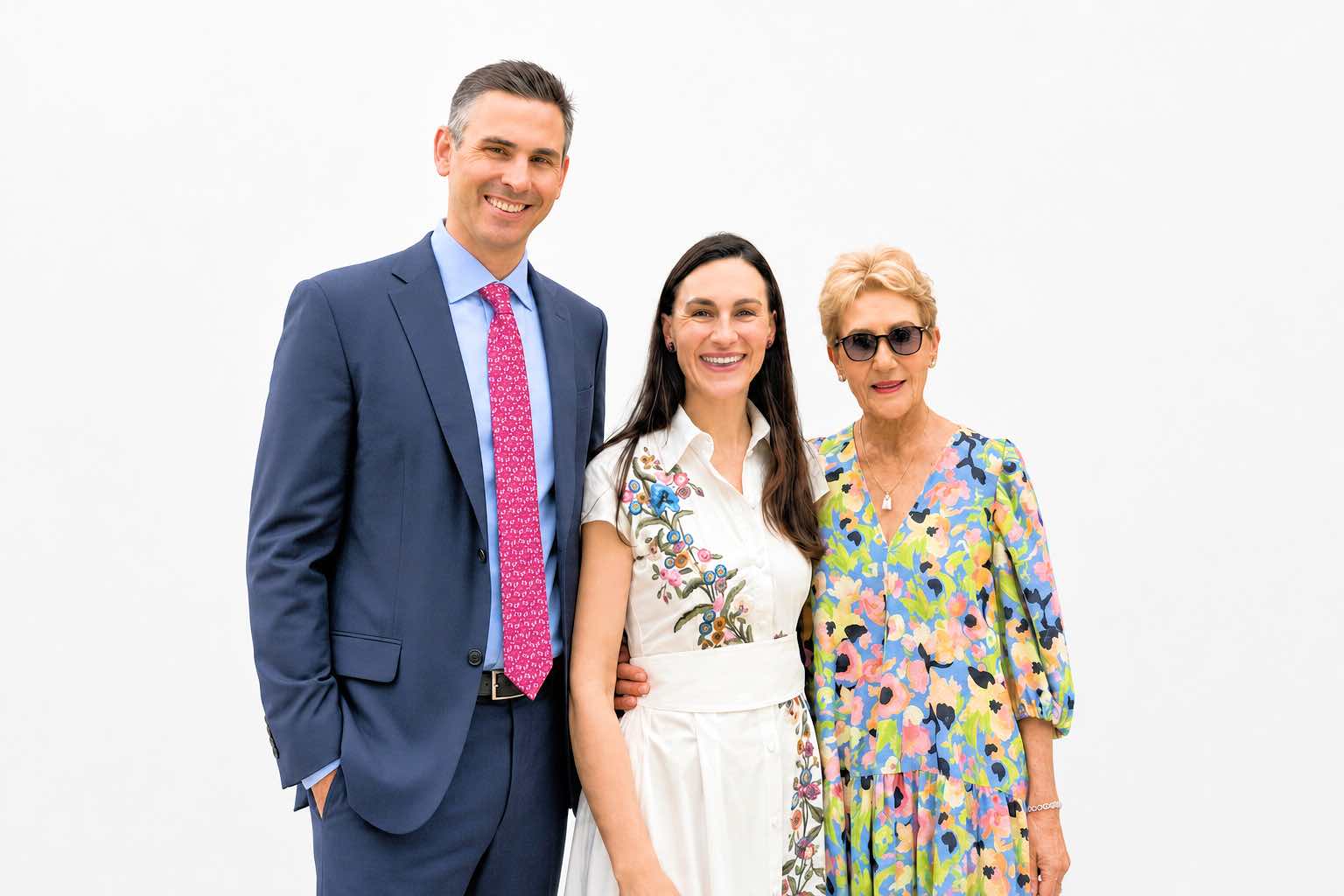
He left behind Malú, his wife of nearly 46 years; two daughters, Malú and Carla; a son-in-law, John Brozovich, who had spent thirteen years at his side working on succession and now runs Gambrinus as president and CEO; and two grandchildren, Carlos and Carla.
It’s this family, and specifically this generation of it, that decided how to honor him.
The $25 million that created the Carlos Alvarez School of Arts and Humanities at Trinity was their call, made after his death, not his.
Brozovich, who also sits on Trinity’s board of trustees, became the family’s voice on the decision: “Carlos believed that education and the arts open doors to understanding ourselves and one another. This commitment to Trinity University reflects who he was as a husband, father, and leader. Our family is honored to see his values live on through the Carlos Alvarez School of Arts and Humanities”.
His daughter Malú, a Davidson College graduate whose own alma mater bears an Alvarez name on its student union, put it more personally: “It is very meaningful for my mother and our family to honor my father’s legacy in expanding access to education and his belief in the transformative power of the liberal arts”.
Part of the gift, $5 million, goes straight to scholarships, matched dollar for dollar by Trinity itself.
The rest funds an endowed dean’s post, faculty chairs, and new research and internship money across nine departments — art history, linguistics, architectural studies, and more.
Trinity president Vanessa Beasley said the emphasis on funding travel for students who can’t otherwise afford it wasn’t an accident.
It’s the same idea Alvarez built into that first program back in 2005, just twenty years, one generation, and a lot more zeroes later.
So next time you see that new sunburst logo know this: underneath the rebrand sits the name of an immigrant kid from Mexico City who sold beer out of the trunk of a car, rescued a dying brewery in a tiny Texas town, and built a family that, even after he was gone, kept quietly buying other people’s kids a shot at an education he never had.