$260 million from philanthropists Bill Ackman and Neri Oxman creates an extraordinary brain research institute in Manhattan
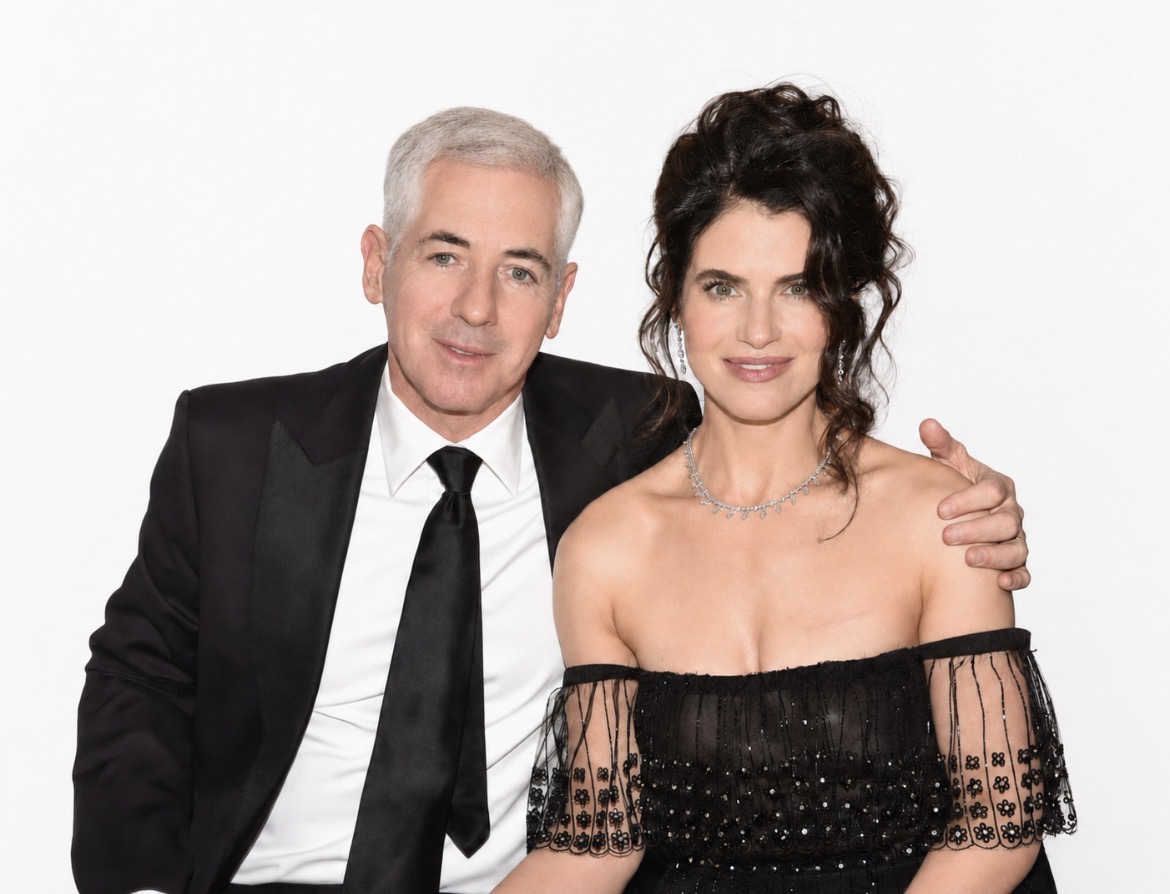
Some love stories are measured in ordinary days.
This one is being measured in nearly 700,000 square feet of Manhattan real estate—purchased not because it was a good investment but because a father and mother found themselves staring at the possible death of a child and decided they would not look away.
In February, Bill Ackman’s daughter Lucy, 26 years old and a writer of television dialogue, suffered a brain hemorrhage.
She was found on the floor of her apartment fifteen hours later.
Physicians will tell you, carefully and without drama, that an injury of that severity after so many hours of pressure on the brain is ordinarily unsurvivable.
Thankfully, Lucy survived.
There is no clean way to describe what followed.
The relief was enormous and incomplete.
Ackman does not reach for the word “miracle” easily, but it is the word that keeps arriving.
He did not sit still and wait for a prognosis.
He pressed her medical team toward experimental treatments most families never even hear about, including the injection of mitochondria into her eye in a last attempt to protect what vision remained after her optic nerve was crushed.
Lucy came back to consciousness after about a month.
She has lost her voice—a particularly hard loss for someone whose work is language—and most of her sight.
Lucy is still here.
She is improving.
For that, her parents remain grateful in a way that does not need embellishment.
“Lucy was a test case,” Ackman has said.
The sentence can sound clinical until you understand what he actually means: that the knowledge hard-won in the fight to keep one young woman alive should not stay locked inside a single hospital. It should be given away.
This decision did not appear out of thin air.
Bill Ackman and Neri Oxman had already been thinking about brain science for years, ever since Oxman lost her mother, the architect Rivka Oxman, to Alzheimer’s.
They had even looked at this same stretch of West End Avenue once before.
At the time, the numbers—both for the real estate and for staffing a serious research institute—felt impossible.
What changed was a downturn in life-science real estate and a growing number of scientists willing to work outside traditional academic structures. The deal closed recently.
The institute will carry both their names for a reason.
Neri Oxman is an active partner in this story.
She grew up in Haifa, the daughter of two architecture professors.
She served three years as a first lieutenant in the Israeli Air Force, spent two years in medical school, and only then committed fully to architecture.
At MIT she created a field she called “material ecology,” bringing biology, computation, and design into the same conversation.
Her work is in the permanent collections of MoMA, SFMOMA, and the Centre Pompidou. In 2020 she left the university after fifteen years to build her own practice.
In 2024, with Foster + Partners, she opened a studio and laboratory designed to carry those ideas further.
They married in January 2019 at Central Synagogue in Manhattan.
Their daughter was born that spring.
In the Vows piece she gave the Times, Oxman wrote something that now feels like a quiet map of what they are doing: that Bill pushes her to grow larger while staying grounded and that they both care about the expansive work of building, sharing, and inspiring a creative life.
For years they have run the Pershing Square Foundation together.
During the pandemic they helped stand up a saliva-based COVID testing lab with Mount Sinai.
They created the MIND Prize to support early-career researchers working on neurodegenerative disease.
When Lucy needed the best possible care, it was Mount Sinai that provided it.
That history matters.
What they are building now is larger than anything they have done before.
In partnership with Mount Sinai, the Ackman Oxman Institute will bring together researchers in genetics, nutrition, longevity, and rehabilitation, with operating rooms for neurosurgery built in.
Its founding board already includes Nobel laureate Jim Rothman and Stanford neuroscientist Andrew Huberman.
A CEO search is underway.
Ackman hopes the doors will open before the year ends.
It will be supported by Pershing Square Philanthropies, which has already directed more than a billion dollars toward related work, and eventually by the startups and venture capital that may grow up around it.
When Ackman speaks about the project, the public version of him—the activist investor, the boardroom fighter—falls away.
“The interesting thing is that everything I’ve done in my life up till now has prepared me to help her,” he said.
“All the philanthropic stuff, the interest in science, the fact that we met all these brain science people during COVID. We partnered with Mount Sinai, built a saliva-based testing lab… So when we had an emergency, I knew who to call.”
There is nothing hypothetical about this.
An amazing young woman nearly died.
Her parents did not allow the experience to turn into a tragedy.
They turned it into a building, a laboratory, a place where other families might one day receive better answers than the ones they were given in the darkest hours.
That is the quieter truth of the Ackman Oxman Institute.
It is not a monument to great wealth.
It is what two people who love each other very much decided to build when the worst thing happened and they refused to let it be the end of the story.