
$100 million new effort from a $13 billion family legacy: Hewlett grandchildren Billy Hewlett, Flora Hewlett Birdzell, and Carrie Hewlett Zeisler champion new AI and biosecurity initiatives
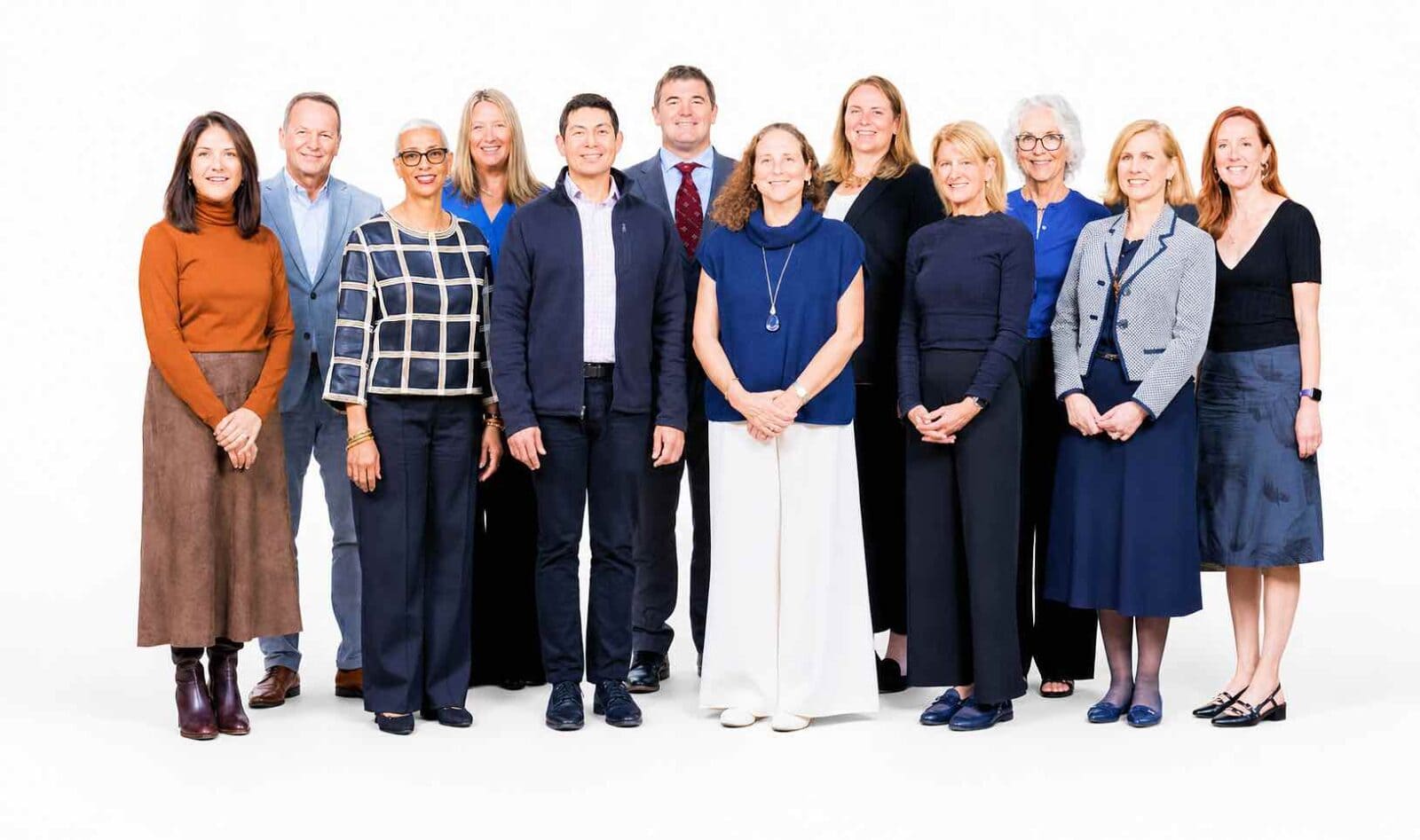
When the William and Flora Hewlett Foundation unveiled a new $100 million Emerging Technology and Security Initiative recently, the announcement carried the institutional weight of a $13 billion philanthropy.
Behind that weight sits a quieter but deliberate governance structure: a board that permanently includes four members of the Hewlett family, ensuring the founder’s pragmatic vision remains tethered to the people who still carry the name.
Current family directors include Billy Hewlett, Flora Hewlett Birdzell, and Carrie Hewlett Zeisler (among others listed in foundation materials). These family members sit alongside non-family directors drawn from government, academia, business, and civil society—figures such as Board Chair Mariano-Florentino Cuéllar, President Amber D. Miller, Melody Barnes, Persis S. Drell, and others.
The mix is intentional. It keeps the foundation’s largest strategic bets accountable both to professional expertise and to the family’s long-term view of what Bill and Flora Hewlett set in motion more than six decades ago.
The new initiative, formally announced July 16, will deploy roughly $20 million annually through 2031. Its focus is narrow and urgent: ensuring that artificial intelligence, biotechnology, and quantum computing develop in ways that strengthen rather than undermine security, critical infrastructure, and democratic societies.
Exploratory grants totaling $10 million have already gone out earlier this year to institutions including Stanford’s Hoover Institution and Vanderbilt University’s Institute for National Security. Another $10 million in exploratory funding is planned before the five-year program begins in earnest in 2027.
“Rapidly emerging technologies like AI hold extraordinary promise while they also pose novel security challenges,” Foundation President Amber D. Miller said in the announcement.
“We view embracing progress and tackling safety risks not as competing approaches but as natural complements.”
Miller, an astrophysicist and former university dean who took the helm in 2024, has framed the effort as a continuation of the foundation’s earlier work in nuclear security, conflict resolution, and a decade-long Cyber Initiative.
Eli Sugarman, the foundation’s director of special projects and former head of that cyber initiative, is leading the new program in its startup phase.
He has described the work as practical and evidence-based: funding independent institutions that can convene government, industry, and civil society around problems that ordinary people actually care about—whether the power grid stays online, whether hospitals remain functional, and whether the information ecosystem can withstand AI-enabled manipulation.
The presence of Hewlett family members on the board is not ceremonial. Foundation materials and historical practice make clear that the bylaws require four family directors at all times.
Billy Hewlett, Flora Hewlett Birdzell, and Carrie Hewlett Zeisler occupy those seats today, joining a rotating group of outside leaders.
This arrangement has allowed the foundation to evolve—expanding into climate, education, democracy, and now advanced technology—while retaining a through line to William R. Hewlett’s preference for experimentation over ideology and Flora Hewlett’s commitment to institutional steadiness.
That continuity matters for a commitment of this scale.
A $100 million, five-year program is large enough to shape a field, yet small enough, relative to the foundation’s total assets, to remain experimental.
The family directors’ role is to ask whether the experiment still serves the original purpose: supporting creative problem-solvers who help people and communities flourish.
Non-family directors bring the technical and policy fluency required to evaluate grants in quantum cryptography, biotech safeguards, or AI-enabled critical infrastructure defense.
Together they form the body that ultimately approved the initiative.
The foundation has been careful to position the new work as nonpartisan and independent. It plans to engage technology companies on shared safety priorities while preserving the distance that allows civil-society grantees to critique industry and government alike.
Grantmaking will prioritize organizations in the United States and allied countries that can produce near-term, empirically grounded solutions rather than abstract frameworks.
For the Hewlett family members on the board, the announcement is both familiar and novel. Familiar because the foundation has long worked at the intersection of technology and security.
Novel because the pace and dual-use nature of today’s technologies—AI systems that can both diagnose disease and design novel pathogens, quantum machines that can both secure and break encryption—demand a different kind of vigilance.
By keeping family directors in the room alongside specialists from government, academia, business, and civil society, the foundation is attempting to answer that demand without losing the institutional memory that has guided it since Bill and Flora Hewlett’s era.
Whether the $100 million ultimately shifts the trajectory of AI, biotech, or quantum security will depend on the quality of the work it funds.
What is already visible is the governance design behind the check: a board that deliberately pairs the Hewlett name with outside expertise, ensuring that decisions of this magnitude remain both professional and personal.
Photo: Board members, from left to right: Mary Ellen Iskenderian, Benno Dorer, Alecia A. DeCoudreaux, Carrie Hewlett Zeisler, Mariano-Florentino Cuéllar, Billy Hewlett, Amber D. Miller, Flora Hewlett Birdzell, Susan Meany, Persis S. Drell, Sue Lloyd, and Sarah Jaffe. Not pictured: Melody Barnes, Margaret Spellings. (Photo: Nancy Rothstein)