$86 billion in philanthropy in the making: a lifetime of generosity and giving from Dario and Daniela Amodei
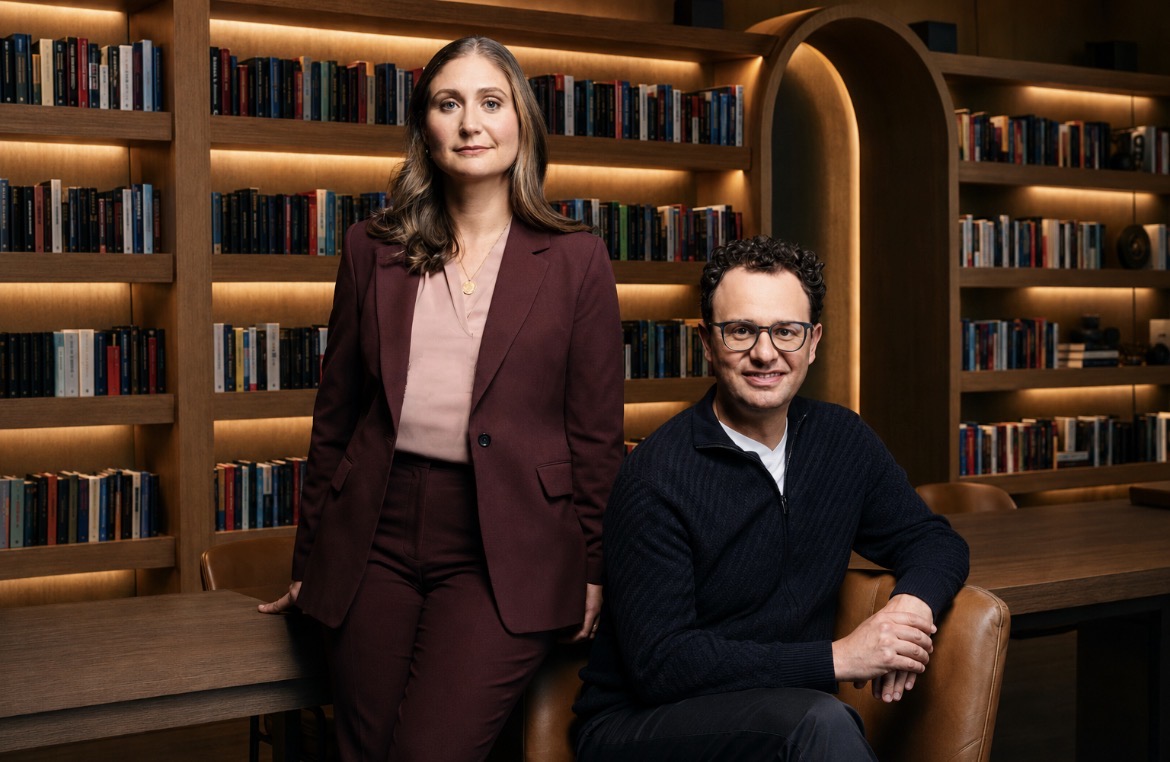
Long before Dario and Daniela Amodei became two of the most consequential figures in artificial intelligence, they were simply the children of a leather artisan and a librarian.
Growing up in San Francisco’s Mission District, their father, Riccardo Amodei, an immigrant from the small Tuscan town of Massa Marittima, worked with his hands until his health no longer allowed it.
Their mother, Elena Engel, spent her career overseeing library renovations across the Bay Area — quietly building the very spaces where knowledge could reach people who might otherwise never find it.
“They gave me a sense of right and wrong and what was important in the world,” Dario has said of his parents, crediting them with instilling in him “a strong sense of responsibility.”
From two parents with entirely different vocations but the same instinct to build things that outlast them, the siblings inherited something rarer than ambition: a quiet conviction that whatever you’re given is meant to circulate back outward.
Four years younger than her brother, Daniela charted her own course first—studying English literature, political science, and music at UC Santa Cruz; working on a congressional campaign; and later serving in the office of former Rep. Matt Cartwright.
A stint at Stripe eventually led her to OpenAI, where she became vice president of safety and policy two years after Dario joined.
He, meanwhile, had taken the academic route, earning a PhD in biophysics at Princeton as a Hertz Fellow before a postdoctoral appointment at Stanford’s medical school.
Different routes, same eventual destination: In December 2020, brother and sister left OpenAI together, and in 2021 they co-founded Anthropic alongside five colleagues—Tom Brown, Jack Clark, Jared Kaplan, Sam McCandlish, and Christopher Olah—on a bet that artificial intelligence could be built to serve humanity rather than sideline it.
Dario now leads the company as CEO; Daniela serves as president, steering its operations and long-term strategy.
The company’s flagship Claude models have since become fixtures of enterprise software, coding, and research. In March 2025, Anthropic closed a $3.5 billion funding round that valued the company at $61.5 billion, with backing from Amazon, Google, and Lightspeed Venture Partners—a vote of confidence in the Amodeis’ rare combination of world-class research and an unwavering focus on safety.
What’s most remarkable about the Amodeis, though, isn’t the scale of what they’ve built—it’s how early and how methodically Dario began giving it away.
In a 2010 guest post for the GiveWell blog, written while still a physics graduate student at Princeton, he documented in careful detail how he’d allocated a $10,000 donation the year before, drawn from a stipend he’d already been giving a share of since 2006.
He weighed two finalists: Stop TB, which funds tuberculosis treatment in the developing world, and Village Reach, which strengthens the cold-chain logistics that carry vaccines to children in remote clinics.
Rather than trust instinct, he worked through cost-per-life-saved estimates, weighed execution risk in each organization’s delivery chain, and reasoned through the ethics of comparing an adult life to an infant’s. He ultimately gave the full amount to Village Reach—not because it was the more compelling story, but because its “simple and short chain of execution” gave him the greatest confidence the money would reach a child who needed it. By his own calculation, the gift was poised to save roughly twenty lives.
It wasn’t a large sum by today’s standards. But it revealed exactly who Dario was before the fortune arrived: a person who brought the same rigor to a $10,000 decision that he would later bring to leading one of the most consequential companies on Earth—driven, in his words, by a wish to reward the kind of unglamorous, well-run execution that “does not make good headlines.”
That instinct never faded.
It scaled, and it spread.
In January 2026, Dario published a sweeping essay, “The Adolescence of Technology,” reflecting on the risks and promise of advanced AI.
Tucked inside was a commitment almost without precedent in the history of tech: all seven of Anthropic’s co-founders pledged to give away 80 percent of their personal wealth.
It’s a rare thing to see an entire founding team — not just one high-profile name — unite behind a single giving philosophy. Dario framed the decision as a continuation of an older American tradition of wealth and obligation, invoking the Gilded Age industrialists who felt bound to give back even as they built empires.
“Those who are at the forefront of AI’s economic boom,” he wrote, “should be willing to give away both their wealth and their power,” adding simply: “Wealthy individuals have an obligation to help solve this problem.”
The scale of that promise is difficult to fully absorb.
With Anthropic’s valuation climbing past $96.5 billion—and speculation of a trillion-dollar IPO by year’s end—each founder’s stake has been estimated at roughly $15.5 billion.
Honored in full, the group’s shared 80 percent commitment could direct more than $86 billion toward charitable causes once the company goes public: a sum on the scale of a small nation’s annual giving, and nearly 15 percent of all documented U.S. philanthropy in 2024.
What elevates this from a headline moment to something closer to a genuine culture shift is that none of the seven founders stopped at their own pledges.
Anthropic employees have individually committed to donating company shares worth billions of dollars at current valuations, and the company has agreed to match those gifts on a tiered basis—a richer match for its earliest hires and a 1:1 match up to 25 percent of equity for those who joined more recently.
By mid-2026, that spirit had moved from promise into practice. In June, Anthropic committed roughly $350 million to easing the economic disruption AI may cause: $200 million toward an Economic Futures Research Fund studying real policy responses to job displacement and $150 million for a fellowship helping early-career workers bring AI’s benefits into communities that might otherwise be left behind.
The same month, the company launched a program placing roughly 1,000 AI coaches inside nonprofits, helping under-resourced organizations put the technology to work.
Taken together, it’s the portrait of two siblings who have always treated generosity less as a milestone to announce and more as a discipline to practice—a graduate student weighing which vaccine-delivery charity would save the most lives with money he could barely spare and, years later, a founding team of seven carrying that same instinct into a pledge that could move tens of billions of dollars into the world.
It is rare to find someone who pairs this level of success with this much deliberateness about giving it away.
It is rarer still to find someone who brought six equally successful co-founders along for the same commitment—quietly, long before anyone outside a GiveWell comment thread was paying attention.
As Dario Amodei wrote in the essay that set it all in motion, wealthy individuals have an obligation to help solve the problems of their time.
It may be the simplest possible summary of a life spent methodically proving that belief true.