$75 million new donation from Jensen Huang to university pushes his giving past $300 million
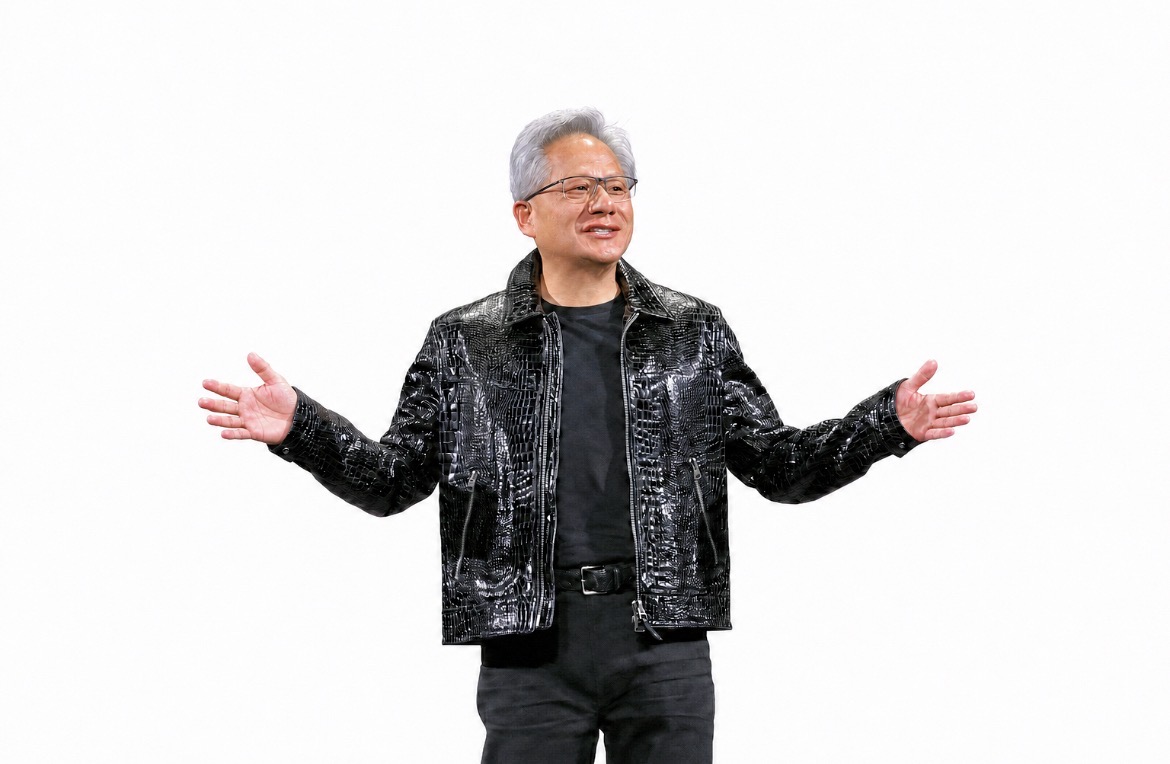
Jensen Huang has never been especially loud about his money.
For the better part of two decades, the NVIDIA founder quietly wrote checks to the schools that shaped him—Stanford, Oregon State, a small Baptist boarding school in Kentucky — while the company he built in a Denny’s booth in San Jose slowly, then explosively, became the engine of the AI economy. This week, that quiet habit produced its biggest number yet.
Huang and his wife, Lori, have given Vanderbilt University $75 million to help build its new San Francisco campus, and the gift will carry both their names: the Jen-Hsun and Lori Huang College of Art, Architecture, and Design, set to open as Vanderbilt’s flagship San Francisco academic unit in 2027. It’s the largest single university gift Huang has ever made—bigger than the more than $50 million he’s poured into his alma mater, Oregon State.
The money comes with a catch, by design. It’s a matching gift, meaning Vanderbilt has until the end of 2028 to raise an equal amount from other donors before the full match unlocks. The university says it’s already more than 40 percent of the way there, having pulled in over $100 million total when combined with the Huangs’ own commitment, with early support from Katie and Matt Paige, Jeff and Marieke Rothschild, and Leah and Ben Spero, plus a handful of anonymous donors Vanderbilt plans to name later.
“Technology expands what we can build. Art and design determine why we build it. Together they shape civilization,” Huang said of the gift. “We are delighted to partner with Vanderbilt University to cultivate the next generation of creators and help San Francisco remain one of the world’s great centers of creativity, innovation, and culture.” Vanderbilt Chancellor Daniel Diermeier described the new college as the emotional center of the university’s West Coast bet: “With the Jen-Hsun and Lori Huang College of Art, Architecture, and Design, Vanderbilt is positioning these branches of creation as the heart of our San Francisco campus…
In partnership with the city and surrounding community, we will blend Vanderbilt’s distinctive excellence with San Francisco’s distinctive excellence to build something truly remarkable, together. ” Provost C. Cybele Raver, who will oversee the search for the college’s founding dean, put it more plainly: “The defining challenges of our time demand both technical expertise and creative imagination.”
There’s a bittersweet backstory here. The new college will rise on the campus of the California College of the Arts, a 120-year-old San Francisco arts school that’s closing at the end of the 2026-27 school year after years of shrinking enrollment and the financial strain of its newer campus.
Vanderbilt is inheriting the site in the city’s Design District and folding pieces of CCA directly into what it’s building—a “California College of the Arts Institute” inside the new college that will preserve and digitize the CCA Archives, keep the Wattis Institute for Contemporary Arts running as a public exhibition space, and reach out to CCA’s more than 25,000 alumni through new fellowships and residencies.
This is actually the second time Huang has tried to save this particular school. In February 2025, his foundation gave CCA a $22.5 million matching gift—its largest ever at the time—that helped generate close to $45 million in combined support and bought the school room to explore whether it could survive on its own. CCA president David Howse later reflected that the money “was critical in allowing us to figure out if there was a pathway for independence…
Once we got to the point where we couldn’t figure it out, it actually created time for us to help write our own future, versus our future happening to us.” Tallied together, Huang’s support tied to CCA and its successor now adds up to roughly $97.5 million.
The closure hasn’t been entirely smooth politically—California Governor Gavin Newsom had championed a $20 million state grant for CCA in 2025 and, by some accounts, wasn’t given advance notice of the closure, prompting a state assemblymember to push for a hearing on the matter.
Once open, the new college will be led by a founding dean—endowed as the “Katie and Matt Paige Dean”—currently being recruited through a national search.
Vanderbilt describes an academic model that leans into the tension its own donor embodies: undergraduates will get intensive studio training, apprenticeships, and internships wired into San Francisco’s creative and tech economy, while graduate programs stay studio-centered and research-driven, alongside community classes, precollege programs, and lifelong learning offerings still pending faculty and regulatory approval. It’s the anchor of a broader push—Vanderbilt University–San Francisco—built around engineering, entrepreneurship, and design, the Nashville school’s attempt to plant real academic roots in one of the country’s defining tech and culture cities.
Zoom out, and the Vanderbilt gift looks less like a one-off and more like the latest chapter in a giving story that’s been quietly compounding for almost twenty years.
Jensen and Lori Huang started their foundation back in 2007 with 370,000 NVIDIA shares worth about $12.6 million at the time. Stock splits and NVIDIA’s staggering rise have since turned that seed into something almost unrecognizable: foundation assets went from roughly $13 million in 2007 to $1 billion by 2022, then jumped 170 percent in a single year to reach $9.2 billion by the end of 2024, putting it among the largest private family foundations in the country, ahead of institutions like the Ford Foundation.
Long before that money existed, Huang was already sending gifts back to the places that made him. In 2008, he pledged $30 million to Stanford, where he’d earned his master’s in electrical engineering, to help build the Jen-Hsun Huang School of Engineering Center. In 2017, he and Lori gave $2.5 million toward an atrium at Oregon State’s Kelley Engineering Center and separately funded a $5 million cancer research lab there. In 2019, they gave $2 million to Oneida Baptist Institute, the small Kentucky boarding school Huang attended as a young immigrant, to build a girls’ dormitory named Huang Hall.
The giving really started climbing in 2022, when Huang and Lori — who met as engineering students at Oregon State — put $50 million toward a $200 million research and education center that became the Jen-Hsun and Lori Huang Collaborative Innovation Complex, a supercomputing and AI hub that broke ground in 2024. Another $10 million followed to Oregon State in 2023, and by 2024, the school remained the single biggest recipient of the Huangs’ direct giving, pulling in $30.5 million across three grants that year alone.
Not all of the foundation’s money goes to named buildings. Its 2024 filings show roughly $126 million in total giving, but two-thirds of that — about $82 million — went into a donor-advised fund at DAFgiving360 (formerly Schwab Charitable), a holding vehicle wealthy donors often use before directing money to specific causes down the line.
Outside the DAF and the universities, the foundation has also backed Crisis Text Line ($10.8 million in 2024), Mental Health Innovations, the Association for Computing Machinery, AI4ALL, and smaller regional causes like the Monterey Bay Aquarium and the Law Foundation of Silicon Valley.
In a more unusual move, the foundation disclosed in May 2026 that it was donating over $108 million worth of CoreWeave cloud computing capacity to universities and nonprofit research labs to power AI and scientific research, with NVIDIA potentially throwing in free engineering support on top.
What’s changed most obviously in the last eighteen months is where Huang’s biggest personal bets are landing: art and design education in San Francisco, the city where NVIDIA is headquartered and where he clearly wants to leave a cultural mark, not just a technological one. Starting with the CCA rescue in early 2025 and now the Vanderbilt gift, it’s become the clearest throughline in his giving.
All of this has scaled alongside a fortune that’s grown almost too fast to track. As of mid-July 2026, Huang’s net worth sat around $174 billion, making him the seventh-richest person in the world—up from roughly $90 billion just two years earlier.
Federal rules require the foundation to pay out at least 5 percent of its assets each year, which means as NVIDIA’s stock keeps climbing, so does the pressure — and the capacity — to give away even more.
Most of that wealth still isn’t liquid; it sits in NVIDIA shares held directly, in family trusts, and inside the foundation itself, which now controls an estimated 69 million NVIDIA shares.
For a long time, Huang had a reputation as one of tech’s more reluctant philanthropists, with his giving described as “still at a nascent stage” and concentrated mostly on alma mater checks.
The Vanderbilt gift, layered on top of the CCA rescue and the CoreWeave computing donation, suggests that era is over. As NVIDIA’s fortunes have gone parabolic, so has the size — and the visibility — of what Huang is willing to put his name on.