Hamdi Ulukaya: the penniless refugee who turned an inherited childhood yogurt recipe into a $20 Billion, nine‑figure‑giving philanthropic phenomenon
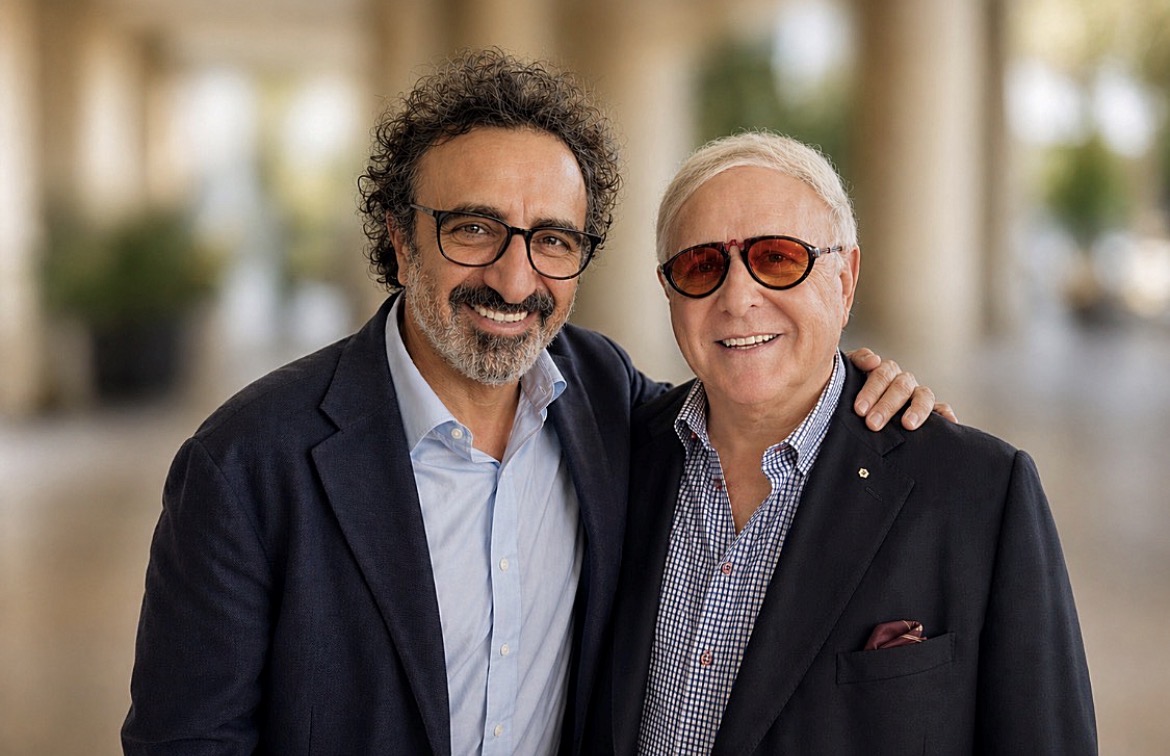
Hamdi Ulukaya has become one of the rare billionaire founders whose philanthropy reads less like an accessory to his success and more like the central plotline.
Ulukaya’s story is a classic rags‑to‑riches arc: born in 1972 to a Kurdish family of dairy farmers in a small village in eastern Turkey, he arrived in the United States in the mid‑1990s with limited English, very little money, and a vague plan to study and start a small cheese business, only to stumble across a piece of junk mail advertising a defunct yogurt plant in upstate New York that no one else wanted.
Scraping together an SBA‑backed loan of roughly 700–800 thousand dollars, he bought the shuttered factory in 2005, slept on site with a tiny team, and spent nearly two years perfecting a thicker, less sugary yogurt that reminded him of home before launching Chobani in 2007.
Within a few years, that gamble upended America’s dairy aisle: Chobani became the country’s top‑selling yogurt brand, Greek yogurt went from niche to mainstream, and the once‑broke immigrant who had practically lived in his plant was suddenly running a company valued in the tens of billions and appearing on global rich lists as one of the world’s wealthiest entrepreneurs.
To date, Ulukaya has directed hundreds of millions of dollars in cash, products, and equity toward refugees, food security, and his employees and has formally pledged at least 700 million more—most of his fortune—to refugee relief and integration efforts.
It is an approach to giving that mirrors the way he built Chobani itself: intensely personal, rooted in his own immigrant story, and impatient with the idea that business should stand on the sidelines while humanitarian crises unfold.
Much of Ulukaya’s modern philanthropic identity crystallized around a single, simple conviction: refugees are not a burden to be managed but a workforce and a community to be welcomed.
That belief led him in 2016 to start the Tent Partnership for Refugees, now a global network of hundreds of companies committed to hiring and supporting displaced people in more than a dozen countries. The model is straightforward but unusually ambitious.
Instead of focusing on short-term aid, Tent pushes corporations to translate their balance sheets into jobs, training, and on-the-job support that allow refugees to rebuild their lives in the private sector. In less than a decade, the platform has grown into a marquee partner for some of the world’s largest employers—Amazon, Hilton, Marriott, Pfizer, and others—moving the refugee conversation from charity into core HR and workforce planning.
Ulukaya has not stayed behind the scenes. During the 2023 earthquakes that devastated parts of Turkey and Syria, he first moved with his own checkbook, donating 2 million dollars in personal funds, and then added another 1 million dollars, plus a matching commitment, to Turkish Philanthropy Funds for recovery efforts.
Almost as soon as those pledges were made, he started working the phones, pressing fellow CEOs, financiers, and global institutions, including the World Bank, to step in behind him. It is a familiar pattern. Nearly a decade earlier, as ISIS advanced across Syria and Iraq, Ulukaya quietly wrote a $2 million check to the UN Refugee Agency, one of the largest personal donations in that phase of the crisis.
These gifts are not outliers; they are waypoints in a long-running strategy to put his wealth and his voice in the same place.
But the numbers that appear on a ledger tell only part of the story. From the moment he established Chobani, Ulukaya put 10 percent of the company’s net profits on permanent assignment to charitable causes, initially through the Shepherd’s Gift Foundation and, later, the Chobani Foundation.
As the business has grown from a shuttered plant in New Berlin, New York, into a food company valued in the tens of billions, that 10 percent has turned into one of the more significant, recurring philanthropic engines in corporate America.
The money has gone into refugee programs, arts initiatives, famine relief, and—most visibly in recent years—into the fight against hunger in the communities where Chobani operates.
Since 2022 alone, Chobani has donated more than 6.4 million pounds of food across the United States, an in-kind stream that has become a defining feature of Ulukaya’s current giving. Truckloads of yogurt and other products now move regularly from Chobani facilities to food banks, school pantries, and community organizations, particularly in upstate New York and Idaho, where the company’s plants are economic anchors.
Those donations sit alongside the Chobani Community Impact Fund and related initiatives, which distribute hundreds of thousands of dollars each year to small, often overlooked nonprofits working on food security, youth programs, and community wellness in the company’s backyard.
For Ulukaya, these local grants are not a side project; they are part of an explicit attempt to make a large food manufacturer feel and act like a neighbor.
Inside his own four walls, he has chosen a different kind of philanthropy—one that looks more like shared ownership than traditional charity. In 2016, Ulukaya stunned much of corporate America by announcing that he would give roughly 10 percent of Chobani to his employees, turning more than 2,000 workers into equity holders overnight.
Based on valuations circulating at the time, analysts estimated that an eventual sale or IPO could yield average windfalls of around $150,000 per person, with long-tenured staff potentially crossing the seven-figure mark. Ulukaya has never framed the move as a donation but as a correction—an attempt to align wealth with the people who, in his view, actually built it.
Many observers, particularly in philanthropy and labor circles, see it as one of the most consequential “gifts” he has made.
The same instinct runs through his treatment of refugeesnot just as beneficiaries of his generosity but as colleagues. Chobani’s plants in places like Idaho and New York have become quiet laboratories for refugee hiring, with Ulukaya using his own company to prove what he urges others to do through Tent: bring displaced people into the workforce early, pay them fairly, and give them the stability to put down roots.
That approach has earned him an unusual array of honors—UNHCR Eminent Advocate, a United Nations Foundation Global Leadership Award, and a listing among TIME’s most influential people—not for the size of a single check, but for reimagining what a “refugee-friendly” corporation can look like.
The backbone of all this is a public promise that dwarfs even the headline numbers already on the board. In 2015, Ulukaya announced that he would dedicate at least 700 million dollars—then most of his net worth—to Kurdish and other refugees around the world, channeling the money through a new foundation that evolved into the Tent Partnership.
That pledge was made in tandem with his decision to join the Giving Pledge, the initiative launched by Bill Gates and Warren Buffett, in which he committed “the majority of my personal wealth—along with everything else I can do—to help refugees and help bring an end to this humanitarian crisis.”
Coming from a self-made founder whose fortune is still tied up in a privately held company, it was less a philanthropic victory lap than a binding long-term contract with his future self.
Add it all up, and a clearer picture emerges. On one side are the tangible flows already out the door: millions of dollars in crisis relief and refugee grants; years of 10 percent profit giving; millions of pounds of donated food; and a double-digit ownership stake handed to workers who, in most companies, would never see a share certificate with their name on it.
On the other side are the pledged amounts: at least 700 million dollars earmarked for refugees and a broader commitment, through the Giving Pledge, to convert the majority of his multibillion-dollar fortune into a tool for solving the very crises that shaped his early life.
For Ulukaya, the divide between those two columns—paid and promised—seems less important than the direction of travel.
His theory of change is not built around a single museum wing or a named hospital but around a set of intertwined bets: that a food company can help end hunger in its own backyard; that refugees, given a job and a welcome, can strengthen the economies that receive them; and that wealth created in a factory town ought to flow back into that town’s people.
In an era when billionaire giving is scrutinized as never before, Hamdi Ulukaya is effectively wagering his fortune and his business on the idea that capitalism’s sharpest edges can be softened not by rhetoric, but by wiring generosity into the way a company makes, shares, and spends its money.