$75 million gift from philanthropist Darlene Marcos Shiley breaks ground for new university STEM building
The University of San Diego has moved from promise to construction on one of the biggest gifts in Catholic higher education, with cranes and fencing now encircling the hilltop campus as the new Shiley STEM Initiative building begins to rise.
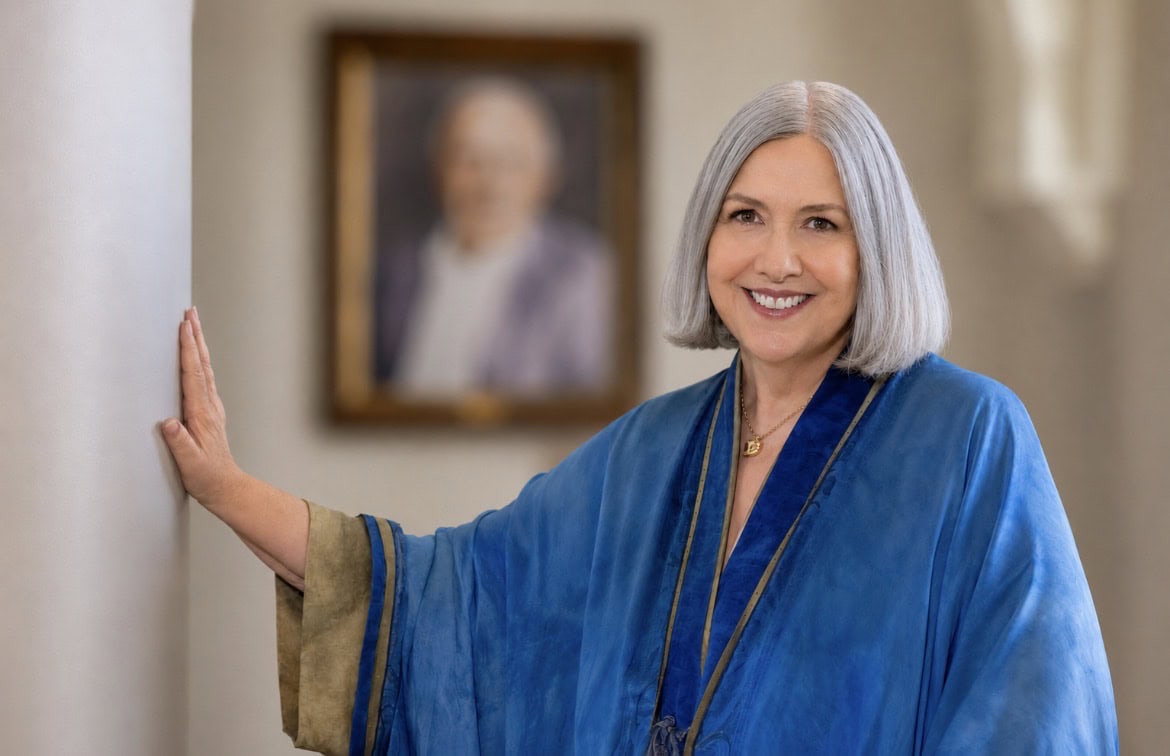
With television cameras rolling and students pressed up along the temporary barriers, philanthropist and board chair emerita Darlene Marcos Shiley stood alongside university leaders to turn over a shovel of dirt, formally breaking ground on the 70,000‑square‑foot facility that will carry her family name and anchor a sweeping expansion of science and engineering at USD.
The project is the centerpiece of her 75 million pledge announced at the university’s 75th anniversary celebration, the largest gift in the university’s history and among the largest ever made to a Catholic university, which USD officials say will reshape everything from how undergraduates experience lab science to how the institution competes for research talent.
The building is now under construction just steps from existing engineering facilities, with work scheduled to accelerate over the next academic year, with a target opening date in the latter part of the decade.
Shiley’s commitment first became public at USD’s 75th Anniversary Founders Gala at Petco Park, when President James T. Harris III announced a record‑breaking 75 million pledge, drawing an extended standing ovation from donors and alumni.
The gift, he said that night, would launch the “Shiley STEM Initiative,” a comprehensive push to expand and integrate science, technology, engineering, and math programs while funding a new state‑of‑the‑art STEM facility on campus. University materials quickly framed the pledge as an investment in “people, programs, and facilities,” designed to move USD into the top ranks nationally for undergraduate STEM research and education and to help meet the demands of San Diego’s fast‑growing biotechnology and scientific sectors.
From the start, the scale of the commitment set it apart. USD officials emphasized that it was not only the largest gift in the school’s history, but also among the largest ever given to any Catholic university in the country, a benchmark that resonated across the broader landscape of faith‑based higher education.
Internal data cited by the university showed a significant increase over the past decade in the number of students majoring in STEM disciplines, a trend that had already begun to strain existing laboratory and classroom space. Shiley’s pledge was presented as arriving at exactly themoment when the institution faced a choice between incremental fixes and a step change in capacity; campus leaders chose the latter, tying her name to a vision of integrative STEM that would touch multiple corners of USD’s academic life.
Over the following year, the university translated that vision into architectural plans and campus renderings, working toward a building that would physically connect the engineering and science communities on campus. USD released detailed images showing a three‑story structure tucked between Warren Hall and the Pardee Legal Research Center, next to the Belanich Engineering Center, with a light‑filled atrium and flexible lab floors meant to invite collaboration rather than silo disciplines.
Administrators described the future facility as a “home for integrative STEM studies” and a literal bridge between the Shiley‑Marcos School of Engineering and the College of Arts and Sciences. In public statements, they stressed that the building’s design and location were as important as its size, signaling to students that engineering, physics, chemistry, and emerging fields like biomedical engineering belong in conversation with one another.
The formal groundbreaking took place under clear skies, with dozens of faculty, trustees, students, and staff gathered in what had been a parking lot and a landscaped hillside overlooking San Diego Bay. Shiley, smiling and using a shovel adorned with a commemorative ribbon, joined Harris and other leaders as they posed for photos in front of a banner reading “The Shiley STEM Initiative,” bookending speeches that cast the day as the culmination of her years-long partnership with the university.
In a social media post that day, USD called the gift “record‑breaking” and highlighted its significance not only for campus but for Catholic higher education more broadly, thanking Shiley for a generosity that “will expand USD’s commitment to STEM education for generations to come.”
The building itself, now under construction, is designed as a 70,000‑square‑foot, three‑story facility that USD and project partners describe as a “state‑of‑the‑art integrative STEM building.” Architecture and campus planning materials emphasize collaborative, reconfigurable spaces: biomedical engineering laboratories, a medical device lab dedicated to prototype development, robotics and neuroscience labs, and specialized spaces for environmental and materials science are all planned within its footprint.
One of the more distinctive features is a food science and coffee lab, where students will study the chemistry and physics of food and beverage preparation, blending hard science with applications rooted in everyday life.
The building will also feature maker spaces, a multipurpose theatre for lectures and performances, and a rooftop ecology zone that can support research on plant growth, sustainability, and renewable energy.
Sustainability is another defining piece of the project. Planning documents and promotional videos emphasize natural light, energy‑efficient systems, and exposed structural wood, with the central atrium framed in glulam timber to underscore the university’s commitment to environmentally conscious design. USD leaders have repeatedly described the building as a “future‑forward” facility that will model sustainable construction practices for students, especially those studying environmental science and engineering.
The structure is expected to be a new visual anchor on campus, reinforcing the message that a Catholic university can be both rooted in tradition and fully engaged with current scientific and ecological challenges.
Behind the renderings and construction updates is a clear strategic aim: to elevate USD’s position in a region dominated by research-heavy institutions and a booming life sciences sector. University officials say the Shiley STEM Initiative will help the institution respond more directly to workforce needs in biotechnology, engineering, and data‑driven disciplines that define San Diego’s economy.
By offering more advanced undergraduate research opportunities and modern laboratory infrastructure, USD hopes to compete more effectively for students who might otherwise choose larger research universities, as well as for faculty who require contemporary facilities to support their work.
The gift will also help underwrite new or expanded programs, certificates, and cross‑disciplinary initiatives that blur the lines between engineering, natural sciences, and areas such as business, health, and the arts.
Shiley’s pledge, though most visible in concrete and steel, is not limited to capital costs. University statements make clear that the 75 million dollars will flow into a broader portfolio of initiatives, including support for undergraduate research in STEM fields and continued investment in programs that have been long‑standing beneficiaries of the Shiley family’s philanthropy.
These include scholarships and support for veterans and military‑connected students, reflecting both USD’s regional context—San Diego is home to a large military community—and the donor’s interest in easing transitions for those who have served. The gift also extends to arts and theater programs, such as the Shiley Graduate Theater Program in partnership with The Old Globe, continuing a pattern in which the donor backs both scientific and cultural institutions under the same philanthropic umbrella.
For USD, the relationship with Darlene Marcos Shiley is decades in the making. A prominent figure in San Diego’s philanthropic community, she has served in various leadership roles at the university, including as chair of the Board of Trustees, and her name already graces the Shiley‑Marcos School of Engineering.
Beyond campus, she is widely known for significant giving to arts organizations and medical and research institutions, often in honor of her late husband Donald Shiley, an engineer and inventor whose work on heart valve technology saved thousands of lives. In the university’s telling, the emphasis on biomedical engineering and medical device labs inside the new STEM building is no accident; it reflects both Donald’s legacy and Darlene’s desire to invest in fields at the intersection of engineering, health, and human well‑being.
In video messages produced after the pledge was announced, Shiley spoke of the university as a place that “believes in possibilities” and of her hope that the new STEM investments would give students the chance to make real-world discoveries that matter. USD President Harris, in the same materials, framed the gift as lighting “the way forward for students for decades to come,” language that underscored the administration’s view of the pledge as an inflection point rather than a one‑time boost.
That kind of rhetoric has been echoed in subsequent coverage, with local outlets describing the donation as “transformative” and highlighting both its record‑setting size and its concentration in disciplines viewed as critical to the region’s future.
The Shiley STEM Initiative is now firmly in its build‑out phase. The ceremonial gold shovels have been put away, construction fences define the edge of the worksite, and USD has begun to use images of the rising structure in recruitment materials and fundraising communications.
University posts show excavation and early foundation work, accompanied by captions celebrating the official start of construction of the new STEM building. The institution continues to project an opening date in the latter part of the decade, and administrators say planning for the building’s academic programming—what courses, labs, and research groups will occupy which spaces—is advancing in parallel with the physical construction.
The stakes, by USD’s own account, extend far beyond a single building project.
With STEM enrollments up sharply, regional employers hungry for talent, and competition intensifying among universities positioning themselves as hubs of innovation, the Shiley gift is being cast as a decisive move that could define the trajectory of the University of San Diego for a generation.
If the initiative delivers on its promise, future students walking into the Shiley STEM building may take for granted that their campus offers cutting‑edge labs, interdisciplinary project spaces, and a strong pipeline into San Diego’s science and technology economy.
For now, they can only glimpse that future through construction fencing and architectural renderings while the donor whose name will adorn the building watches her record‑making pledge steadily turn from idea into concrete reality.