$64.5 million gift: Luis Carlos Sarmiento Angulo leads earthquake relief effort
It’s been nine brutal days since a magnitude 7.4 earthquake tore through Colombia’s Pacific coast, and the country is still adding up the damage.
The quake struck near San José del Palmar in Chocó on August 10, the strongest to hit Colombia this century, and the shaking reached all the way to Bogotá and Medellín, spilling over into Ecuador and Panama.
Cali, Pereira, Quibdó, Manizales and Armenia took the worst of it. The death toll has climbed steadily and painfully — from 169 in the first grim count to a peak of 294, before being revised down to 287 as rescue crews sorted through the chaos.
More than 4,100 people were hurt and roughly 190 are still unaccounted for.
Over 127,000 homes were damaged, more than 26,000 destroyed outright, nearly 200 buildings collapsed, and upwards of 120,000 families have been displaced across 472 municipalities.
The US Geological Survey put the economic toll at around $649 million, though that number will almost certainly grow.
Colombia’s brand-new president, Abelardo De La Espriella, had barely settled into office — he was sworn in August 7, just three days before the ground shook — when he had to declare a national emergency.
He’s since turned to the country’s wealthiest families and biggest companies for help, and they’ve answered in a big way.
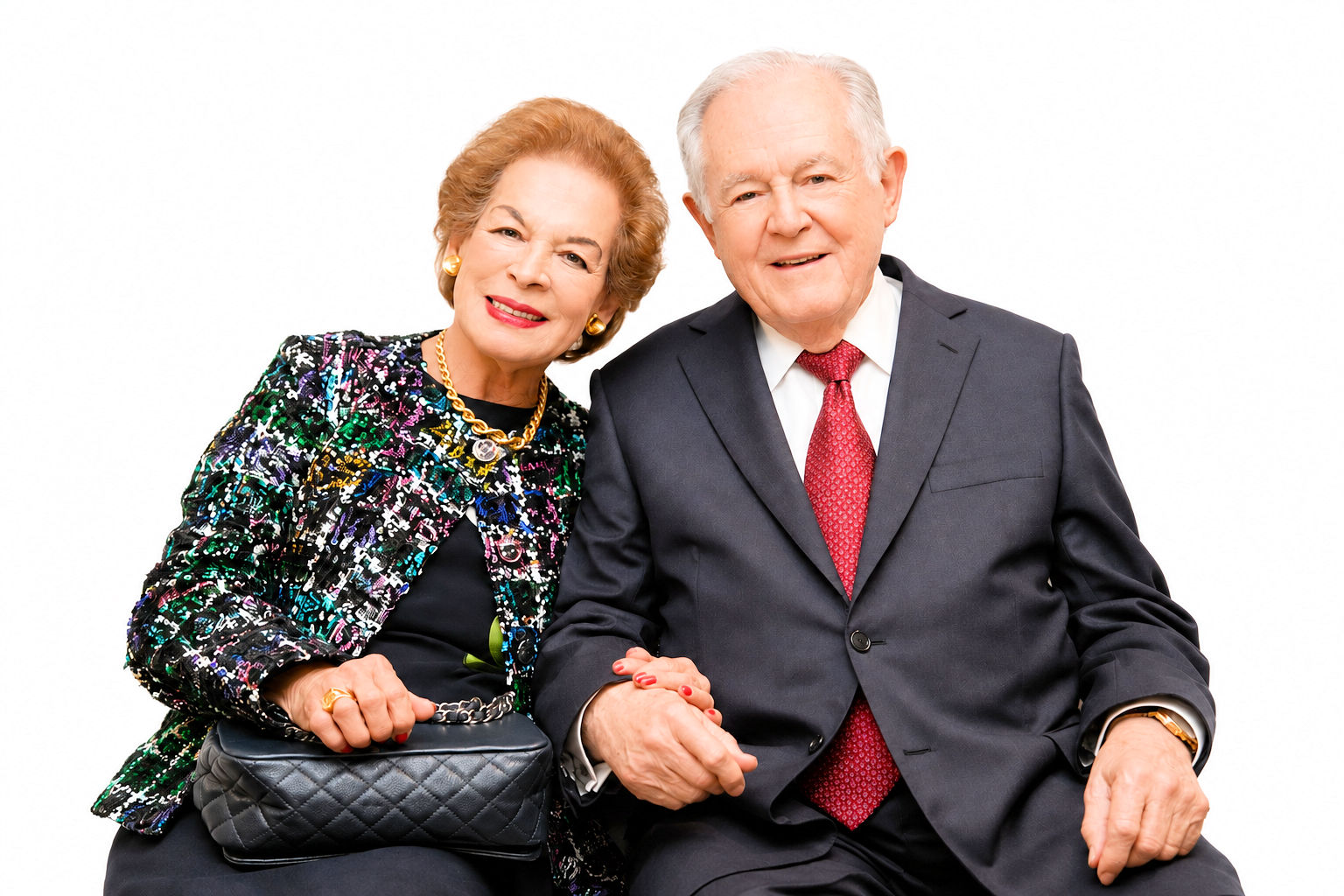
The most eye-catching gift came from Luis Carlos Sarmiento Angulo, Colombia’s richest man and founder of the banking giant Grupo Aval, who is giving $64.5 million alongside his wife, Fanny Gutiérrez de Sarmiento.
De La Espriella thanked them personally, saying their generosity would help both the emergency response and the rebuilding to come.
Jaime Gilinski, whose fortune also rivals Sarmiento’s, pledged $48.4 million earmarked for hospitals and schools in Cali.
David Vélez, the founder and CEO of the fintech giant Nubank, and his wife Mariel Reyes are giving $32.3 million, focused on Chocó and education.
And the Santo Domingo family — the force behind Valorem, Caracol TV and the D1 discount chain — matched that with another $32.3 million. Add it up and those four donations alone total $177.5 million, with Sarmiento accounting for well over a third of it.
Beyond the individual billionaires, Colombia’s business establishment has organized too.
The country’s main business association, ANDI, ran a campaign called “Empresas Unidas por Colombia” that closed out at a business congress in Cartagena with just over $65 million raised.
Tecnoquímicas kicked in $16.1 million, the brewer Bavaria gave $3.9 million, and the foundation Proantioquia says it’s helped consolidate roughly $64.5 million in giving.
Grupo Argos teamed up with the reggaeton star Nicky Jam on a home-rebuilding campaign called “Adopta un Hogar,” starting with $4.2 million and aiming to match donations up to $8.4 million for families in Chocó, the Coffee Region and Valle del Cauca.
Even the glassmaker Tecnoglass chipped in, sending $1.9 million in cash and windows.
All told, Colombia’s private sector has now put more than $516 million toward the recovery.
What’s striking, once you start pulling the thread, is how American nearly all of these names actually are.
Sarmiento’s Grupo Aval isn’t just a Colombian bank — it’s been trading on the New York Stock Exchange since September 2014, back when it raised roughly $1.26 billion in one of the biggest stock offerings Latin America produced that year.
Sarmiento himself rang the opening bell that morning with his wife and son at his side, the same wife who’s now co-signing the earthquake gift.
His American ties go back even further: in 2010, Grupo Aval paid General Electric $1.9 billion for BAC Credomatic, the Central American banking network that at the time had operations reaching into Florida.
Gilinski’s connection to the US runs through Wall Street itself.
He picked up his MBA at Harvard, worked as an investment banker at Morgan Stanley in New York, and today his own corporate biography describes his holdings as concentrated primarily in the banking and real estate sectors in Latin America and the United States. He’s best known internationally for controlling Metro Bank in Britain, but the American roots of his career are very much part of how he built his fortune.
Vélez’s Nubank is arguably the most American company of the bunch, despite being a Brazilian fintech. He studied at Stanford, worked at Goldman Sachs and Morgan Stanley, and was a partner at Sequoia Capital in Silicon Valley before starting the company.
Nubank has traded on the New York Stock Exchange since its 2021 IPO, with Berkshire Hathaway putting up $500 million as an early investor.
Just this past January, US regulators gave conditional approval for Nubank to open an actual American bank, and co-founder Cristina Junqueira has relocated to the US to run it.
The Santo Domingo family may have the deepest American roots of anyone on this list.
Their fortune is tied to Anheuser-Busch InBev, the brewing conglomerate that bought the iconic American company Anheuser-Busch for $52 billion back in 2008, and the family still holds a meaningful stake in the combined company. Alejandro Santo Domingo was actually born in New York, studied at Harvard, and works out of Manhattan today, where he sits on the boards of the Metropolitan Museum of Art and the Bronx Zoo. The family’s investment arm has also put money into Kraft Heinz, Keurig Dr. Pepper, and buyout funds run by KKR and 3G Capital.
Even Nicky Jam fits the pattern.
He’s Puerto Rican, which makes him American by birth, and he lives in Miami, where he bought a $4.1 million condo in 2024. He’d already been flying in aid on a private plane to the hardest-hit towns before the Grupo Argos partnership came together.
And Grupo Argos itself has had a US headquarters in Alpharetta, Georgia since 2011, having invested more than $3 billion into cement and concrete plants across Georgia, the Carolinas, Alabama, Florida, Texas, Mississippi, Virginia and West Virginia.
In 2023 it merged its American business with Summit Materials in a $3.2 billion deal, creating what’s now known as Argos USA — a company that trades on Wall Street, not just in Bogotá.
Just days after the ground shook, Colombia’s recovery is being underwritten by a group of families and companies who, it turns out, are as much a part of the American financial landscape as they are of Colombia’s own.