
$50 million new gift from multibillionaire Masayoshi Son represents just one expression of a lifelong commitment to using capital as a force for connection, resilience, and human advancement
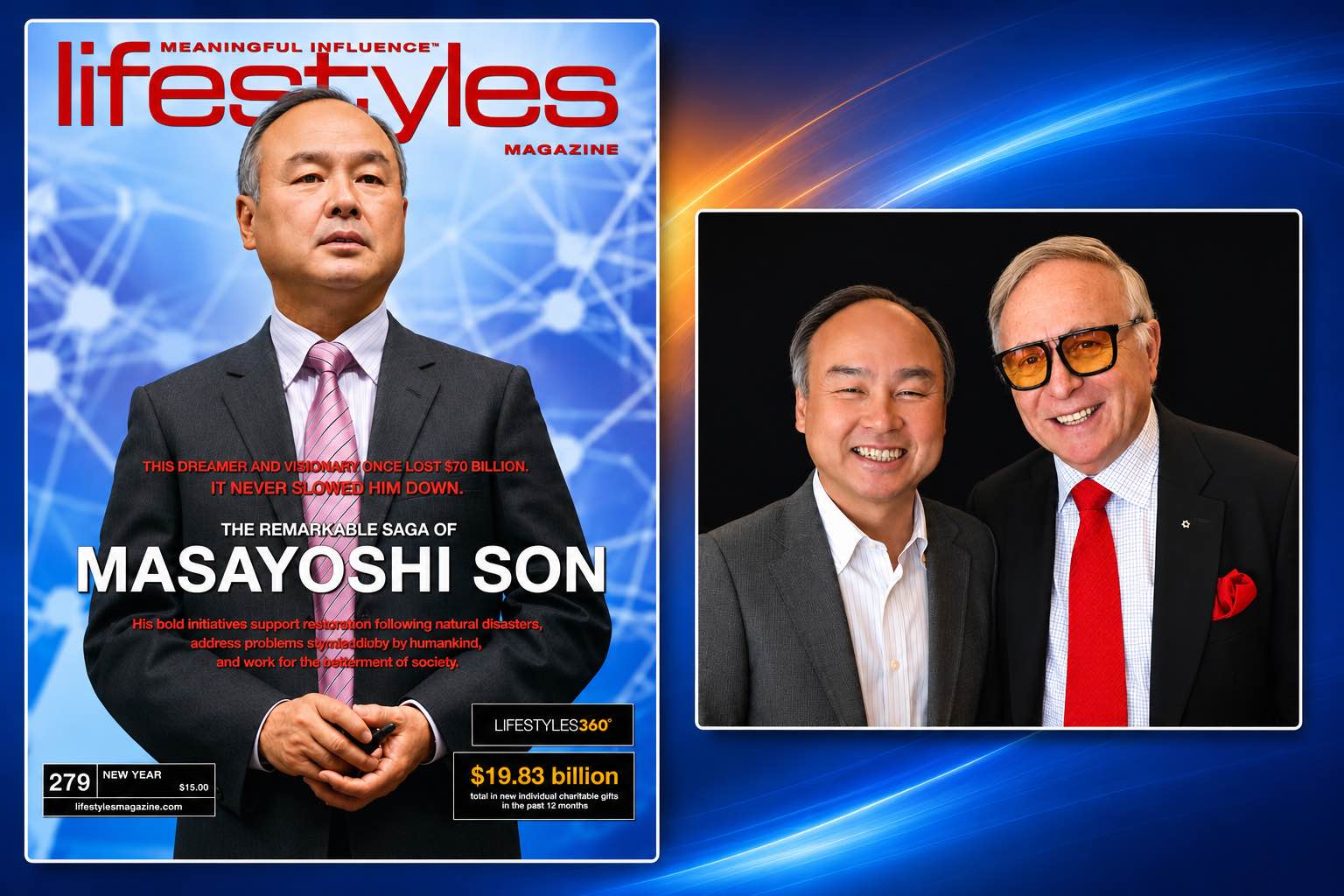
In the world of high-stakes global philanthropy, few figures move with the same blend of strategic vision and bold personal commitment as Masayoshi Son, the billionaire founder and chairman of SoftBank Group.
Recently, Son once again demonstrated his distinctive approach to giving when his company quietly donated $50 million to the Donald Trump Presidential Library and Foundation in Miami — one of the largest publicly disclosed contributions to the ambitious project so far.
The gift is earmarked for a dedicated section highlighting the U.S.-Japan alliance, encompassing economic, strategic, and technological cooperation between the two nations.
While the donation has drawn attention for its timing amid ongoing U.S.-Japan relations and SoftBank’s massive AI investment pledges in America, it also fits into a broader, decades-long pattern of Masayoshi Son’s philanthropy that blends disaster relief, education, innovation, and international bridge-building.
Son, born in 1957 in Japan to Korean immigrant parents, has long viewed wealth not merely as a byproduct of his extraordinary business success but as a tool for shaping the future.
His personal fortune, built on transformative early bets like a $20 million investment in Alibaba that ballooned into tens of billions, has enabled him to act decisively when crises strike or when he sees opportunities to nurture young talent.
His giving often carries a forward-looking, almost futuristic bent—reflecting the same mindset that has driven SoftBank’s investments in artificial intelligence, robotics, and connectivity.
The roots of Son’s major philanthropic efforts trace back to one of Japan’s darkest modern moments.
Following the devastating Great East Japan Earthquake and tsunami in March 2011, which killed nearly 20,000 people and triggered the Fukushima nuclear crisis, Son stepped forward with extraordinary speed and scale.
He personally pledged approximately $120 million (10 billion yen) for relief efforts, directing funds through the Japan Red Cross and other organizations.
He went further by committing his entire remaining salary as SoftBank’s leader to support children orphaned by the disaster.
SoftBank Group itself contributed an additional billion yen. Beyond immediate aid, Son established the Great East Japan Earthquake Recovery Initiatives Foundation and the Renewable Energy Institute, organizations aimed at long-term rebuilding and shifting Japan toward sustainable energy sources.
These moves were not just charitable responses; they reflected Son’s belief in technology and innovation as forces for societal resilience.
This disaster-driven philanthropy marked a turning point. In December 2016, Son formalized his commitment to the next generation by founding the Masason Foundation (also known as the Masayoshi Son Foundation).
Unlike traditional scholarship programs, the Masason Foundation seeks out exceptionally talented young people, who are often in their teens or early twenties, from around the world who demonstrate high aspirations and creative potential. It provides not only financial support but also mentorship, networking opportunities, and an environment designed to accelerate their development.
The foundation’s mission is explicitly ambitious: to cultivate individuals who will “create the future” of humanity.
Participants have engaged in fields ranging from AI research to biotechnology, with alumni gatherings featuring direct interactions with Son himself, who has urged them to prepare for the coming age of artificial general intelligence.
Son’s educational philanthropy extends internationally as well. In 2015, he announced support for the Schwarzman Scholars program at Tsinghua University in Beijing, endowing fellowships specifically for Japanese students.
The program, modeled after the Rhodes Scholarship, brings together emerging leaders from around the world to study geopolitics, economics, and global affairs in China.
Son has spoken personally about his own experience as a young man leaving Japan to study in the United States, emphasizing how cross-cultural education can foster understanding and break down barriers—a theme that resonates with his recent $50 million library contribution focused on U.S.-Japan ties.
What distinguishes Son’s approach is its integration with his business empire.
His philanthropy rarely operates in isolation from SoftBank’s strategic interests in technology, connectivity, and global partnerships.
The Trump library donation, for instance, aligns with SoftBank’s high-profile $100 billion investment pledge in U.S. projects—particularly in artificial intelligence infrastructure—announced in late 2024.
That pledge echoed a similar, smaller commitment Son made during Trump’s first term.
Observers note that Son’s support for a presidential library section on bilateral relations serves both national interests and the broader ecosystem in which SoftBank operates, including investments in American tech giants and AI ventures.
Throughout his career, Son has maintained a relatively low public profile on his personal giving compared to some Western billionaires, preferring targeted, high-impact initiatives over splashy announcements.
Yet the cumulative effect is substantial: from earthquake recovery and renewable energy advocacy in Japan to nurturing young global talent and strengthening international alliances.
In recent years, reports have also surfaced of targeted community donations in the United States, such as a significant contribution to the Pike County community, illustrating his willingness to support local causes where SoftBank has a growing footprint.
Critics sometimes question the intersection of Son’s philanthropy with business and politics, particularly when large sums flow toward institutions associated with sitting or former leaders.
Supporters, however, see a consistent thread: a deep optimism about technology’s power to improve human life, paired with a pragmatic understanding that strong bilateral relationships and educated youth are essential to realizing that vision.
As artificial intelligence accelerates and geopolitical tensions evolve, Masayoshi Son appears determined to use his resources not just to document history—as with the Trump library—but to help shape its next chapters.
At 68 years old, Son shows no signs of slowing his dual pursuits in business and giving. Whether funding disaster recovery, empowering prodigies through the Masason Foundation, or investing in symbolic diplomatic spaces, his philanthropy continues to reflect a man who bets big on the future—much as he has done throughout his remarkable entrepreneurial journey.
The $50 million gift to the Trump Presidential Library may be the latest headline, but it represents just one expression of a lifelong commitment to using capital as a force for connection, resilience, and human advancement.