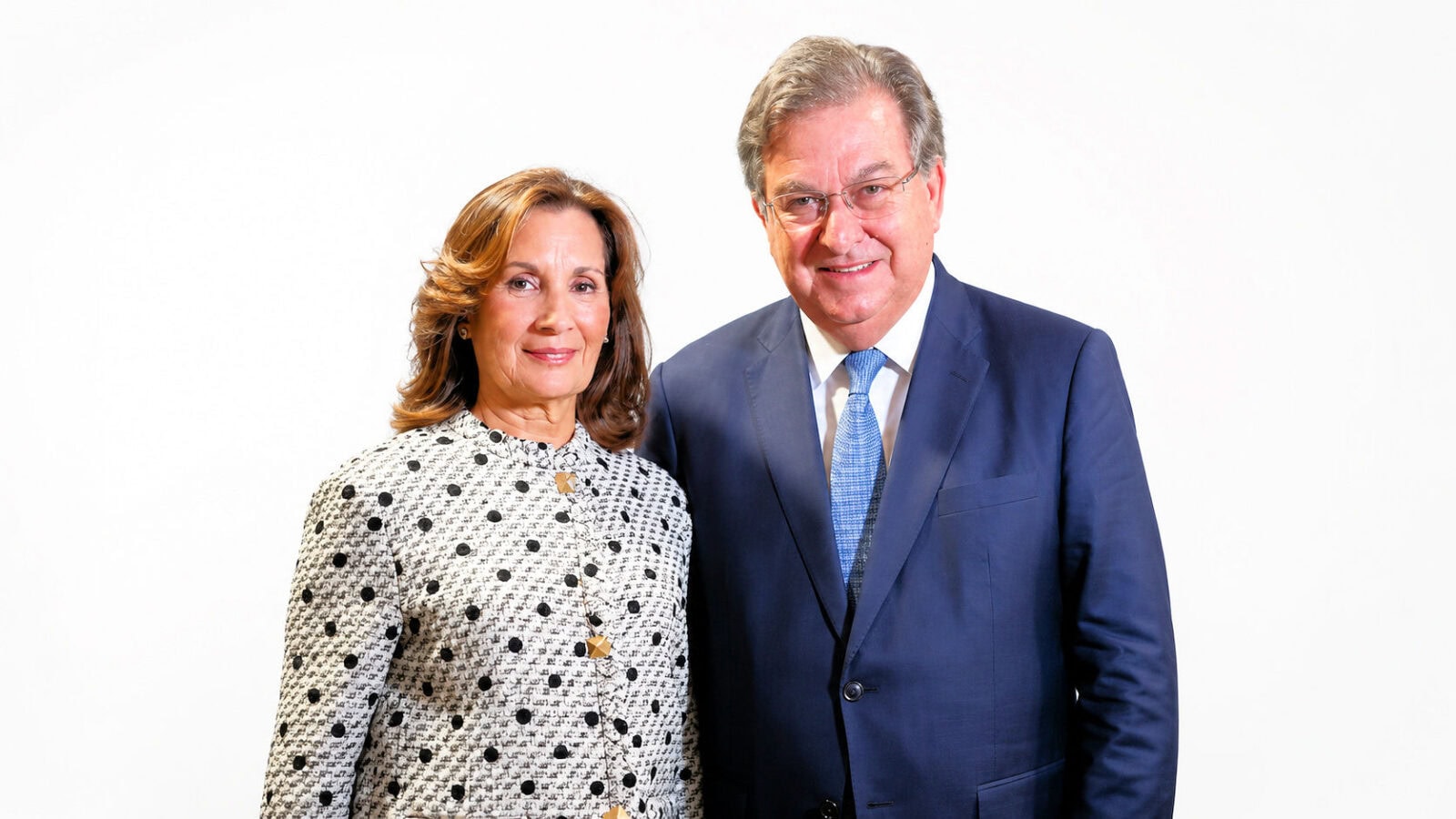
$48 million earthquake gift puts spotlight on a quietly built philanthropic record by Jaime and Raquel Gilinski
over 4,600 people, and left roughly 240 still missing, Jaime Gilinski didn’t wait for a formal appeal to reach him.
The country is still tallying the human toll.
Within days, Colombia’s president, Abelardo de la Espriella, picked up the phone and called the banker directly.
That conversation produced a pledge of 150 billion Colombian pesos — about $48 million — from Jaime and his wife, Raquel, aimed squarely at rebuilding the hospitals and schools shattered in Cali, the city where Gilinski grew up.
De la Espriella later described it on social media as an “extraordinary gesture of solidarity” arriving at one of the country’s darkest moments, according to La República. The letter the couple signed, reported by EFE, was specific rather than sweeping: the money goes toward the clinics and classrooms that let a broken city keep functioning, channeled through whatever reconstruction mechanism the national government sets up.
That specificity matters, because Colombia is now facing a staggering rebuild. Early government estimates put the economic damage at roughly $9.6 billion, according to Reuters, and the country’s business class has been racing to respond.
The Santo Domingo family, which controls one of Colombia’s largest media empires, had already committed $32 million just days earlier, and other business leaders pooled more than $64 million on top of that, per the Miami Herald.
Against that backdrop, the Gilinskis’ gift is notable less for outdoing anyone than for where it’s pointed—straight at the hometown hospitals and schools that shaped Jaime Gilinski long before he became the richest man in the country.
That wealth was not inherited so much as engineered, generation by generation.
Gilinski, 68, comes from a family whose business roots stretch back nearly a hundred years to his grandfather Isaac, who ran modest industrial and consumer-goods ventures out of Cali.
Jaime turned that inheritance into something far larger: a conglomerate that today touches banking through GNB Sudameris and the digital lender Lulo Bank, a controlling stake in the food giant Grupo Nutresa, a major position in Grupo Sura, the Semana media group, and a stable of luxury hotels in Bogotá and Cartagena run under the Four Seasons and Ritz-Carlton names, as detailed in La República’s history of the family empire.
His fortune sits somewhere near $15 billion, a figure that has climbed sharply in just the last few years as his banking and equity bets across Latin America and Europe have paid off, according to El Colombiano.
There’s an unmistakable American thread running through how he got there, and it shows up again and again in where his generosity has landed. Gilinski studied at the Georgia Institute of Technology before earning his MBA at Harvard, a grounding that briefly took him into Morgan Stanley’s mergers-and-acquisitions desk before he went home to rescue a failed Colombian bank out of the wreckage of the collapsed Bank of Credit and Commerce International—the deal that effectively launched his career, as chronicled by the Financial Times and The Times.
Decades later, the ties to those American years never really loosened. Gilinski chairs capital projects for the Chabad House at Harvard, and through the Jaime and Raquel Gilinski Endowment, he backs the David Rockefeller Center for Latin American Studies—a fitting cause for a man whose fortune was built almost entirely in the region the center studies.
He and Raquel also endowed the Jaime and Raquel Gilinski Fellowship at Harvard Business School, which sends Colombian and Panamanian students to business school on scholarship, effectively paying forward the same kind of education that once carried him out of Cali. And in 2022, the giving turned into American medicine directly when Mount Sinai Health System in New York received a multimillion-dollar gift from the couple to support its Department of Obstetrics, Gynecology, and Reproductive Science—a quiet but significant contribution to US academic medicine from a family whose public profile has always been bigger in Bogotá than in New York.
None of this is new behavior dressed up for a crisis. Back in the 1990s, while Gilinski chaired Banco de Colombia, the family gave roughly $8 million to the Fundación Santa Fe de Bogotá. which still supports one of the capital’s leading hospitals—a gift made decades before anyone was tallying his net worth in the billions.
Colombian business writers have long noted that Gilinski, who tends to avoid interviews and keep a low public profile, has steadily directed his personal giving toward health, education, and culture, treating them as places where private money can move faster than government red tape, as La República observed when it named him Businessman of the Year.
Even earlier this year, when earthquakes struck Venezuela, Gilinski quietly sent $18,000 to help rebuild that country’s Jewish community—a modest sum next to his fortune, but one more data point in a pattern of showing up wherever disaster intersects with the communities and causes he’s spent decades supporting.
Seen against that history, the $48 million earthquake pledge reads less like an isolated act of crisis generosity and more like the latest chapter in a story that has been unfolding for thirty years—one that runs from a hospital foundation in Bogotá to a Chabad house and a scholarship fund at Harvard, to a maternity ward at Mount Sinai, and now back to the hospitals and schools of the Colombian city where it all started for him.