
$40 million latest commitment from Ed and Sasha Bass to university is aimed at freeing future architects from the burden of student debt—raising their family’s philanthropy to the mid-nine-figure range
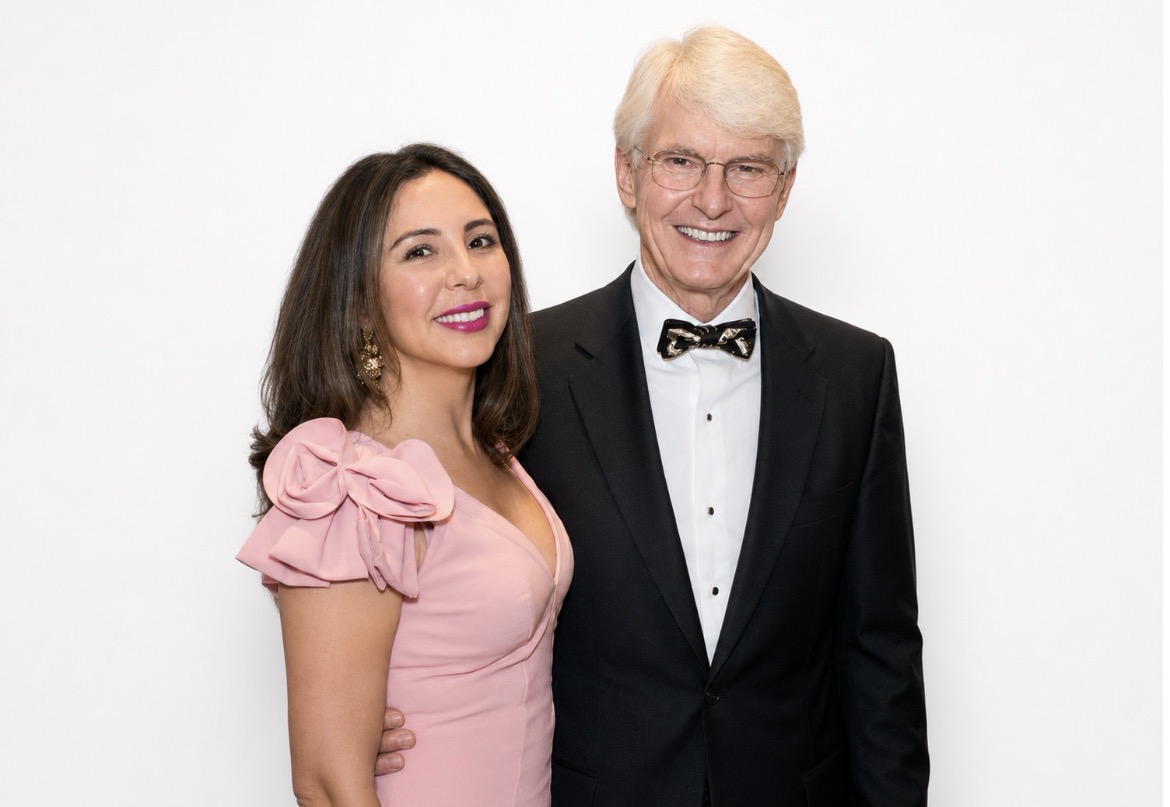
Billionaire philanthropists Edward Perry “Ed” and Sasha Bass are extending their long, deeply personal relationship with Yale University with a new $40 million matching commitment aimed at freeing future architects from the burden of student debt.
The unprecedented pledge, structured as a two-to-one challenge, is the latest chapter in a decades-long pattern of giving that has quietly made Bass one of the most consequential university donors of his generation.
The new commitment, to be introduced to alumni as the Bass Challenge, asks fellow supporters of the Yale School of Architecture to contribute $20 million to its financial aid endowment; for every dollar they give, Bass and his wife Sasha will contribute two, up to $40 million, creating a $60 million pool that Dean Deborah Berke says can eliminate student loans from the school’s aid packages. For Berke, the goal is nothing less than a “debt‑free” architecture education at Yale, a prospect that could reshape who feels able to enter the profession and how graduates choose to practice.
The structure of the gift is characteristic of Bass’s philanthropy, which often pairs large anchor commitments with mechanisms designed to pull in other donors and permanently shift institutional trajectories. At Yale, that pattern has played out repeatedly over the last three decades as Bass’s philanthropy has moved from residential colleges to museums, science infrastructure, and now professional education.
Bass’s affinity with Yale began as an undergraduate in the 1960s, when he studied at Yale College, and he briefly enrolled in the School of Architecture in 1970. Although he left the program before completing his degree, the experience seems to have left an enduring imprint, visible in his preference for gifts that transform the physical campus and the built environment that frames student life.
After graduating, Bass went on to build a career as a financier and investor in his native Fort Worth, Texas, becoming chair of the venture firm Fine Line and of the Sid W. Richardson Foundation, the main vehicle for his family’s philanthropic activities.
His contributions to Yale began in earnest in the 1990s and have since exceeded $300 million, according to past university disclosures and press reports. That total includes anchor gifts to the construction of Pauli Murray College and Benjamin Franklin College, the two residential colleges that allowed Yale College to expand enrollment while preserving its centuries‑old residential model.
Those projects signaled Bass’s interest in both student experience and the long‑term evolution of the campus fabric, a dual focus echoed in his latest commitment to the School of Architecture’s financial aid endowment.
If the colleges underscored his interest in student life, Bass’s $160 million lead gift to the Yale Peabody Museum of Natural History, announced in 2018, showcased his willingness to fundamentally remake a major cultural and scientific institution.
That contribution, the largest known single gift of his Yale career, underwrote a complete renovation and expansion that increased gallery space by roughly 50 percent, created new classrooms and reimagined how the museum presents science to the public.
When the Peabody reopened in 2024, university leaders cast the project as a generational transformation made possible by a donor whose ties to Yale and to natural history stretch back to his undergraduate years.
Bass’s Yale philanthropy has also included support for the renovation of the President’s House and major investments on Science Hill, where he funded a lecture hall named for O.C. Marsh as part of broader campus development.
Those projects, while less visible to the wider public than the Peabody or the residential colleges, reflect a consistent taste for capital projects that blend architecture, science, and institutional identity. They also mirror the way he has used his fortune in Fort Worth, where he helped drive the redevelopment of the downtown Sundance Square district and the creation of the celebrated Bass Performance Hall, now a defining landmark of the city’s cultural life.
In Fort Worth, Bass has long been regarded as a pivotal civic figure whose philanthropy and investments have reshaped the city’s skyline and its cultural offerings. Beyond Sundance Square and the performance hall, he has directed significant resources toward conservation and science, financing the ambitious Biosphere 2 project in Arizona, a closed ecological research facility that cost roughly $200 million to build.
Through the Philecology Trust and related entities, Bass has acquired and protected vast tracts of prairie and grassland, and he has held leadership roles at institutions such as the Fort Worth Zoo and the World Wildlife Fund, where he is a director emeritus after nearly two decades on the board.
This dual identity—as a builder of cultural and educational infrastructure and as an environmental philanthropist—casts the new architecture-school commitment in a broader light. Bass’s giving has often sought to influence not only what gets built but how people think about the relationship between the built and natural environments, whether in a Texas city core, a closed ecological dome in the Arizona desert, or a natural history museum in New Haven.
By targeting student debt at the very school where he once studied architecture, he is now choosing to intervene at the level of professional formation.
The Bass Challenge is also notable for its focus on leverage and participation. Rather than a simple endowment gift, the two‑to‑one match creates urgency and a clear target for alumni, essentially inviting the school’s broader community into a shared project of financial access.
For younger graduates who may have struggled with loans, the prospect of a debt‑free future for the next generation carries particular emotional resonance, and for older alumni, the challenge offers a way to magnify their own philanthropy alongside the Basses’.
Former Yale President Richard Levin has remarked that Bass has provided more philanthropic support to Yale than any other living donor, a judgment borne out by the accumulation of projects now bearing his name or made possible by his gifts. His service on Yale’s Board of Trustees from 2001 to 2013 further embedded him in the university’s strategic decisions, giving him a direct hand in steering the institution whose physical and intellectual infrastructure he has repeatedly funded.
Bass’s net worth is around $3 billion, placing his Yale giving in the rare category of philanthropists whose commitments to a single institution represent a substantial portion of their overall fortune.
The new architecture school gift, though, suggests that Bass’s story with Yale is still being written. Levin has hinted that Bass is interested in at least one more major building project on campus, though he has declined to elaborate, and Yale has given no details. What is clear is that the Basses’ latest pledge is designed not just to add another building or gallery but to alter the economic reality for generations of architects, ensuring that the decision to design buildings and cities is not constrained by an obligation to service loans.
For a donor whose career has spanned oil wealth, avant-garde ecological experiments, and the remaking of a Texas downtown, the move toward eliminating student debt may be his most quietly transformative architectural project yet. If the challenge succeeds, future Yale architecture alumni will walk out into the world carrying portfolios instead of payment schedules, their choices in practice and geography shaped more by ambition and conscience than by creditors.
In that sense, Ed Bass’s latest intervention in the built environment will be measured less in stone and glass than in the lives and careers of the designers it sets free.