$200 million investment in philanthropy and growing; supporting arts, education, conservation and science: how Judy and Stewart Colton built a global network to make our world a better place and end autoimmune suffering
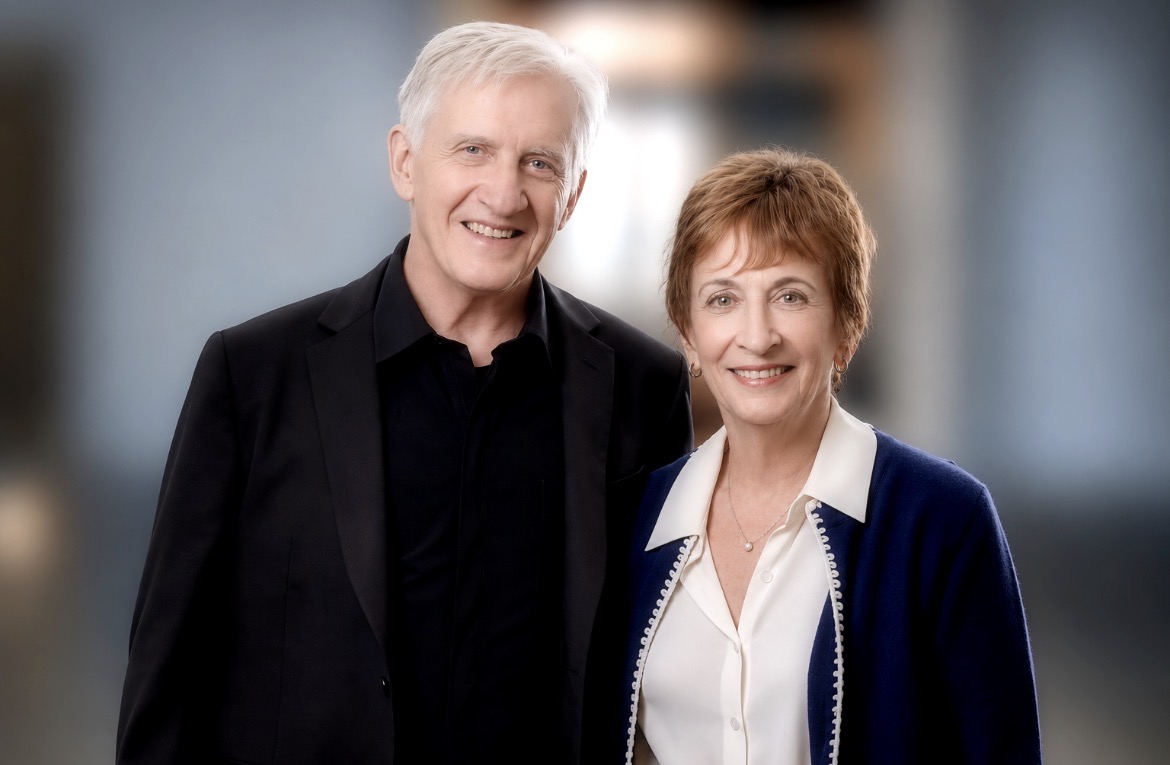
On June 10, 2026, two of America’s most consequential philanthropists made history twice in a single day.
NYU Langone Health and Yale School of Medicine each announced new philanthropic investments from Judy and Stewart Colton—gifts that together form a single, sweeping act of generosity totaling $17.5 million, shared across the global Colton Consortium for Autoimmunity, and directed toward a shared vision that the couple has spent more than a decade building from the ground up: a world in which the more than eighty autoimmune diseases that afflict an estimated 23.5 million Americans—and hundreds of millions worldwide—are finally, definitively, understood and conquered.
Judy and Stewart Colton are, before anything else, builders. Stewart, a 1962 graduate of the University of Pennsylvania’s Wharton School, built Alpha Metals Co. into a formidable international metals and chemical enterprise serving the global electronics industry — a technically exacting business requiring the same qualities that have defined his philanthropy: precision, patience, and a deep respect for long-term compounding.
Judy’s career ran parallel in ambition: trained as a psychologist at Boston University, she worked as a teacher and market researcher before founding Hartwood Systems, a computer consulting firm she led for twenty-five years, developing along the way a rare combination of behavioral acuity, organizational discipline, and the ability to shepherd complicated early-stage ideas through the difficult passage from possibility to institution.
When Stewart sold Alpha Metals and devoted himself to private investment and philanthropy, the two set out not merely to give money away but to do something harder and more lasting: to build scientific infrastructure that would outlive any individual gift, and to do so across institutions, borders, and generations.
Their vehicle is the Colton Family Foundation, established in 1984 and based in Short Hills, New Jersey—a private philanthropic institution of considerable scope that reflects the full texture of two lives richly and curiously lived.
In 2023, the foundation distributed nearly $14.8 million to 96 grantees, with assets totaling approximately $90 million. In 2024, distributions grew to $16.98 million — a foundation running at full stride.
The Coltons give generously to the arts, to land conservation, to Jewish causes, to higher education, to youth development, and to medical research—Judy has served as a founding board member of New Jersey SEEDS and the Community FoodBank of New Jersey; on the boards of JESPY House and the Wilderness Society; and as a member of Tel Aviv University’s Board of Governors, while Stewart serves as president of the American Friends of Tel Aviv University and was awarded an honorary doctorate by the university in 2006.
In 2021, a $10 million gift from Colton to the New Jersey Performing Arts Center in Newark funded a new institute devoted to curriculum innovation and training programs for underserved youth, quietly transforming creative pathways for young people who might not otherwise have found their way there.
But within this panoramic philanthropic life, the Colton Consortium for Autoimmunity has emerged as the couple’s most defining creation—and the one that most fully reveals who they are as thinkers and as donors. The Consortium today unites four world-class centers: the Judith and Stewart Colton Center for Autoimmunity at NYU Langone, the Colton Center for Autoimmunity at the University of Pennsylvania’s Perelman School of Medicine, the Colton Center for Autoimmunity at Yale School of Medicine, and the Colton Center for Autoimmunity at Tel Aviv University.
Each center is a serious, well-resourced research institution in its own right. Together, they form something genuinely unprecedented in the landscape of privately funded biomedical science — a living, breathing, real-time network in which investigators share ideas, patient cohorts, technologies, and expertise across institutional and national boundaries as a matter of daily scientific practice.
The architecture did not happen by accident. It happened because the Coltons insisted upon it.
“They decided to expand the Colton Centers and form a consortium of autoimmunity centers under the Colton umbrella,” says Dr. Joseph Craft, the Paul B. Beeson Professor of Medicine (Rheumatology) and professor of immunobiology at Yale and the founding director of the Colton Center at YSM.
Craft knows the Coltons’ ambitions intimately—he met the couple seven years ago through his work at NYU, where he served on the advisory committee for the original Colton Center at NYU Grossman School of Medicine, the initiative the Coltons launched in 2014.
When the Coltons began envisioning a broader network in 2019, Craft was their first call at Yale. “In 2019, they asked me if Yale would be willing to host a Colton Center, and they would fund it,” he recalls. Yale was willing.
What has grown from that conversation is a center of remarkable productivity. Since its founding in 2020, the Colton Center at Yale has received more than 300 research proposals—62 in the current year alone— funding a steady pipeline of high-risk, high-reward scientific ideas that larger government programs cannot easily accommodate.
In 2025, the center awarded nine translational research projects totaling nearly $1 million, advancing work in diagnostics, treatments, vaccines, and technologies for autoimmune disease.
Craft, who joined the Yale faculty in 1985, served as chief of rheumatology for twenty-eight years and has spent four decades studying systemic lupus erythematosus with a personal tenacity that has earned him the Lupus Research Alliance’s 2022 Distinguished Innovator Award, describes the center as a scientific accelerator—a place where ideas that cannot yet promise predictable outcomes can still get a hearing and a check.
“In research,” he says plainly, “that ‘something’ is often the high-risk work that cannot yet promise predictable results but is necessary for true breakthroughs.”
The new $2.5 million gift to Yale, announced today, will be allocated across three carefully designed priorities, each calibrated to extend the center’s reach and deepen the Consortium’s cohesion.
The first is a director’s fund for innovative ideas in autoimmunity—a flexible, leadership-directed reserve that gives the center’s scientists room to pursue the unexpected, the speculative, and the genuinely original without waiting for the slower cycles of federal grant review.
The second is faculty recruitment, with emphasis on investigators working at the frontier of human autoimmunity and translational immunology—a new generation of scientists who can bridge the gap between mechanisms uncovered in animal models and the far more complex terrain of human disease.
Craft is intentionally catholic about departmental affiliation:
“It’s not meant to be a person who’s necessarily in a particular department; rather, we want the best person wherever they fit.” What matters — what must be present alongside scientific excellence — isthe capacity for broad collaboration, within Yale’s walls and beyond.
The third priority is the most architecturally ambitious: a three-part consortium initiative explicitly designed to deepen and formalize multi-institutional collaboration.
The first part co-funds research projects requiring investigators from all four Consortium institutions, creating a structural incentive for the kind of cross-institutional science that, as Craft frankly acknowledges, does not come naturally to academic culture.
“As a scientific community, we need to continue to collaborate. However, it’s hard for academicians to work across institutions,” he says—differences in culture, regulation, and funding mechanisms all conspire against it.
“We’re able to do it, but in essence, Stewart and Judy forced us to do it.” The second part launches an extramural request for applications, allowing investigators at any of the four consortium institutions to apply in partnership with collaborators outside the network—expanding the consortium’s footprint and bringing in new ideas and scientific voices from anywhere in the world.
The third part focuses specifically on monogenic autoimmune diseases—rare immune conditions caused by single-gene defects, which offer an unparalleled window into the fundamental mechanisms of immune function—led at Yale by Dr. Carrie Lucas, associate professor of immunobiology, who trained at Harvard Medical School and the NIH’s National Institute of Allergy and Infectious Diseases and has built one of the country’s most respected laboratories for the study of severe immune disorders at the genetic level.
“Collaboration becomes real not when people merely share ideas but when institutions jointly invest in them,” Craft says—a line that doubles as a description of what Stewart and Judy Colton have been doing, at enormous scale and with remarkable consistency, for more than a decade.
Meanwhile, at NYU Langone, the parallel announcement of a new investment as part of the broader $15 million three-institution gift deepens what is already the oldest and most layered relationship in the Consortium.
The Coltons’ connection to NYU predates the autoimmunity center entirely—Judy’s uncle, a prominent surgeon, established a loan fund for NYU medical students generations ago, a seed of institutional connection that has grown, slowly and steadily, into one of the most consequential philanthropic partnerships in the history of American academic medicine.
Since the Judith and Stewart Colton Center for Autoimmunity was established at NYU Langone with a $10 million founding gift in 2014 and reinforced with an additional $10 million in 2020, the center has supported nearly twenty interdisciplinary pilot project collaborations, catalyzed more than $25 million in direct NIH awards, and contributed to more than $82 million in total federal and non-federal scientific funding.
It has also produced a direct research relationship with argenx, the biopharmaceutical company now recognized as a global leader in immunology drug development—a concrete demonstration that strategic, patient philanthropic capital can travel all the way from the laboratory to the pharmacy shelf.
Under the founding leadership of Dr. Steven Abramson and the directorship of Dr. Jose U. Scher, with associate directors Dr. Jill P. Buyon and Dr. David B. Beck, the NYU center has pursued a translational model of uncommon ambition—integrating clinical care, immunology, genetics, microbiome science, and data-driven discovery across psoriatic arthritis, lupus, rheumatoid arthritis, VEXAS syndrome, and beyond.
Early-career investigators supported by the center are deploying artificial intelligence against patient datasets, engineering microfluidic synovium-on-a-chip devices that model human synovial tissue at the cellular level, and exploring the PD-1 checkpoint’s role in autoimmunity with precision tools that simply did not exist when the center was founded.
“The Coltons understand both the urgency and the long horizon of biomedical discovery,” said Dr. Scher. “Their commitment reflects a deep belief in science, collaboration, and improving the lives of patients with autoimmune disease. Philanthropy like this creates hope with a practical path forward.”
At Penn, the Coltons gave $10 million in 2021 to launch the Perelman School’s center, then returned in 2022 with a landmark $50 million gift matched by Penn with $50 million of its own institutional funds—creating a total $100 million impact at a single institution and a center now co-located with Penn’s immunology, vaccinology, virology, and data science programs in a physical home designed for the kind of cross-disciplinary science the Coltons have always demanded.
At Tel Aviv University—where the Coltons’ relationship extends back twenty-five years, encompassing scholarships across five disciplines, the endowed Colton Chair of Law and Security, the Colton Family Next Generation Technologies Institute, and Stewart’s honorary doctorate and vice chairmanship emeritus of the Board of Governors—the Colton Center stands as Israel’s first multidisciplinary autoimmune research institution, applying the full tools of a modern university to a disease burden that respects no borders.
Nancy J. Brown, MD, the Jean and David W. Wallace Dean of the Yale School of Medicine and the first woman to hold that position in the school’s history, captured the significance of the day’s announcement with the clarity of someone who understands what this kind of sustained commitment actually makes possible.
“This gift enables Yale School of Medicine to recruit faculty focused on autoimmunity and translational immunology, foster multi-institution collaboration with physicians and scientists across the Colton Consortium, and advance research toward novel treatments and cures,” she said.
Behind those words lies something larger: the recognition that the Coltons are not merely donors but architects—people who set out to redesign the infrastructure of a field and then, over twelve years and across four institutions on two continents, actually did it.
Craft, who has watched that architecture rise from the inside, captures its meaning with a directness born of long experience: “The consortium is designed so that four academic institutions work together and leverage the intellectual resources of all four to advance our understanding and treatment of autoimmune diseases that are common and increasing in incidence.
It’s an international collaboration with first-rate investigators, scientists, and physicians in the U.S. and at Tel Aviv.”
And then, from the Coltons themselves: “This is not limited to the duration of the gift; it’s beyond that.” It is, in the truest sense, what great philanthropy always aspires to be — generosity that outlasts the gift itself, building something that will continue to generate discoveries, attract scientists, and change lives long after the checks have been deposited and the press releases have faded.
On June 10, 2026, Judy and Stewart Colton gave again.
They have been giving, with vision and without fanfare, for a very long time — and every indication is that they are far from finished.