$40 million gift from Quentin and Kylie Birts gives impetus to global fight against MND
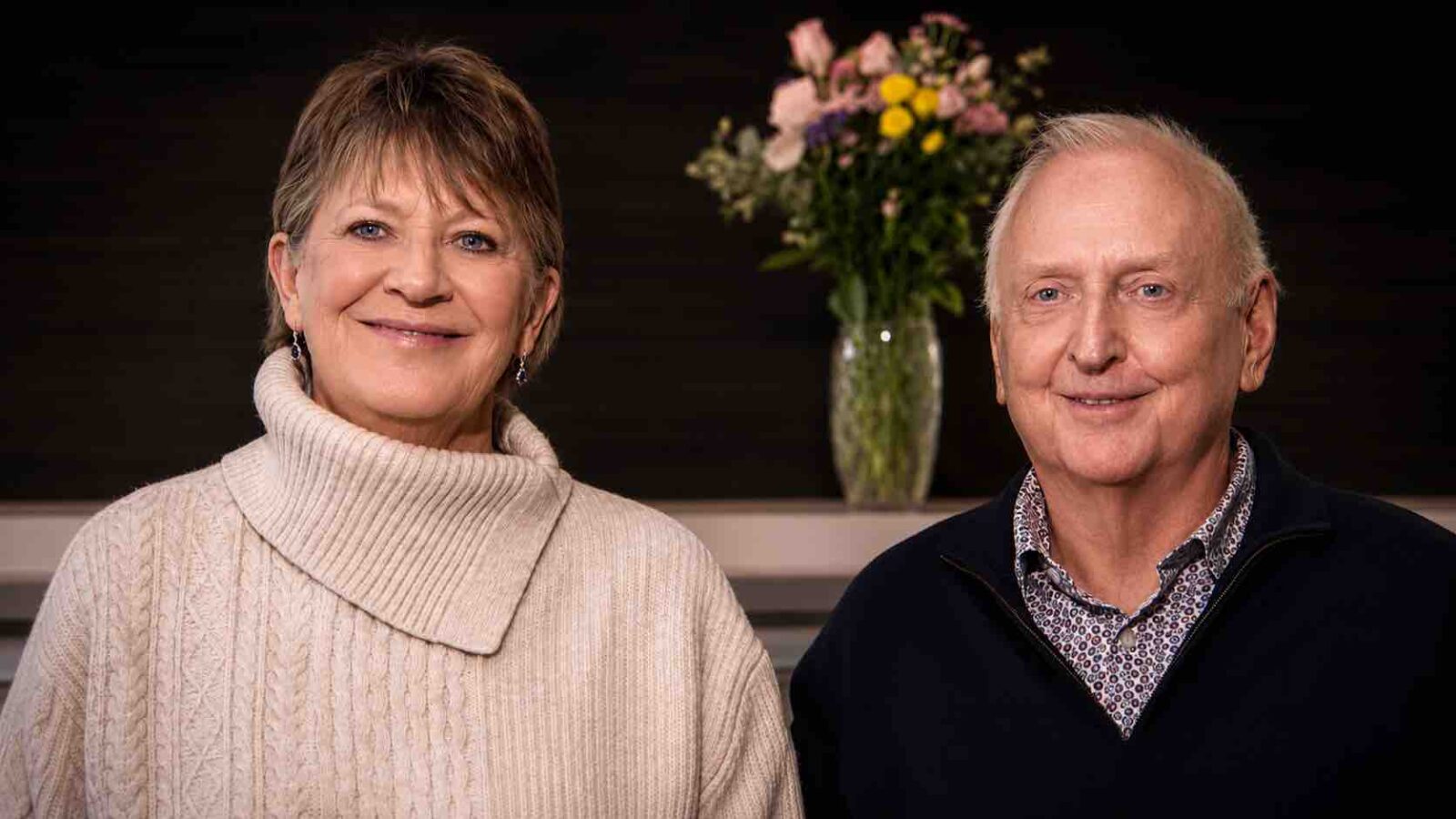
A Brisbane construction couple has quietly become one of the world’s most consequential donors to motor neuron disease research, and almost no one outside Australia had heard their names until now.
Quentin and Kylie Birt, who built their fortune from a family earthworks business that began with a second‑hand Ford Falcon, a wheelbarrow and a shovel, have pledged 40 million Australian dollars to FightMND, the charity founded by Australian football legend Neale Daniher.
The gift, announced during the Big Freeze game at Melbourne Cricket Ground in the first year after Daniher’s death, stunned even seasoned observers of Australian philanthropy.
The Birts had previously promised FightMND $ 10 million; moved by the size of the crowd and the public’s emotional response, they quadrupled that commitment.
For a disease with no cure and limited treatment options, the scale of their pledge effectively reshaped the country’s funding landscape overnight.
Quentin and Kylie are not the usual tech billionaires or global financiers who tend to dominate headlines about megagifts. In 1973, Quentin walked away from a cadet engineering role with Queensland Rail and started a tiny earthworks outfit that won a 10,000‑dollar contract to help construct an Australia Post car park in suburban Brisbane.
Rather than leasing equipment, he bucked industry orthodoxy and used whatever cash flow he had to buy machinery outright. That decision—own your assets, live with the risk—allowed the company to scale steadily and control both margins and project delivery.
Over the next decades, the firm, Q, H and M Birt, moved from modest local jobs to major government and private projects, including a defining contract in 1985 to lay the final road section linking Queensland’s east coast with central Australia.
Today, the company claims to operate the largest civil construction fleet in the Southern Hemisphere and to have delivered more than 2 billion dollars in work in the past ten years, more than half of it from repeat clients. In the world the Birts inhabit, reliability is currency; long before they crossed into public philanthropy, they were already known in industry circles as operators who simply got big jobs done.
Their philanthropy has followed a similarly no‑nonsense pattern. Earlier in 2025, the couple donated 57 million dollars to the Redtails Pinktails Right Tracks Program, an Australian rules football initiative for young people in the Northern Territory and South Australia.
The program uses football as a lever for mentoring, education, and employment pathways, and local leaders described the Birts’ gift as a “jackpot” moment for the region.
That donation alone was enough to place them among the top five philanthropists in Australia that financial year. With the FightMND pledge, they have now effectively written two nine-figure checks in about 18 months, at least in Australian-dollar terms.
If their business story is rooted firmly in regional Australia, their giving plugs directly into a global ecosystem—with a quiet but significant U.S. dimension.
Motor neuron disease (known in the United States primarily as ALS) has seen some of its biggest funding injections from American campaigns, most famously the 2014 Ice Bucket Challenge.
That viral moment raised well over $ 100 million for ALS research in the U.S. alone and roughly $ 220 million worldwide, seeding more than 100 research projects and strengthening clinical trial infrastructure at major American institutions. Those investments helped build the international trial networks, biobanks and data platforms that Australian researchers now rely on.
FightMND itself is part of that architecture. Since its founding in 2014 by Neale Daniher and colleagues, the organization has become one of the world’s largest independent funders of MND research and patient support. Its Big Freeze campaign—anchored by celebrities sliding into icy water at the MCG in ridiculous costumes—has become both a cultural ritual and a serious fundraising engine.
The Birts’ 40‑million‑dollar commitment doesn’t sit in isolation; it will likely co‑fund or complement trials, lab collaborations, and drug development programs that involve U.S. universities, biotech firms and regulatory pathways.
Money raised in Australia has a way of showing up, quietly but decisively, in Boston, California and other American centers where ALS therapies are being tested.
In that sense, this is a story about how local loyalty—one couple’s admiration for a football icon who refused to make excuses—translates into a bet on a global pipeline.
The Birts’ business philosophy of owning their machinery and backing themselves is now expressed through philanthropy: instead of waiting for governments or multinational foundations to act, they have decided to buy time, talent, and capacity for researchers trying to turn incremental scientific gains into actual treatments.
For U.S. donors and foundations already invested in ALS, their decision sends a subtle but important signal. Mega‑gifts to neurodegenerative research are no longer the exclusive domain of Silicon Valley fortunes and East Coast endowments. An earthworks company headquartered in Brisbane can step into the same arena and influence the same trials.
What also stands out is the coherence of the Birts’ emerging philanthropic identity. On one side, a 57‑million‑dollar play for Indigenous and regional youth, using football to create opportunity in communities often left out of Australia’s prosperity story.
On the other, a 40‑million‑dollar stake in a disease that strips away movement, speech and independence, and that has long been underfunded relative to its severity. Both gifts orbit around sport, but they operate at very different altitudes—one hyper‑local, the other resolutely global.
Taken together, they suggest a couple who see sport as a bridge: between remote towns and professional careers, between fans in blue beanies and scientists in white coats, between a hero’s public struggle and a lab’s private grind.
For U.S. readers, the Birts are a reminder that the next big partner in ALS research may not be a familiar American dynasty but a family enterprise on the other side of the world, run by people who talk more easily about machinery and road base than about endowments and impact investing.
Yet the effect of their giving will likely be felt in American clinics and clinical trials as new therapies and trial designs move through the cross-border research ecosystem.
In the long run, if their 40 million helps bring a viable treatment to market, what happened at the MCG this week won’t just be a landmark in Australian generosity.
It will be another chapter in a global story of how a once‑niche disease, catapulted into mainstream consciousness by an American viral challenge, has drawn in unlikely allies—from Silicon Valley coders to Australian earthmovers—who are collectively trying to turn awareness into cures.