
$35 million new gift from John and Kathy Schreiber extends $50 million giving legacy to transform community health
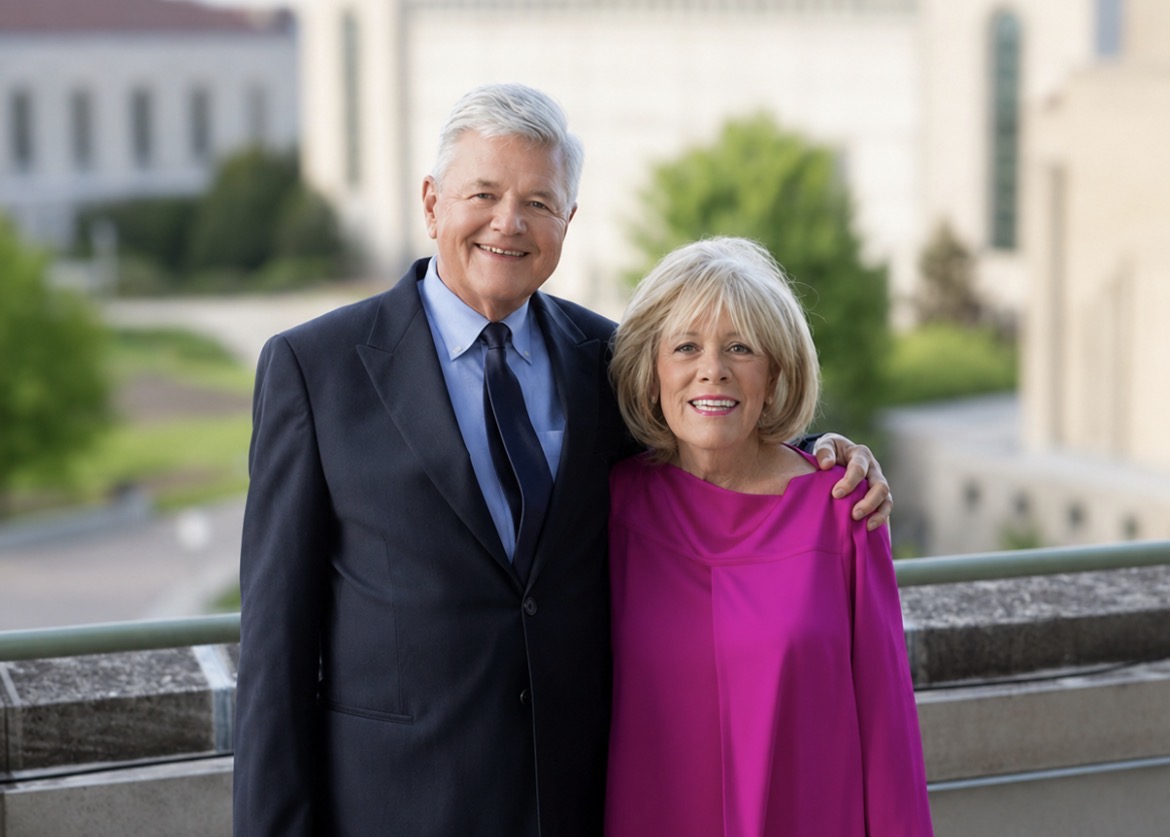
Chicago philanthropists John and Kathy Schreiber are deepening a three-decade pattern of targeted, systems-level giving with a $35 million grant to Northwestern Medicine, a gift that both reflects and extends a quietly influential philanthropic portfolio centered on access, equity, and institutional durability in their home city.
The contribution will establish the John and Kathy Schreiber Community Health Institute, an effort designed to address persistent gaps in care for underinsured populations while reinforcing the connective tissue between major health systems and community-based providers across Chicagoland.
For the Schreibers, the investment is less a departure than a continuation of a long-standing philosophy: fund infrastructure, not just programs, and prioritize interventions that can scale through partnerships. Their relationship with Northwestern Medicine alone dates back more than 30 years, beginning in 1994, and this latest gift brings their cumulative support for the system to nearly $50 million.
Over that period, their contributions have tracked the evolution of healthcare delivery itself—from traditional capital and clinical support toward more integrated, community-facing models that recognize the role of social determinants in shaping outcomes.
That shift is evident in the design of the new institute. Rather than centering exclusively on hospital-based care, the Schreiber-funded initiative will extend into neighborhoods through transitional care clinics, federally qualified health centers, and free clinics, with an emphasis on care navigation, workforce development, and culturally competent delivery. The model reflects a broader trend among experienced donors who are moving upstream—investing in coordination, prevention, and access points that reduce reliance on emergency and acute care settings.
The Schreibers’ philanthropic identity has been shaped by both consistency and selectivity. While not among the most publicly visible mega-donors, they have built a reputation in Chicago’s nonprofit and healthcare sectors as disciplined, long-term partners. Their giving has often focused on institutions capable of anchoring broader ecosystems—academic medical centers, community health networks, and organizations positioned to convene stakeholders across sectors. In that sense, the Northwestern Medicine gift aligns with a pattern of leveraging large, strategic commitments to catalyze collaboration rather than standalone initiatives.
Kathy Schreiber, who co-founded Schreiber Philanthropy, has articulated a guiding belief that access to high-quality healthcare should not be determined by geography or income, a principle that has informed much of the couple’s recent giving. Their philanthropy has increasingly intersected with questions of equity—how systems can be redesigned to reach populations that have historically been underserved, and how institutions can be supported in ways that make those changes sustainable. The Community Health Institute’s focus on care navigation hubs, expanded transitional care, and support for addiction and substance use services signals a recognition that barriers to care are often structural, not merely financial.
The scale of the gift also reflects a broader maturation of the Schreiber philanthropic strategy. Earlier contributions helped build capacity within established institutions; more recent investments are aimed at integration—ensuring that those institutions work more effectively with community-based partners and public health frameworks. By funding both direct services and the connective infrastructure around them, the Schreibers are positioning their philanthropy to influence not just outcomes, but systems.
Their approach mirrors a wider movement among high-net-worth donors who are applying a more analytical lens to giving, often informed by data and cross-sector collaboration. The institute’s emphasis on data-driven insights and measurable outcomes aligns with this trend, suggesting that the Schreibers view philanthropy not as episodic generosity but as a form of long-term civic investment with expectations of performance and adaptability.
At the same time, the gift underscores the enduring importance of place-based philanthropy. Despite the national and global reach of many major donors, the Schreibers have remained deeply focused on Chicago, directing resources toward institutions and initiatives that shape the region’s social and healthcare landscape. Their continued investment in Northwestern Medicine reinforces the role of anchor institutions in addressing urban health disparities while highlighting how sustained donor relationships can evolve alongside institutional priorities.
As healthcare systems grapple with rising costs, uneven access, and the growing recognition that up to 80 percent of health outcomes are influenced by non-clinical factors, philanthropic capital is increasingly being deployed to test new models. The Schreiber gift positions Northwestern Medicine to expand its reach beyond traditional clinical settings, but it also reflects a donor perspective that has been developing over decades—one that sees healthcare not as a siloed service, but as an interconnected system requiring coordination, trust, and sustained investment.
In that context, the $35 million commitment is both a milestone and a marker of continuity. It builds on a philanthropic history defined by long-term partnerships and targeted impact, while signaling where the Schreibers—and donors like them—believe the next frontier lies: not simply in funding care, but in reshaping how and where care is delivered.