
$34.5 million latest gift to university from philanthropist K. Lisa Yang to expand autism research and clinical care raises her giving to well over $500 million
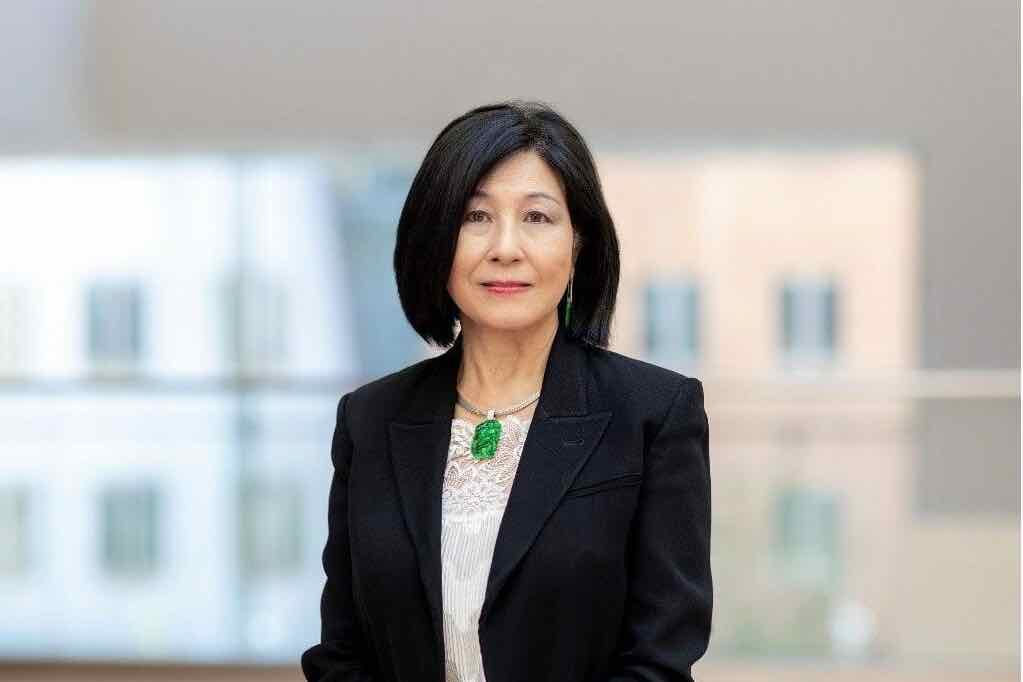
The University of Cambridge has secured a $34.5 million gift from philanthropist K. Lisa Yang to expand autism research and clinical care, anchoring a powerful new transatlantic alliance that links Cambridge with Harvard and MIT and carries direct implications for autistic individuals and their families in the United States as well as the United Kingdom.
K. Lisa Yang, a retired Wall Street investment banker turned impact-focused philanthropist, has spent the past decade methodically building a portfolio of giving around neurodiversity, disability, and global health, often in partnership with her longtime philanthropic collaborator, technology executive Hock E. Tan.
At Harvard and MIT, the couple has already established major centers devoted to autism research, brain–body science, and molecular therapeutics, effectively seeding a cross-institutional pipeline that moves basic science closer to real-world interventions for neurodevelopmental conditions.
Yang’s latest commitment to Cambridge extends that ecosystem beyond the United States, embedding a leading UK university into what is now a three-campus constellation of autism-focused hubs, each operating under the umbrella of the Yang Tan Collective.
Of the $34.5 million, $28 million will create the K. Lisa Yang Center for Autism Research at the University of Cambridge, a new academic engine that will investigate the health, social, and lifespan challenges faced by autistic people and their families.
The remaining $6.5 million will establish the K. Lisa Yang Autism Clinical Center inside the planned Cambridge Children’s Hospital, a first-of-its-kind facility that aims to integrate physical and mental health care for children in a single setting when it opens in 2030.
University leaders say the gift is the largest single philanthropic contribution to Cambridge’s School of Clinical Medicine since the school was founded in 1976, underscoring the scale of Yang’s bet on the institution’s capacity to drive autism research forward.
For Yang, the Cambridge commitment is explicitly about joining forces with existing US-based centers rather than standing up a standalone UK initiative.
She has formally designated the university as a “core partner” in the Yang Tan Collective, alongside Harvard and MIT in Cambridge, Massachusetts, a network of eight specialized research centers that collectively tackle human health, disease, and environmental challenges, with a particular emphasis on engineering solutions that can be deployed in low-cost and resource-constrained settings.
Within that network, two centers already focus directly on autism at Harvard and MIT, and Yang has been clear that her vision is for all three K. Lisa Yang autism centers—Harvard, MIT, and now Cambridge, UK—to work as a coordinated triad that spans disciplines, borders, and stages of research from discovery to intervention.
The Yang Tan Collective itself has emerged as one of the more distinctive philanthropic architectures in contemporary science giving, especially from a US perspective.
Rather than concentrating all capital and talent at a single American campus, Yang and Tan have deliberately stitched together an alliance of “world-class universities” that share scientific advisory boards, co-host symposia, and align research agendas in areas such as autism, brain–body communication, computational neuroscience, global engineering, and molecular therapeutics.
At MIT, for example, the Hock E. Tan and K. Lisa Yang Center for Autism Research focuses on identifying biomarkers and therapeutic targets by examining autism at the genetic, molecular, and neural circuit levels, while the Harvard counterpart emphasizes understanding the neurobiological basis of autism spectrum disorders and translating that knowledge into new approaches to treatment; both centers were launched with $20 million gifts and operate with closely coordinated leadership and shared governance.
The Cambridge expansion now gives this US-rooted structure a significant foothold in the UK, but the relevance for American families and clinicians is immediate and concrete rather than simply symbolic.
Autism remains highly prevalent in the United States—some estimates put the rate at roughly one in dozens of children—and Yang’s US philanthropy has already underwritten work on gene therapy, neural circuits, and early detection strategies designed to inform future standards of care.
By tying Cambridge’s long-established Autism Research Centre, led by Professor Sir Simon Baron-Cohen, directly into this network, the new gift is expected to accelerate cross-border studies on topics such as why autistic people face reduced life expectancy, how to identify autism earlier in childhood, and which interventions best support healthy development across the lifespan.
Leaders at Cambridge emphasize that Yang’s funding will more than simply sustain existing efforts; they frame it as a long-term endowment-like base that will support academic leadership, collaboration, and innovation in autism research for years to come.
A key element of that strategy is the creation of K. Lisa Yang Fellowships, which will support emerging scholars and investigators in neurodevelopmental research, with the explicit goal of nurturing “fresh perspectives and disruptive ideas” that can be fed back into the broader Yang Tan Collective.
For US institutions like Harvard and MIT, this represents a deepening of the talent pipeline as much as a new collaboration, since fellows and faculty will be encouraged to move among campuses, share data, and co-develop studies that can be tested in different national health systems and cultural contexts.
Clinically, the K. Lisa Yang Autism Clinical Center at Cambridge Children’s Hospital is being designed as a model that could influence pediatric care well beyond the UK, including in the United States, where health systems are grappling with how best to coordinate services for autistic children.
The hospital itself is a partnership among the University of Cambridge, Cambridge University Hospitals NHS Foundation Trust, and Cambridgeshire and Peterborough NHS Foundation Trust and is currently in an advanced planning stage supported by a £100 million philanthropic campaign.
Within that framework, the new Clinical Center will convene clinicians, researchers, data scientists, and policy experts to deliver evidence-based interventions that not only address immediate developmental needs but also aim to improve outcomes from childhood into adulthood, a life-course approach that closely mirrors conversations taking place in US pediatric and behavioral health circles.
On the donor side, Yang’s Cambridge investment continues a pattern of major gifts that span continents but are anchored in US higher education.
At MIT’s McGovern Institute for Brain Research, she and Hock Tan seeded a center in 2017 with a $20 million commitment to drive interdisciplinary research into the origins of autism, focusing on genetics, early brain development, and novel models that can support future gene therapies.
At Harvard University, a parallel $20 million gift created the Hock E. Tan and K. Lisa Yang Center for Autism Research, which collaborates closely with MIT through shared advisory structures and joint gatherings; both institutions have since layered additional initiatives such as postdoctoral fellowships and brain–body programs on top of those original investments.
Yang’s broader portfolio has also attracted recognition in US media and philanthropy circles.
She was named to the 100 Most Influential People in Philanthropy list in 2025, with the publication noting that in 2024 alone her giving reached more than $74.5 million, supporting areas ranging from gene therapy research for autism to the design of advanced bionic prosthetics.
In public remarks, Yang has linked this work to personal motivations, highlighting her children and expressing a desire to “create a world where neurodiverse individuals are respected,” an ethos that resonates strongly with ongoing US debates over how to reconcile medical and social models of disability.
The decision to add Cambridge as a core Yang Tan partner also reflects a growing philanthropic interest in cross-system learning, especially between the US and UK.
While American universities benefit directly from Yang’s capital and convening power, the UK’s National Health Service environment provides researchers with a distinct platform to test interventions at a population scale, generate longitudinal data, and explore how integrated care models function within a publicly funded health system.
By structuring the autism initiative as a network of three centers under a new Autism Research Institute headquartered at Cambridge, with formal links to Harvard and MIT, Yang is effectively backing a real-time experiment in how transatlantic collaboration can shorten the distance between basic science, clinical practice, and policy change.
For autistic people and their families in both countries, the stakes of that experiment are tangible.
Research priorities set out for K. Lisa Yan for Autism Research at Cambridge include understanding why autistic individuals face higher risks of premature mortality, identifying earlier markers of autism to enable timely diagnosis, and developing interventions that support not just symptom management but overall well-being and participation in community life.
In the US, where families often navigate fragmented services and evolving insurance coverage rules, insights generated through the Yang Tan Collective’s multi-site research could influence guidelines, reimbursement policies, and the design of new tools and therapies, especially as private sector partners look to the network for validated targets and translational pathways.
At a moment when many large US donors are turning toward highly structured, data-driven philanthropy, Yang’s latest gift stands out for its combination of scale, focus, and global reach. It reinforces her role as a central architect of an emerging autism research infrastructure that spans Boston and Cambridge, Massachusetts, to Cambridge, UK, and positions US institutions as both beneficiaries and collaborators in a long-term, multi-country effort to improve the lives of autistic people.
As the K. Lisa Yang centers in Harvard, MIT, and Cambridge begin to operate more explicitly as a coordinated whole, the question many in the autism and philanthropy communities will be watching is how quickly this network can translate its bold, multi-disciplinary ideas into concrete changes in diagnosis, treatment, and day-to-day support for autistic individuals on both sides of the Atlantic.