
$285 million new commitment from Michael Bloomberg to power a cleaner future for the world’s fastest-growing economies
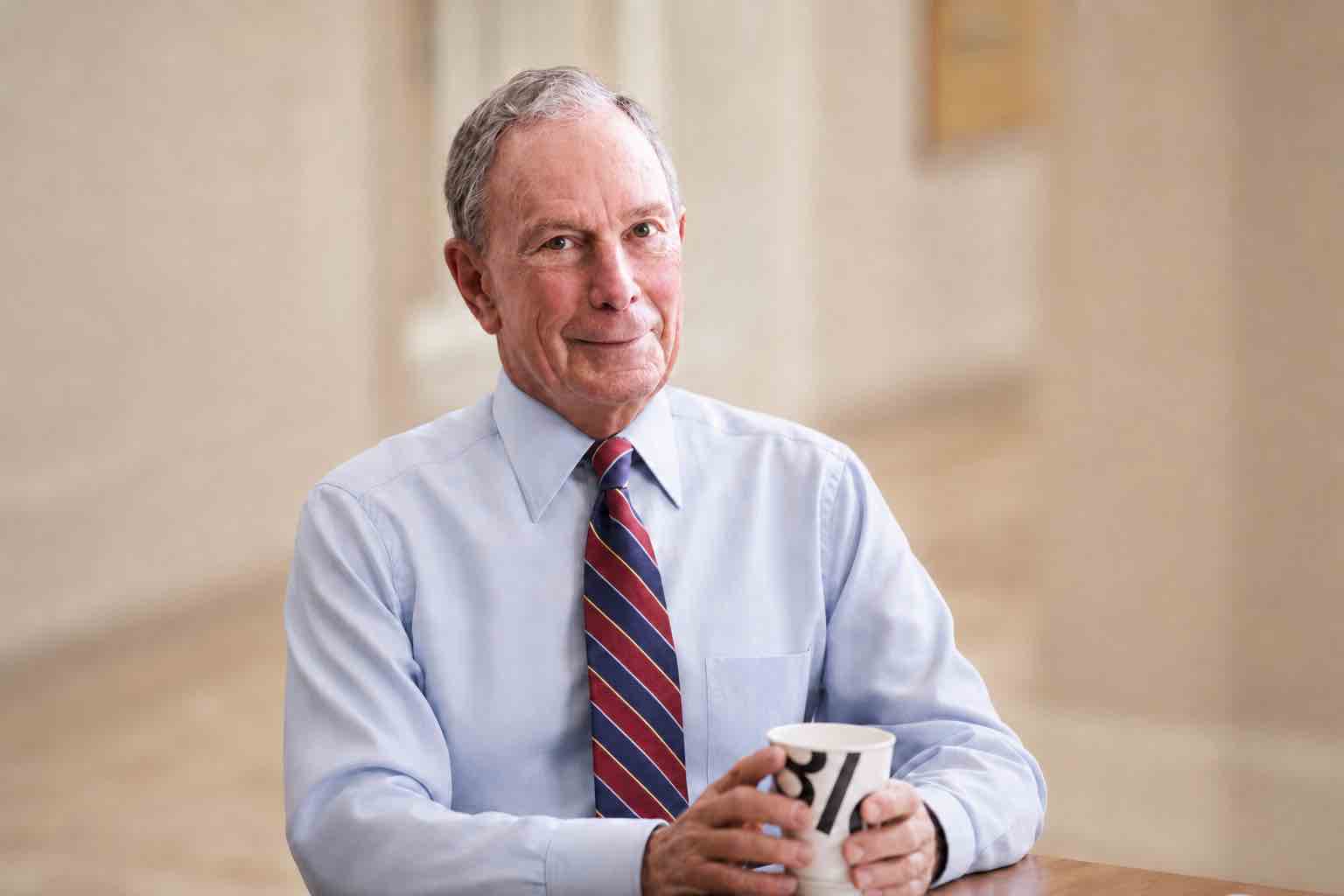
Mike Bloomberg has never been shy about writing big checks for clean energy, but even by his standards, the $285 million he recently committed stands out.
Announced as the centerpiece of a $590 million environmental package, the gift is aimed squarely at emerging and developing economies, the places where electricity demand is climbing fastest and where the fight against fossil fuels is far from settled.
What sets this commitment apart isn’t just the size of the number. It’s where the money is actually going. Bloomberg isn’t funding another round of solar farms or wind turbines this time.
He’s funding the associations, coalitions, and technical shops that fight for clean energy inside government rooms where policy actually gets written, in countries that together account for nearly 70 percent of global power-sector emissions.
It’s an unglamorous kind of giving, the sort that doesn’t produce a ribbon-cutting photo, but people who study this sector closely say it might be the smartest money Bloomberg has spent yet.
“Clean energy is now cheaper than fossil fuels in virtually every part of the world, and as a result, its share of global power production is growing,” Bloomberg said in announcing the gift.
“But fixable obstacles are still slowing down deployment—and with energy demand rising at an unprecedented speed, we can’t allow those obstacles to continue standing in the way of lower energy costs for households and businesses and cleaner air and water for communities.
This new investment will help ensure they don’t.” It’s a very Bloomberg way of putting it: no soaring rhetoric, just a businessman’s insistence that a solvable problem shouldn’t be left unsolved.
The money is heading to renewable energy groups across India, Indonesia, Vietnam, South Africa, Kenya, Nigeria, Ghana, Brazil, the Philippines, Colombia, and Mexico, building on a smaller pilot that quietly backed about ten organizations over the past year, among them the Global Solar Council, the Kenya Renewable Energy Association, and the Pakistan Solar Association.
For a number of these groups, this single infusion will double or triple their entire annual budget.
That’s not a rounding error for them — it’s the difference between having a seat at the table when energy policy gets drafted and being talked over by an oil and gas lobby that has had a financial head start for decades.
Barbara Buchner, CEO of the Climate Policy Initiative, put her finger on exactly why this matters: “Renewable energy is the world’s fastest-growing power source, but that growth is uneven. Markets with great potential are often the ones where the foundational prerequisites like strong policy frameworks, institutional capacity, industry coordination, and reliable data are still being established. Directing resources towards closing those gaps is what turns potential into bankable opportunity, and that is what this commitment does.”
Sonia Dunlop, who leads the Global Solar Council, was even blunter about the problem this money is meant to fix: “Competitive technology alone doesn’t build a new energy system. In market after market, we see the same story: the economics are there, the projects are ready, but what slows us down is the institutional and political representation gap.
Renewable energy associations that can engage effectively in grid planning, market design, and finance aren’t a peripheral concern.
They are what turns a country’s energy potential into actual power on the grid. That is what this investment recognizes, and it is long overdue.”
Even the United Nations weighed in with unusually warm praise.
Secretary-General António Guterres called the moment a turning point: “The clean energy age has arrived. As demand for power surges, it must now scale fast in the economies that need it most. Mike Bloomberg’s commitment does exactly that—backing the industries that will power homes, lower bills, lift economies, and clear the air for billions. Together, let’s bring the renewables revolution to every corner of the world.”
Coming from the head of an institution not known for effusive language, that’s a striking endorsement.
None of this comes out of nowhere. Bloomberg has been at this since 2011, when he first backed the Beyond Coal campaign in the U.S., and since 2017 globally, eventually reaching partnerships in 32 countries and the European Union.
Over roughly the past decade, he has put more than $3 billion of his own fortune behind climate work, money that has helped push nearly 450 coal plants into cancellation across four continents and helped stand up more than 1,100 gigawatts of clean power capacity—enough to keep the lights on in about 300 million homes.
The timing of this latest gift is notable too: it lands just as renewables passed coal in global electricity generation for the first time in roughly a hundred years, reaching 34 percent of the world’s power mix in 2025.
And the follow-through has been fast.
Just weeks after the London announcement, attention was already turning to Africa, where regional leaders and philanthropic partners have begun using this fresh capital to build out exactly the kind of institutional backbone Bloomberg’s gift was designed to fund—stronger market design, sharper regulatory expertise, and the technical know-how needed to pull in private investment, rather than simply bankrolling individual solar or wind projects.
It’s a sign that this isn’t a one-off headline moment destined to fade from view. The money is already moving, and by the time solar and wind are meant to be supplying more than half the electricity in these markets in 2030, the associations, data systems, and regulatory groundwork Bloomberg is funding now could be the reason that goal is actually within reach.
It would have been easy for Mike Bloomberg to keep chasing the big, photogenic numbers—another thousand megawatts here, another coal plant closure there. Instead, with this $285 million, he’s betting on something less visible but arguably more durable: the institutions that will keep fighting for clean energy long after the cameras from London Climate Action Week have packed up and gone home.
That’s not just generous.
It’s the kind of giving that tends to compound.